I've been on a lot of marches, organised a few too. I used to get very affected by the crowd feeling, overwhelmed, which isn't a problem when it's happy but was harder when it was angry or even negative. I've built a wall (yes, a wall) now that I'm a parent that means I don't react as once I did, especially when my children are around. I push it all away behind the wall, muttering "later, later", but Later rarely comes.
Today Later came a little for me, after the Auckland Women's March, when I came across a sexist arse in Aotea Square. It was the Mansplainiest of Mansplaining. A man with a megaphone yelling at those leaving the march, mostly women, about how good women have it, and how wrong we all are.
Because the problem isn't the disproportionate impact of poverty on women and other marginalised groups, or the over the odds rate of incarceration for indigenous people in colonised countries world-wide, or the economic inequality and injustice that in our own city manifests in people begging on the streets and children (usually with their mothers) living in cars. The problem isn't the greed of some, the complicity of others, the oppression that is sexism, racism, discrimination on the basis of sexual identity, body parts at birth, income level, skin colour,religion, and the downright meanness of many. No the problem is that women are stupid.
The problem is not that women are stupid.
At first I felt not much, as I had on the march - intellectually pleased by the turnout and seeing friends and family, proud of my kids with the signs they made, assessing in the back of my mind how this was playing out as a protest given my own experiences. I was ok to walk on by, and to then feel bad about doing that because I knew I probably shouldn't.
But then this chap was just so earnest, and so misrepresented feminism and the issues and the arguments, and maybe I've been listening to the soundtrack of That Bloody Women too much lately but I yelled at him. And then I went closer to him and yelled at him some more.*
I was shaking with anger and knew I needed to walk away. A few bystanders clapped as I went back to the stroller and someone else yelled at him too. He kept going, certain in his righteousness, with his red capped mates no doubt pleased he'd got a reaction.
I've seen this before, this supreme arrogance, and it has always got under my skin. I'm reasonably articulate, it's been a large part of my jobs for years, but I can never find the words to move people like this one. Not in the moment anyway. Maybe he'll read this and maybe it'll have an impact but I sincerely doubt it.
Because whenever I've seen this before I've also seen in their eyes the dismissal of whatever I say. Which, when you've lived a bit longer and had a few things happen to you and people you love, becomes what we used to call on the feminist blogs a few years back "denial of lived experience".
It's a dismissal, a denial, a calling untrue, of what has actually happened to you in your life, what you have actually seen and experienced. So callous, so ruthless, a simple "no, that's not possible". Or, more often the more sly refutation of "then why didn't you...". All of it, all of it, saying what you know is true must not be.
That gets to me, down in my bones, in my very gut. I can remember starkly a few other times; the argument in a politics tutorial where someone ended up telling me that a child of my acquaintance was choosing to be poor; the pleas to those who would observe a social justice march, walk alongside rather than join in, to come on board, met with sneers that told me I was dirt and my hopes ridiculous; the shutters coming down on the eyes and the turning away when I was hurting and a peer didn't want to see it; the constituent who insisted on the unimpeachable veracity of information I knew intimately was completely untrue.
And when I got back to the stroller, and the two kids I had with me, my wall had a big crack in it. Bits were leaking out. And I couldn't do that right then, couldn't leak everywhere. One of my children was oblivious, but the other was a bit confused and upset: "I don't like it when you yell at people Mummy." "It doesn't happen very often though, does it?" "No, but I don't like it."
A quick fix job on the wall then, rushing to squeegee up all the leaked rage and frustration, squeezing it back over the top to deal with Later. Mortar of forgetfulness, brick of fake cheerfulness for the kinders. I've done it before, I imagine most parents do, I'll do it again no doubt. The wall was solid again.
Maybe it's more like a dam than a wall, maybe. I shall work on finding a turbine for that anger to power, a positive outlet that creates energy rather than flooding the whole valley. Maybe this is that.
* And mis-spoke and said I was paid worse, when I meant I was treated worse, as unlike most jobs in Aotearoa NZ, the pay for my role is transparent and set independently by the Remuneration Authority, that's the bit I'm kicking myself for most, damnit.
I'm not doing comments on my posts these days. I'm easy to find on social media if you desperately want to tell me what you think, under my name, Julie Fairey.
Showing posts with label activism. Show all posts
Showing posts with label activism. Show all posts
Saturday, 21 January 2017


Monday, 9 December 2013
keeping up the momentum
we had our national day of action against rape culture. it was awesome to see so many people out on the streets, raising their voices on this issue. and it's good to see that there may be some changes to the law as a result of these protests.
but as time goes on & the pressure goes off, it's likely that there will be less change than we hoped for. this is why we're holding a public meeting in hamilton tomorrow night, to have a discussion on what needs to change & what needs to be improved. hopefully we can talk about meaningful ways to change both our culture and our institutions. and hopefully we can come up with some action points to take forward.
it's election year next year, and most parties will be working on policies to take forward into the election. it's important to make sure that issues around justice & funding in relation to sexual violence & abuse remain at the forefront of policy debates. if there is a time to push for meaningful change, it's now.
for those of you who are already active in politics & campaigning, please don't let the issues slide. raise it with your party caucus reps, your party's leadership & those who you know will be active in your party's campaign team. the amount of discussion and debate that arose out of the "roast busters" incident shows that many, many people care about this stuff, and many people want things to change.
for those who aren't so deeply involved in politics, small acts make a difference. letters to MPs, letters to the editor, questions at public meetings (& particularly at meet-the-candidates events in the campaign) will help to keep focus on the issues. it's all basic stuff, the building blocks of any political campaign.
if you need motivation & you haven't read them all, then read through the testimonies of survivors in their own words (huge trigger warning - it's tough reading). but i think so many of us have our own experiences to draw on. the problem isn't that we don't care enough, it's that there are so many things to care about, so many fronts that we're fighting on, that we run out of energy. or sometimes the issues are too triggering, the wounds still too fresh for us to be able to take on activism as well. i understand that.
for those who do have the energy, and particularly if you're in the waikato, i hope you'll come to the meeting tomorrow night. i'm a little nervous about it - i hope that the discussion is constructive. but also pretty excited to have speakers like louise nicholas, dr neville robertson & catherine o'kelly. here are the full details:

but as time goes on & the pressure goes off, it's likely that there will be less change than we hoped for. this is why we're holding a public meeting in hamilton tomorrow night, to have a discussion on what needs to change & what needs to be improved. hopefully we can talk about meaningful ways to change both our culture and our institutions. and hopefully we can come up with some action points to take forward.
it's election year next year, and most parties will be working on policies to take forward into the election. it's important to make sure that issues around justice & funding in relation to sexual violence & abuse remain at the forefront of policy debates. if there is a time to push for meaningful change, it's now.
for those of you who are already active in politics & campaigning, please don't let the issues slide. raise it with your party caucus reps, your party's leadership & those who you know will be active in your party's campaign team. the amount of discussion and debate that arose out of the "roast busters" incident shows that many, many people care about this stuff, and many people want things to change.
for those who aren't so deeply involved in politics, small acts make a difference. letters to MPs, letters to the editor, questions at public meetings (& particularly at meet-the-candidates events in the campaign) will help to keep focus on the issues. it's all basic stuff, the building blocks of any political campaign.
if you need motivation & you haven't read them all, then read through the testimonies of survivors in their own words (huge trigger warning - it's tough reading). but i think so many of us have our own experiences to draw on. the problem isn't that we don't care enough, it's that there are so many things to care about, so many fronts that we're fighting on, that we run out of energy. or sometimes the issues are too triggering, the wounds still too fresh for us to be able to take on activism as well. i understand that.
for those who do have the energy, and particularly if you're in the waikato, i hope you'll come to the meeting tomorrow night. i'm a little nervous about it - i hope that the discussion is constructive. but also pretty excited to have speakers like louise nicholas, dr neville robertson & catherine o'kelly. here are the full details:

Monday, 4 November 2013
The baying mob, or How I carry a torch.
In my more frustrated moments, I would love to be that person carrying a torch at the front of a baying mob, crying for justice and making a difference to the outcome of a trial of people who have hurt someone else.
But we don’t live in a village of 100 people. These young men are not the only people out there perpetrating sex crimes. And we HAVE a justice system. It is flawed, but we need to use it so the flaws are SEEN, and changed, and our system can evolve with our understanding of right and wrong. An example of this is that rape used to be legal within marriage, and the laws evolved for the better with our societal changes.
We can’t nor should we, start a mob of people, so here are some ideas for how you can be brave, and carry your torch out into the community and really make a difference.
Be the light at the end of the tunnel.
Volunteer. Work on help lines. Or just be a strong and vocal voice for justice so that people see you as a safe refuge or support when they need it. Advocate for friends who need a voice. Speak for those still too traumatised to speak. Hold your friend’s hand when they decide they are brave enough to speak up, or pursue justice.
Be the voice of reality.
This issue is raising the topic of “what could possibly make young men behave this way.”
Remind people that 1 in 4 women are raped. This act is not a rarity and we live in a rape culture.
It is raising the question of “how to avoid being a victim”
Remind people that: most victims know their rapist.
That the rapist drinking is of more importance than the victim as far as causation.
Be the person brave enough to discuss “consent”.
People are often confused about what rape is. We need to start talking about the fact that rape isn’t what the media tells us.
Its subtle, it’s discreet, it is friends, it is family. It is quiet, it is dangerous, and it is under reported.
You can inform them that in research when men are asked if they have “raped” most will say no. But when men are asked if they have “forced a woman who was not your wife or girlfriend at the time to have sex,” or if they had ever “had sex with a woman who was too drunk or drugged to indicate whether she wanted it" that answer changes significantly.*
Be the person who knows the facts.
When talking about false reports, there are more false reports for stolen cars than false reports for rape. As a crime it is under reported and really badly dealt with.
This image from the USA is incredibly depressing, and NZ is no better off.

Be the killjoy.
Be the person at your work, or social gatherings who when someone makes a rape joke, you look blankly at them and ask why it’s funny. If they have to explain it, it becomes apparent very quickly the rape culture we are living in.
Be the support person.
Be the person who listens without judgement, believes the person talking about abuse, and helps them with WHATEVER THEY CHOOSE TO DO.
Be the person advocating body autonomy for the children and young people around you.
Ask before you hug or kiss friends, family or other people you greet.
When kids don’t want to give you a kiss or hug hello or goodbye, say “that’s ok, kisses and hugs are special and we can ALWAYS choose when to give them.” Empower young people to understand that touch is a choice, and their bodies are their own to control.
Be the person supporting those on the front line.
Donate, remind those around you to donate, and when there are competitions for funding, support organisations who help. Thanks to Natalie for this link here, to resources available.
Not everyone can carry every torch and they are ALL important. Support the other torch bearers. Carry someone else’s for a while to lighten their load. Accept that we will all need to take a break sometimes.
But as long as we are casting light in our own communities, that will spread, and other people will find the strength to start standing with us.
My love to everyone on the front lines.
X
*These quotes are from the WHO study, and are therefore gendered in this way.
Edit: a new post on this topic here at THM in response to the question "how could this happen"
Edit: a new post on this topic here at THM in response to the question "how could this happen"
Thursday, 16 May 2013
update on merida makeover
just a quick post to say that activism does work sometimes. after a successful petition and significant backlash against the proposed makeover of merida (covered in my previous post), disney has decided to pull the sexualised image:
In preparation for her "coronation ceremony" last Saturday, Disney gave the Brave heroine Merida a makeover,
redesigning the character as thinner with a bigger bust, more revealing
dress, a face full of makeup, less wild hair, and replacing her
signature bow and arrows with a sassy sash. People were pissed and
turned to the internet to voice their protests—which seems to have
worked.
As a response to the public outcry, Disney has quietly pulled the redesigned Merida from its Princesses website and replaced it with the original Pixar version. It seems like petitions actually are useful sometimes!
in a world where we're constantly made to feel that our voice doesn't matter & there is no point in trying to change things, even small wins are meaningful. anything that can counteract our collective feelings of helplessness can only be good.
Sunday, 7 October 2012
A weekend in Dunedin - National Council of Women's 2012 conference
 In 2010 I decided that I should get involved in the National Council of Women. To me it was a somewhat shadowy organisation, with a mandate I didn't understand, which occasionally popped up with submissions to Select Committees or media statements which I either agreed with or was strongly concerned by. One such example of the latter was NCWNZ submitting in favour of the 90 day legislation for employment, on the basis that it would be good for women. My experience and observation is that those who face discrimination in the workplace already, as women do, are usually made more vulnerable by losing rights, not less so. But anyway...
A couple of months ago QoT wrote about the NCWNZ support for the Who Needs Feminism campaign, and expressed her concerns about the level of feminist analysis NCWNZ was (or rather wasn't) undertaking. While I agree with some of the points The Thorny One made, we are not in total agreement - which is not unusual ;-) - and it has been very interesting to become more involved in NCWNZ over the last two years and learn about why it is the way it is, and how it is changing.
This weekend I have been in Dunedin for the biennial conference of NCWNZ. It's an organisation established in 1896, and I see it as much like the game of cricket - highly evolved rules and customs which had reasons and made sense to insiders for a long time, but some of those reasons are lost in the mists of time, so it's hard for current participants to understand the relevance of positions such as Silly Mid Off. There have certainly been Silly Mid Off moments for me during the conference.
But putting that to one side, I do see some significant value in NCWNZ, to the point where I am becoming more involved, not less, despite some frustrations. Partly this is because I think it's important to have feminist voices (in particular those who aren't first or second wave), and a diversity of life experiences, active in NCWNZ, and that that is part of the evolution of the organisation which won't happen if it is abandoned by progressive people.
Which is not to say that most of those currently involved are not progressive. I am constantly amazed by the staunch advocacy for women that fellow members will articulately share in branch meetings, online and now on the floor of the conference. Some base their advocacy on the idea that women are mothers first and foremost, and thus what happens for children is of supreme importance, and that really grates for me, but often we find ourselves in agreement, albeit for quite different reasons.
At a recent branch meeting we had a ripper of a debate about marriage equality. Yes I would have prefered we had been in agreement, but it was heartening to see so many wonderful arguments for marriage equality put up by women who were in the demographic that the polling shows us is most likely to be opposed to Louisa Wall's bill. In the end we decided not to take a branch position, which was disappointing to me.
The highlight of the weekend for me, in regard to the democratic aspects, has been the vote to support a remit on making contraception available to all women for free. This includes both the actual contraception (pill, condom, IUD, implant, etc) and the consultation fee. Currently there is a confusing array of free access for certain circumstances, especially those under 25. However there is undoubtedly a need to widen this, as I argued in my 2010 presentation on why abortion needs to be legal. The motion was put up by the Manawatu branch, seconded by ALRANZ (whose president Morgan Healey spoke very well to the motion) and I appreciated having the opportunity to speak to it too. When I tweeted (@juliefairey) about the passing of this remit I was quite surprised at the positive responses from many people glad to see NCWNZ stand up on this issue.
The conference has been an interesting experience, for a variety of somewhat unexpected reasons. The guest speakers and panel discussions have been very valuable; as I type there is a fantastic keynote being given on the issue of how family trusts undermine social justice, particularly as that impacts on women. "Women and Work: No Barriers" is the theme of the conference, and there have been a lot of discussions that show a very wide definition of "work" amongst the delegates, including a focus on the need to recognise the unpaid work that so often falls to women. I've also met some fascinating women through my involvement in Auckland branch, and added to that number at the conference. In particular, I greatly value the perspective of older women that I can access readily through NCWNZ, and which is absent from much public dialogue and not prevalent in my own personal circles.
I'm involved because I think there is a role for an umbrella body, a peak organisation, for women's organisations (and the women's sectors/networks/etcs of other organisations), and because I want to help to shape the future of NCWNZ as it evolves. If you are interested in getting involved too, it can sometimes be difficult to navigate the entry points, so I'm more than happy to assist, and can be emailed on julie dot fairey at g mail dot com.
Saturday, 8 September 2012
Making friends, with fruit trees
Earlier today, before the rain started, I gathered together food, jackets, children and buggy and headed off for a short walk over the ridge, to a leafier part of town. As we bumbled down the hill towards our destination I could see the people, two big trucks, and the bright shafts of spades. When we got closer we could make out spindly trees, poking up from the grass, and the flurry of activity from adults and children alike.
This was a community fruit tree planting exercise, organised by the Puketapapa Local Board in response to submissions from the residents in surrounding streets to refresh their tired park and playground. The renewal of the play equipment was completed earlier this year, and today was the day for all to muck in and make sure these fifteen fruit trees got the best possible start on a sunny slope above the houses.
I love this stuff. Events like this have been the surprise joy of my local government involvement - local people coming together to achieve positive changes in their community that they can't do on their own. I didn't get to actually plant a tree, as there was plenty of help from neighbours and I was more useful wrangling children, talking to people about how this happened, and taking photos. But I've come away with a buzz nonetheless.
Part of the spark I get out of it is from the connections you see people making with each other, and the aha moments you can watch them having as they realise what they have in common, and what they could work on together.
The best examples of this today for me were the woman and her partner who had got the flyer in their letterbox and come along, having recently moved here from another part of Auckland where there was lots of community stuff, keen as beans to get into it here, and three children I came across helping put the mulch bark around the planted trees. I had a chat to the kids and asked them their names, told them mine, pointed out my kids too, and then asked them if they knew each other before today. "Nope" was the response. Half an hour later they were making up their own games to play together on the playground.
Community building can be as simple as giving neighbours a reason to get together and meet each other. Lots of the people I spoke to today were interested in coming over the hill in a fortnight's time to a poorer part of town to help with a community planting day there. I look forward to seeing them again, and being able to at least exchange smiles of recognition in the street, on the bus, and in the supermarket. I hope they are feeling as zippy as I am this afternoon!
This was a community fruit tree planting exercise, organised by the Puketapapa Local Board in response to submissions from the residents in surrounding streets to refresh their tired park and playground. The renewal of the play equipment was completed earlier this year, and today was the day for all to muck in and make sure these fifteen fruit trees got the best possible start on a sunny slope above the houses.
I love this stuff. Events like this have been the surprise joy of my local government involvement - local people coming together to achieve positive changes in their community that they can't do on their own. I didn't get to actually plant a tree, as there was plenty of help from neighbours and I was more useful wrangling children, talking to people about how this happened, and taking photos. But I've come away with a buzz nonetheless.
Part of the spark I get out of it is from the connections you see people making with each other, and the aha moments you can watch them having as they realise what they have in common, and what they could work on together.
The best examples of this today for me were the woman and her partner who had got the flyer in their letterbox and come along, having recently moved here from another part of Auckland where there was lots of community stuff, keen as beans to get into it here, and three children I came across helping put the mulch bark around the planted trees. I had a chat to the kids and asked them their names, told them mine, pointed out my kids too, and then asked them if they knew each other before today. "Nope" was the response. Half an hour later they were making up their own games to play together on the playground.
 |
| Three children spreading bark mulch around a newly planted fruit tree. From left to right: Emma, Sarah and Dave. |
Thursday, 23 August 2012
Love isn't Love isn't Love: The Marriage Game
Love is love is love. That's the game we're playing now. That's what the images say, uniform toilet-symbol representations of binary genders in three different (two person) combinations. Conventionally attractive white young photographed kisses in three different (two person) combinations. Still more - usually young, usually conventionally attractive, usually white - couples photographed in couples, professing how just like anyone else they are, how they pay their taxes and eat toast in the morning and how they're just like anyone else. Our love is just like your love. Love is love is love.
This is the game we're playing. This is the game to get marriage.
We're used to games. We've played them all our lives, played them for survival from the first slight difference bubbling in our consciousness, played them later in press releases and on parliament grounds. We've accepted compromises, concocted strategies. We know we will always have to do this. Sometimes there are winnings. Sometimes we play together and stay together, ready for the next round. Games aren't all bad.
We always play to the same goal. Love is love is love.
Except ours is love is a society that ignores it, that discredits it, that overtly oppresses it. Our love is in secret, or with a never ending shame, a belief that maybe, maybe, it should not be. Our love is a brazen fuck you, our love is a show of pride. Our love is us just wanting, just wanting our love to be like your love. Our love is wanting our love to never be like your love. Our love is never in a vacuum. Your love and our love never started on equal footings. Our love is having to hide our other differences to make us more normal, make us more ordinary, to gain an acceptance of our love you will never have to work or fight for.
You can choose your pieces. You can be yellow or green or red or blue. Sometimes you can be a boot or a dog or an iron or a car.
Make no mistake. This is a game for ordinary people. A game for normal people. A game for people who look good in the newspapers, people who the average kiwi can relate to. No-one likes it, but it's what we have to do to win. Jostling at the edges, or maybe staying home, will be those who will never look good in the papers, but found in the queer community a home of sorts, or those who were never welcome even there. We'll pick up our placards and we'll march, because we know this fight has to be fought, this game has to be won. We may even have a share of the winnings, or we may have a penalty deducted. It won't have been our fight. It won't have been our liberation.
This is the game to get marriage. But does the winner take all? Who has to fold up the board and put away the pieces? And will you, and your winnings, be on our team for another round?
This is the game we're playing. This is the game to get marriage.
We're used to games. We've played them all our lives, played them for survival from the first slight difference bubbling in our consciousness, played them later in press releases and on parliament grounds. We've accepted compromises, concocted strategies. We know we will always have to do this. Sometimes there are winnings. Sometimes we play together and stay together, ready for the next round. Games aren't all bad.
We always play to the same goal. Love is love is love.
Except ours is love is a society that ignores it, that discredits it, that overtly oppresses it. Our love is in secret, or with a never ending shame, a belief that maybe, maybe, it should not be. Our love is a brazen fuck you, our love is a show of pride. Our love is us just wanting, just wanting our love to be like your love. Our love is wanting our love to never be like your love. Our love is never in a vacuum. Your love and our love never started on equal footings. Our love is having to hide our other differences to make us more normal, make us more ordinary, to gain an acceptance of our love you will never have to work or fight for.
You can choose your pieces. You can be yellow or green or red or blue. Sometimes you can be a boot or a dog or an iron or a car.
Make no mistake. This is a game for ordinary people. A game for normal people. A game for people who look good in the newspapers, people who the average kiwi can relate to. No-one likes it, but it's what we have to do to win. Jostling at the edges, or maybe staying home, will be those who will never look good in the papers, but found in the queer community a home of sorts, or those who were never welcome even there. We'll pick up our placards and we'll march, because we know this fight has to be fought, this game has to be won. We may even have a share of the winnings, or we may have a penalty deducted. It won't have been our fight. It won't have been our liberation.
This is the game to get marriage. But does the winner take all? Who has to fold up the board and put away the pieces? And will you, and your winnings, be on our team for another round?
Wednesday, 1 August 2012
Disability and Queer Issues Part 1
The following is an edited version of a short talk I gave on disability and queer issues to a queer, mostly studenty, audience. It is limited by the short time I had to speak, as well as my own perspective. At the end I touched on some aspects of movement building and common experiences, however I have ended this post quite abruptly before that as I'd like to explore these in more depth in a later post.
As a queer disabled person, the disadvantages and exclusion you face end up being multiplied. It’s hard to find queer friendly housing, and it’s hard to find accessible - which may mean quiet or dry or wheelchair accessible - housing. If you need both, you get slammed. Queer friendly healthcare isn’t that easily come by - but try finding queer friendly healthcare that is accessible and includes the specialist knowledge you might need. Queer people generally get useless, inappropriate and often outright damaging sex education. Disabled people can get the same, or often don’t get it at all, perhaps because we are assumed to be non-sexual, because we are removed from those classes for extra tuition, because it is not offered in a way we can understand or interpret or because it is not appropriate to our bodies. Again, the effect is multiplied.
Queer spaces are too often inaccessible - even on the most basic level of being wheelchair accessible. It's not acceptable, and constitutes a 'not welcome' sign on the door for many disabled people. And whilst this isn't okay anywhere, I think most of us here know how essential queer spaces can be, and that they're often the place you go after being excluded from anywhere else. Accessibility needs can be quite varied, though - to give one personal example, I struggle with the reliance on bars and clubs as queer spaces because I have problems in noisy environments. I'm happy that more and more alternatives are being offered, but there's a long way to go. Accessibility is often overlooked in event planning, but it needs to become as routine as booking a room or putting up posters.
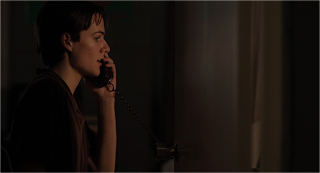
The next thing I want to talk about is family and relationships. The picture above is from the movie Milk in which this young person calls up Harvey Milk for help as his parents are about to send him off to be degayed. He’s advised to run away, and get to a big city. The image then zooms out, revealing he’s a wheelchair user. That story had a happy ending, but many don’t.
It’s hard enough escaping from abusive or bigoted family - but if you have limited mobility, if sleeping on a couch isn’t possible for you, if you need personal care provided by your parents, if they’re the ones who take you to medical appointments, if public transport is inaccessible and your escape can be attributed to your disability then it’s a whole other story. You’ve probably heard about parents of disabled adults fighting to be paid for carework in the news recently. Mostly it’s been fought from the angle of these parents’ rights - which is important. But it’s also important that disabled people are not forced to live with family members longer than they would otherwise choose for financial reasons.
Similarly, there can be pressure for disabled people to stay in relationships longer than they otherwise would if they are meeting support needs - this includes abusive relationships, but also those which have simply run their course. I think this issue is particularly important to the queer community, not just because abuse in queer relationships is under recognised, but because we place a lot of value on the fight to be accepted as in relationships, and we need to understand that for some leaving can be just as much as a struggle.
The sexuality and gender identity of disabled people can be linked to their disabled status in a way which pathologises or dismisses that identity. For example, asexual disabled people are assumed to be examples of the belief that ‘disabled people don’t have sex’ rather than having their identity acknowledged in its own right. Disabled lesbians are assumed to be lesbian because they can’t get a man. Genderqueer disabled people can be assumed to be confused or lack understanding of social appropriateness.
That said, I think queer people can often be unaware of the complex ways sexuality and gender identiy can be linked to disability for some people. To give just one specific example, a lot of autistic people see themselves as outside the gender binary. And a number of them would never identify as genderqueer or join groups catering for queer and gender diverse people (though of course some do!). They might see their gender identity as an extension of their autistic identity, but not talk in the terms or feel welcome in the spaces that other non-binary people do.
Disabled queer people of course experience similar issues to many who experience more than one form of oppression. The more acceptable norms a person fits, the more easily they can get away with breaking others. Sometimes this starts externally, and becomes internal, with people trying to hide one part of themselves because it is all ‘too much’.
Okay, shoe time:

Say (to make it simple) if you were at a queer women’s group, and a woman walked in wearing one of these pairs of shoes. You’d probably assume it related to her identity in some way. If I gave you two stereotype hairstyles, I’m sure you could match them with the shoes - and you might make some assumptions about the type of person she is and what she does with her time.
I look at those shoes and see one pair I could never ever conceive of wearing anything like them, because I’d fall over, and another that I might manage but would be a struggle. I don’t see identity; I see functionality. But so much of identity in the queer community is assumed to be tied up with what we wear or how we look which excludes those of us who have limited choices in this matter.
Related to this is the label of ‘assimilationist’. To me, an assimilationist position is one in which someone seeks to advance the position of their own group whilst leaving the system intact, someone who (for example) focuses on fighting for rich white gay men to have the same rights as rich white straight men, and thinks that’s as far as it needs to go. But I’ve seen it directed at individuals for focussing on meeting personal needs or living a conventional lifestyle.
The truth is, we all do what we need to survive in this society - but the needs of some disabled people may not be recognised as needs. Having - say - a quiet living space or a car because you need it (or even if you don’t need it) isn’t a problem - assuming that because you have the world isn’t broken is. Disabled queer people can also find themselves in a complicated position when it comes to breaking or conforming to stereotypes. The same action can be viewed as challenging stereotypes in one community, but upholding them in others. And therefore we really need to stop making this about our lifestyles, about how we live and what we own, because those don’t change anything. But what we fight for - and how we fight it, collectively - does.
Language and concepts associated with disability - intellectual disability and mental illness in particular - are often used to oppress queer people. Two particular examples come to mind; some of you may remember Constance McMillen, a young person in Mississippi who was not allowed to take her same sex partner to her school prom. After public pressure, the school seemingly relented, only trick to her into what was dubbed a ‘fake’ prom with her intellectually disabled classmates, whilst the so called ‘real’ prom went on elsewhere. Meanwhile in New Zealand a woman recently received an apology for years of medical abuse - including electro-convulsive therapy - resulting from her sexual orientation.
And I think it’s so important we’re careful how we respond to these. Our response shouldn’t be “this abuse was so bad because she wasn’t really mentally ill” or “it was wrong to segregate her from the rest of her school because she’s not intellectually disabled” but to acknowledge that people are on the receiving end of similar forms of oppression for ostensibly different reasons and we need to fight it together.
As a queer disabled person, the disadvantages and exclusion you face end up being multiplied. It’s hard to find queer friendly housing, and it’s hard to find accessible - which may mean quiet or dry or wheelchair accessible - housing. If you need both, you get slammed. Queer friendly healthcare isn’t that easily come by - but try finding queer friendly healthcare that is accessible and includes the specialist knowledge you might need. Queer people generally get useless, inappropriate and often outright damaging sex education. Disabled people can get the same, or often don’t get it at all, perhaps because we are assumed to be non-sexual, because we are removed from those classes for extra tuition, because it is not offered in a way we can understand or interpret or because it is not appropriate to our bodies. Again, the effect is multiplied.
Queer spaces are too often inaccessible - even on the most basic level of being wheelchair accessible. It's not acceptable, and constitutes a 'not welcome' sign on the door for many disabled people. And whilst this isn't okay anywhere, I think most of us here know how essential queer spaces can be, and that they're often the place you go after being excluded from anywhere else. Accessibility needs can be quite varied, though - to give one personal example, I struggle with the reliance on bars and clubs as queer spaces because I have problems in noisy environments. I'm happy that more and more alternatives are being offered, but there's a long way to go. Accessibility is often overlooked in event planning, but it needs to become as routine as booking a room or putting up posters.

The next thing I want to talk about is family and relationships. The picture above is from the movie Milk in which this young person calls up Harvey Milk for help as his parents are about to send him off to be degayed. He’s advised to run away, and get to a big city. The image then zooms out, revealing he’s a wheelchair user. That story had a happy ending, but many don’t.
It’s hard enough escaping from abusive or bigoted family - but if you have limited mobility, if sleeping on a couch isn’t possible for you, if you need personal care provided by your parents, if they’re the ones who take you to medical appointments, if public transport is inaccessible and your escape can be attributed to your disability then it’s a whole other story. You’ve probably heard about parents of disabled adults fighting to be paid for carework in the news recently. Mostly it’s been fought from the angle of these parents’ rights - which is important. But it’s also important that disabled people are not forced to live with family members longer than they would otherwise choose for financial reasons.
Similarly, there can be pressure for disabled people to stay in relationships longer than they otherwise would if they are meeting support needs - this includes abusive relationships, but also those which have simply run their course. I think this issue is particularly important to the queer community, not just because abuse in queer relationships is under recognised, but because we place a lot of value on the fight to be accepted as in relationships, and we need to understand that for some leaving can be just as much as a struggle.
The sexuality and gender identity of disabled people can be linked to their disabled status in a way which pathologises or dismisses that identity. For example, asexual disabled people are assumed to be examples of the belief that ‘disabled people don’t have sex’ rather than having their identity acknowledged in its own right. Disabled lesbians are assumed to be lesbian because they can’t get a man. Genderqueer disabled people can be assumed to be confused or lack understanding of social appropriateness.
That said, I think queer people can often be unaware of the complex ways sexuality and gender identiy can be linked to disability for some people. To give just one specific example, a lot of autistic people see themselves as outside the gender binary. And a number of them would never identify as genderqueer or join groups catering for queer and gender diverse people (though of course some do!). They might see their gender identity as an extension of their autistic identity, but not talk in the terms or feel welcome in the spaces that other non-binary people do.
Disabled queer people of course experience similar issues to many who experience more than one form of oppression. The more acceptable norms a person fits, the more easily they can get away with breaking others. Sometimes this starts externally, and becomes internal, with people trying to hide one part of themselves because it is all ‘too much’.
Okay, shoe time:

Say (to make it simple) if you were at a queer women’s group, and a woman walked in wearing one of these pairs of shoes. You’d probably assume it related to her identity in some way. If I gave you two stereotype hairstyles, I’m sure you could match them with the shoes - and you might make some assumptions about the type of person she is and what she does with her time.
I look at those shoes and see one pair I could never ever conceive of wearing anything like them, because I’d fall over, and another that I might manage but would be a struggle. I don’t see identity; I see functionality. But so much of identity in the queer community is assumed to be tied up with what we wear or how we look which excludes those of us who have limited choices in this matter.
Related to this is the label of ‘assimilationist’. To me, an assimilationist position is one in which someone seeks to advance the position of their own group whilst leaving the system intact, someone who (for example) focuses on fighting for rich white gay men to have the same rights as rich white straight men, and thinks that’s as far as it needs to go. But I’ve seen it directed at individuals for focussing on meeting personal needs or living a conventional lifestyle.
The truth is, we all do what we need to survive in this society - but the needs of some disabled people may not be recognised as needs. Having - say - a quiet living space or a car because you need it (or even if you don’t need it) isn’t a problem - assuming that because you have the world isn’t broken is. Disabled queer people can also find themselves in a complicated position when it comes to breaking or conforming to stereotypes. The same action can be viewed as challenging stereotypes in one community, but upholding them in others. And therefore we really need to stop making this about our lifestyles, about how we live and what we own, because those don’t change anything. But what we fight for - and how we fight it, collectively - does.
Language and concepts associated with disability - intellectual disability and mental illness in particular - are often used to oppress queer people. Two particular examples come to mind; some of you may remember Constance McMillen, a young person in Mississippi who was not allowed to take her same sex partner to her school prom. After public pressure, the school seemingly relented, only trick to her into what was dubbed a ‘fake’ prom with her intellectually disabled classmates, whilst the so called ‘real’ prom went on elsewhere. Meanwhile in New Zealand a woman recently received an apology for years of medical abuse - including electro-convulsive therapy - resulting from her sexual orientation.
And I think it’s so important we’re careful how we respond to these. Our response shouldn’t be “this abuse was so bad because she wasn’t really mentally ill” or “it was wrong to segregate her from the rest of her school because she’s not intellectually disabled” but to acknowledge that people are on the receiving end of similar forms of oppression for ostensibly different reasons and we need to fight it together.
Friday, 20 July 2012
Auckland screening of The Coathanger Project - 23rd July
 ProChoice People, ALRANZ and the Auckland Women’s Centre bring you a screening of
The Coathanger Project
A documentary film about reproductive rights in the United States
Monday 23 July at 6.30pm
Please register at http://tinyurl.com/
See http://www.
Thanks to Pro-Choice People for setting this up. There’s also a FB event page.
--
I'm hoping to make it along after another meeting :-)
Tuesday, 27 March 2012
On straight people 'sacrificing' their weddings
To straight people pledging not to get married until same sex marriage is legally recognised: please, don't do it for me.
If you want to get married or don't want to get married, that's okay. If you don't want to get married because you believe marriage is tainted by being only available to certain people, I understand that. If you don't want to get married as an individual protest: well I think it's ineffectual and I actually find it irritating, but that's your right, but don't pretend you're doing it for those who never asked you to do it.
I confess I don't really understand the whole idea of "I'm going to sacrifice things I have that other people can't". If we lived by that maxim I'd never go to the movies, never use transport, never eat a nice meal, never wear new clothes. The world's set up that some people have things other's can't: we can and should fight that, but we can't just opt out of it.
If you want to support queer rights, ask some queer people what they want you to do. Maybe some will say "don't get married" - we're not exactly a monolith, but I'm confident they'd be a minority. If you asked me, I'd ask for you to help me paste some posters, for $50 towards printing (maybe you could opt for cheaper chair covers), to like and share a facebook page, to challenge transphobia and homophobia where you see it, to join a march, to tell any young people close to you that it is okay, it really is okay. You can do one or more of those and still get married - see, much less of an imposition on your life.
Don't assume that our priorities are the same as yours, or what you assume yours would be. Don't assume that we all have the same priority. Don't assume that we want to get married, or that we don't.
Don't assume there's some clear dividing line between equality and oppression, when some queer people can marry now and some relationships will almost certainly be ineligible for state recognition when same sex marriage is recognised, and marriage rights won't change so many things anyway.
If you're in a situation where marriage carries important practical benefits, where it is necessary for you to obtain healthcare or immigration status, please don't screw with your life like that. Not only do I not want to see that happen to you, I'd honestly rather be putting my energy into activism, rather than worrying about the needless 'sacrifice' you've made.
These types of actions, however well intentioned, always feel like an appropriation. Actions that make it all about the straight couple. Actions that we're supposed to feel grateful for, that we're supposed to appreciate, that we're supposed to owe you something for, when most of us never wanted them in the first place.
Enjoy your marriage, your civil union, your handfasting, your pissup, your relationship unaccompanied by an event, whatever. I'll be wishing you well; if I know you well enough I'll be there, taking advantage of the free food. And when you get back from your honeymoon, or recover from your hangover: well, I could use some help on a poster run...
If you want to get married or don't want to get married, that's okay. If you don't want to get married because you believe marriage is tainted by being only available to certain people, I understand that. If you don't want to get married as an individual protest: well I think it's ineffectual and I actually find it irritating, but that's your right, but don't pretend you're doing it for those who never asked you to do it.
I confess I don't really understand the whole idea of "I'm going to sacrifice things I have that other people can't". If we lived by that maxim I'd never go to the movies, never use transport, never eat a nice meal, never wear new clothes. The world's set up that some people have things other's can't: we can and should fight that, but we can't just opt out of it.
If you want to support queer rights, ask some queer people what they want you to do. Maybe some will say "don't get married" - we're not exactly a monolith, but I'm confident they'd be a minority. If you asked me, I'd ask for you to help me paste some posters, for $50 towards printing (maybe you could opt for cheaper chair covers), to like and share a facebook page, to challenge transphobia and homophobia where you see it, to join a march, to tell any young people close to you that it is okay, it really is okay. You can do one or more of those and still get married - see, much less of an imposition on your life.
Don't assume that our priorities are the same as yours, or what you assume yours would be. Don't assume that we all have the same priority. Don't assume that we want to get married, or that we don't.
Don't assume there's some clear dividing line between equality and oppression, when some queer people can marry now and some relationships will almost certainly be ineligible for state recognition when same sex marriage is recognised, and marriage rights won't change so many things anyway.
If you're in a situation where marriage carries important practical benefits, where it is necessary for you to obtain healthcare or immigration status, please don't screw with your life like that. Not only do I not want to see that happen to you, I'd honestly rather be putting my energy into activism, rather than worrying about the needless 'sacrifice' you've made.
These types of actions, however well intentioned, always feel like an appropriation. Actions that make it all about the straight couple. Actions that we're supposed to feel grateful for, that we're supposed to appreciate, that we're supposed to owe you something for, when most of us never wanted them in the first place.
Enjoy your marriage, your civil union, your handfasting, your pissup, your relationship unaccompanied by an event, whatever. I'll be wishing you well; if I know you well enough I'll be there, taking advantage of the free food. And when you get back from your honeymoon, or recover from your hangover: well, I could use some help on a poster run...
Subscribe to:
Posts (Atom)