I've been away at a feminist retreat for the weekend, recharging my energy for gender equity fights with some feminist sheroes. We don't have to fight about some things anymore, right? The world has moved on...
Sure, there's still that small matter of objectification. Despite capitalism finding new ways to exploit men's bodies, when we pay attention to the typical ways women's bodies are positioned in mass media, it's pretty obvious we're encouraged to view the feminine in ways masculinity is never portrayed.
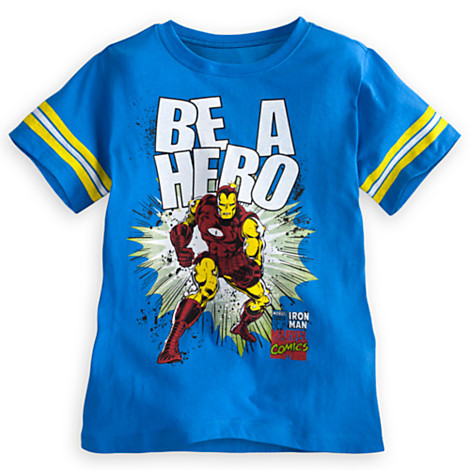
But somehow, despite the cultural scaffolding which treats women as window dressing for the real world concerns of men, despite the fact I wilfully avoid much media to help myself stay sane and centred, I am still shocked when brand new products are created to reinforce traditional gender roles. Just out from Marvel:
We all need heroes. People that inspire us, help us feel brave enough to honour ourselves in tough situations, brave enough to stand up to other people who are behaving badly. Boys need heroes in quite specific ways - while the majority of men don't hold rape supportive attitudes for example, the majority of men do not challenge other men when those attitudes are expressed, because they are scared of failing the dude test.
Sadly I don't think Marvel are quite that nuanced, and this is just pure sexist crap. Girls are being encouraged, again (and again, and again, and again....) to wait around for some bloke to keep us safe, decide what needs doing and help us with our lives with his big strong muscles and his masculine brain. Boys are being encouraged, again (and again, and again, and again....) to suppress any feelings they may have of wanting to be cuddled or comforted, of being able to cry when they are sad, or not knowing how to do something.
If I needed more of a reminder of why I need feminist space than a joyful weekend with other feminists talking about our bodies, our work, self-care and play, I got it, first thing this morning when this jumped into my inbox.
I've written before on why we should focus attention upon the powerful, rather than people who experience oppression. Pretty much Changing the World 101 as far as I'm concerned. Want to change domestic violence? Dismantle masculinity constructs which equate power and control with being a man, and encourage ideas of relationships between whole people which involve sharing decision making and healthy autonomy. Racism enraging you? Examine the ways white privilege operates - then insist it is named and challenged wherever you see it, because every time we pretend something is racially neutral, we're probably perpetrating racism.
We spend far too much time, when it comes to economics, talking about poverty. We have all these narratives about it. People who don't have enough are probably lazy, if not now then earlier in life. They didn't try hard enough at school, or they take the piss at work. They're probably drinking too much. Look at the food they buy, that's disgusting. Besides, they've got Sky TV/that flash jacket/new sunglasses every week/something I don't approve of them buying if they were really that poor......
Let's talk about greed. In stats, because I like them:
The richest 100 billionaires in the world are worth $240 billion. Oxfam thinks that's enough to END world poverty four times over
The richest 1% in the world have increased their income by 60% in the last 20 years. The financial "crisis" has just accelerated this wealth grabbing
Here in Aoteroa, according to Stats NZ, the richest 10% get 25% of our total income, and own 50% of our total wealth
So let's talk about those rich people. How they live, the choices they make, how they make such profits. Because if we did, I'm pretty sure there wouldn't be quite as many people out there prepared to put up with such a corrupt and inhumane way of organising sharing our resources.
I have no good feminist reasons to love Middle Earth, and plenty to find it problematic. Tolkien was clearly uninterested in women - Lord of the Rings features powerful women primarily as supplementary love interests to powerful men (Arwen and Eowyn) or as much less important to the storyline than corresponding male characters (Galadriel - cf say, Elrond).
But long before New Zealand was packaged up as the perfect scenic holiday, I was in love with LOTR. I read both the Hobbit and LOTR for the first time when I was eight, my parents desperate to give me something that would take me longer than Encyclopedia Brown, Nancy Drew and the Famous Five.
Then, what thrilled me were the different creatures, the imagined world of good vs evil, the adventures and bravery and friendships and loyalty. My favourite character was - and still is - Aragorn, the self-doubting hero who tests himself over and over again. But I loved the magic of the wizards, the wry humour of Gandalf, the idea of living in trees and travelling over different lands. I loved the bravery of the hobbits and the sheer genius of the only creature who ever gives up the one ring that rules them all being a short dude with furry feet who likes singing with the Aryans elves.
The problems - apart from no women - were pretty lost on me at eight but have been part of my experience everytime I've read it since. The obvious racism of the elves (white and fair and pure and true) and the orcs (dark and ugly and nasty and abusive). The racial essentialism of all the different "races" - undermined slightly by the big man-love between Gimli the Dwarf and Legolas the Elf, but let's face it, that's just so we can reinforce how natural it is usually for different "races" to hate and distrust one another. The pre-version of the American Superhero narrative - really, we're supposed to believe huge life events like battles between thousands of people hinge on Aragorn and his big sword?
Yet love the Hobbit and LOTR I do, passionately. I know lots of the dialogue by heart, and had to be politely asked to stop my critique when watching the films, disturbed by what a significant narrative arc loss it was to leave out Tom Bombadil (there were other digressions equally disturbing, for reader interest I'll stop there.) Alongside the explicit critique Tolkien is making of industrialisation, for me the fascination sits with the wrestling with issues of power.
Which is where I'll try and make a slightly feminist argument. If there was really one ring to rule them all, liberal feminists would want that ring for themselves, rather than having that horrid patriarch Sauron in charge. Because women would do absolute power differently, right?
Actually, the solution in LOTR is more anarchist, at least briefly. Absolute power has to go, and the joys of watching powerful characters (Gandalf, Galadriel, Aragorn) repeatedly choose not to take up this power, knowing it corrupts, is one of my fave ideas to explore.
Of course, Tolkien went a bit established power structures on us then - long before New Zealand's own Sauron Peter Jackson smashed worker power in his quest for the one film to make him rich.
Absolute power went, but all the different races are still led by their king-dudes, and only brave men and true (Pippin, Merry, Sam and Frodo) can free the oppressed. Power is still operating in traditional, anti-collective or community sharing ways. And the races are still essentially different, even if Gimli and Legolas have taken up Marriage Equality long before New Zealand parliament.
I can't get excited about seeing the Hobbit, despite my love of all things Middle Earth. Wellington is covered in merchandise, I can't get the sour taste out of my mouth over the union-busting, and the cynicism of turning a slight story (trip with the boys to a mountain far, far away, a dragon, inter-racial warfare over resources, then home again) into three films just kills it for me.
Capitalism stole my problematic love. It's not the first time.
Not for the first time, the genius of Jacky Fleming shows how skewed our world becomes when we focus on the wrong end of power and oppression:
Since coming into power, this National government has been near obsessed with blaming beneficiaries and the poor in general for all manner of wrong-doing.
Apparently cutting benefits is the "kick in the pants" some need to take responsibility for other taxpayers
(my emphasis). Paula Bennett has been quick to tell people claiming
benefits - even ones she previously accessed herself - that "the dream is over." If you have to visit a food bank to have enough to feed yourself and your family, it's because you've made "poor choices."
And step out of line if you dare, because Paula Bennett will release your personal details to the media as “a bit of a lesson for what happens if you go out there and put your story,” even if that does breach Privacy Commission ideas of fair practise to the tune of $15,000. Nope, it's beneficiary bashing all the way, thanks.
You
could be forgiven for assuming beneficiaries and the poor are sucking
up resources unfairly, completely to blame for our economy stalling and
many New Zealanders feeling frightened and even so hungry they eat pig scraps.
And they are doing pretty well at the expense of everyone else. Just 9% of New Zealanders are in the top tax bracket,
so those tax cuts really were just for a few of us. And while our
median income is falling, our average income is increasing, which is
just maths geekery for saying rich people are getting richer even in these belt-tightening times.
We
don't spend enough time talking about greed in this country, because
National has us bashing people with very little. It is greedy to make
sure those with lots of resources have the chance to create more and
more and more, without thinking of other taxpayers (my emphasis).
If
we focussed more on stopping those determined to create unnecessary
wealth at the expense of everyone and everything else - the greedy 1% -
and less on judging and punishing those with very little, our world
would be a very different place.
Now I just need Jacky Fleming to write a cartoon about it. Oh look, she has.
4,000 people marched in the hīkoi 'Aotearoa is not for sale' Friday (this is some of them).
I joined from a feeder march from the university. We were worried we weren't going to meet up properly. The first thing I saw was flashing police lights - which said the hīkoi wasn't far away. Then I saw people two blocks away turning into Willis St and there were just more and more of them - by the time we reached the hīkoi the front was already in Lambton Quay. There were just so many people.
I wanted to see how long it went back from there so I started walked backwards against the demo. I said hello to friends, my sister, acquaintances, more friends, people who I thought were overseas; I went past a brass band, many lots of chanting, and still people kept coming. This was the biggest march I'd been on since the Foreshore and Seabed Hīkoi in 2004.
I was on Wakefield St before I could see the end. I hadn't been planning to count it, even though I'm a wee bit obsessed with counting demos - it was too big. But having seen so many people I wanted to be able to put a number on it. So cutting corners and walking fast, I got all the way to the front again (by this time the front was half-way down Lambton Quay. I counted out a hundred in groups of ten, and got a good sense of what 100 people looked like - then I counted people in groups. About 37 groups of 100 people walked past me - and by the time we got to parliament it was more - as some could only come for their lunch break.
Watching everyone walk past I realised just how huge a group of 4,000 people is. The different bits of the demo had a very different feel. The very front was singing, and chanting faded in and out as people passed. There were groups behind different signs - focusing on issues in specific communities - the meatworkers were well represented. There were also some very cute kids (with and without signs).
The hīkoi was led by Maori, and Tino Rangatiratanga flags made a really clear statement about the issues being fought for. I've been on Maori led protests with only a smattering of tau iwi. I've also been on plenty of protests that were organised and dominated by Pakeha and made no effort to acknowledge tangata whenua (including many, many that I've been part of organising). This was something slightly different than either of those things. Maori led the hīkoi, and framed the issues around Tino Rangatiratanga, and tau iwi accepted that leadership and framing - because we believe that our interests are best represented by being part of that fight.
******
I spent much of the time once we'd actually got to parliament trying to find out was speaking. This was quite a difficult mission. The sound system they had didn't work and people were trying to speak to a crowd of 4,000 through a mega-phone. Earlier on, at the Vic feeder march - you could barely hear the speeches that were given through a megaphone when there were 100 of us. It's a fine experience for those giving the speeches, organising the speeches and the first few rows - but a rally without a proper sound system just breaks up the protest for everyone else. It is no longer a collective experience. Either acknowledge that your sound system isn't good enough and focus on a very few chants - or get a sound system that'll allow everyone to hear speakers. Anything else is actually disrespectful to the vast majority of people who came - by not having a good sound system and still giving speeches you're telling them they don't matter (and I should say I've been part of organising protests that made this mistake on many occasions - and it is only the few times that we've got it right that I've realised how important it is)
In this particular case, it was probably good. The list I managed to build up was:
Someone who had been part of organising the hīkoi
Grant Robertson (apparently David Shearer was giving a speech to the Wellington Chamber of Commerce)
Russel Norman (obviously this filled me with joy)
Hone Harawira
Winston Peters (!!!!!!)
Someone from the Meatworkers Union (I was sad to miss this)
I heard one woman's voice, but I couldn't figure out who she was
Te Ururoa Flavell
I'll talk about the politics of this in a second, but at the time (no-one was giving two minute speeches - so the talking - which I couldn't hear - went on and on and on) I began to believe that the plan was to keep talking until everyone had left.
******
The political nature of the hīkoi is a little harder to analyse. Demonstrations are inherently incoherent events - and the larger a demo is the the larger standard deviation is. On this demo one guy had two flags on his flag pool - the first was a tingo rangatiratanga flag. The second was not a flag I'd seen before. It was white and had the union jack in one corner, there were crossed shotguns on it, with a crown on top of it - and it had 'union power' written on. I can't make those symbols make a coherent message - but it must have meant something to him.
There has already been quite a lot of radical political analysis of the hīkoi. Valerie Morse argued for the importance of anti-capitalist politics. Kim at He Hōaka responded with the importance. And since Friday, Shomi Yoon has a post on ISO's blog has a demo report.
'Aotearoa is not for sale' (a name I hate incidentally - currently Aotearoa is for sale - saying something that is patently false has never seemed like a good strategy for me) is centred around resisting current attacks. It opposed: "privatisation of public services, sale of public assets to private investors (local AND overseas), casualisation of labour, privatisation and pillage of our country's resources." I really appreciate the the posts I mentioned above each are focused on linking the current attacks with critical understandings of society. In order to successfully fight - we need to understand how the world works and that means naming colonialism and capitalism.
I want to highlight a point of Shomi's "The xenophobia that’s represented by NZ First leader Winston Peters will be absolutely damaging to the campaign. It is a problem that an openly reactionary party like NZ First felt comfortable endorsing the hikoi." While the fact that no-one heard him takes a little of the sting out of the fact that he could talk . Some of the campaigning material has been xenophobic - emphasising 'foreign ownership' as if that was particularly. The false 'we' is a real danger - supposedly left-wing people have suggested there's something progressive about a consortium led by Michael Fay buying farms. The right have been emphasising the idea of "Mum and Dad" investors. If those who oppose privation use xenophobia - then it is easy for the right to brush off those criticism with examples of New Zealand investors. If we attack privatisation in its our totality our criticisms are much harder to refute.
My contribution is more prosaic. The protest was amazing - getting 4,000 people together is an amazing achievement. However, it is not enough. As John Key has already made clear - he can ignore it. One massive protest isn't enough. Organising is about growing and maintaining pressure. If we want to effectively fight the current attacks - and push for a better world - we need more than one massive protest.
******
Last thought:
All the best protests enlist Seddon in their cause.
WARNING: This post and the ensuing thread include a lot of libertarian ranting. You may prefer to find another time-wasting/procrastinating technique.
Prompted by a discussion in comments in another post, here's a question for debate, and I'll recreate the comments on the matter so far so you can see how it's all come to this:
Mark Hubbard:
To state my ideology, I'm an Objectivist Libertarian. From that point of view, a query.
On Monday the NZ Herald started a week-long series looking at the gap between rich and poor in Auckland. On the first day they examined two families - one well-off and one struggling. The first had two kids, 10 and 13, the second three children, all aged 3 and under.
The article was widely shared online by leftie progressive types I follow and I was startled by some of the responses, particularly on the issue of the struggling family including three children.
Comments such as these were made:
"Agree though that life is all about choices and looking at the big picture of deciding to have 3 kids (and another from a prior relationship) to support when not in a strong enough financial position points to perhaps the wrong choices being made along the way."
"I agree that an average worker should expect to be able to support a family on average pay, but three or more kids I think is pushing it. You shouldn't enter into a situation you can't afford to maintain, that's irresponsible in my view."
When did we decide that having three kids constitutes a large family?
In the whole of human history there has been a massive period of time with average family sizes of more than 3 children born to one couple. In many countries in the world now women are likely to have more than two children over the course of their fertile years, indeed the world average fertility rate is a bit over 2.5 on all three measures Wikipedia lists. Why is it unreasonable to expect to be able to have three children and be able to get by in Aotearoa New Zealand, a comparatively well-off place to live?
What also bugs me is how, like with so many issues that come up through a feminist prism, this is about pretending that you know more about someone else's life than they know about it themselves. Second guessing the life choices of others is a game I'd rather not play. There could be many reasons why people have 2< children (or indeed any children, one child, no children). Maybe there was a contraceptive failure, or cultural pressure to have a big family, or a desire to have children of different sexes, or they had the financial resources at the time of conception, or any range of other reasons that are theirs and not yours, or mine.
And what's are the assumptions made by those saying the equivalent of "you shouldn't breed more mouths than you can feed"?
People's financial situations don't change over time - or at least they don't get worse.
Someone can totally foresee how much more each child will add to their outgoings.
Contraception is fool-proof and freely available and widely used and not socially, religiously or culturally discouraged for anyone.
Abortion for economic reasons is legal and accessible.
None of these is an accurate assumption. Taken together they in fact look quite ludicrous, and the last one in particular I find quite chilling. Those advocating for the termination of pregnancies which are going to put financial pressure on a parent, based on projected income, well, there's a name for that.
And if you don't take it that far, if you merely encourage people who are on tight incomes to end pregnancies, then you are actually asking them to break to law, because, as we frequently discuss on this blog, an abortion for reasons other than the physical or mental health of the pregnant person is illegal in this country. While personally I'll be working to change that law, it isn't likely that abortions on economic grounds will be allowable in the near future.
So if the "Can't Feed Don't Breed" brigade don't want to force poor people to have abortions, or even encourage them to break the law, then what's the next thing? Use contraception? Not 100% effective, so no guarantee of children resulting to impoverish their siblings and parents. Oh wait I know, don't have consensual heterosexual sex! At least not during the fertile years - so that's never for men and not until post-menopause for women. This would certainly be good for that Homosexual Recruitment Drive we've all heard so much about.
Let's not lose sight of the original point of discussion that the Herald article was about - the widening income disparity in Auckland. How about we actually look at the real problem, rather than getting distracted. The issue here is not too many children but too little money; low incomes, whether it be from paid employment or social welfare or a combination of both.
It's not that long ago that most people in this country could expect a reasonable standard of living for their family based on the income of one full time worker, even with three or more children in the household. The area I represent at Auckland Council, Puketapapa, had the 18th lowest median income in the Herald's stats, despite having a lower percentage of people on benefits (10.5%) than many of the suburbs higher up. I live here, in one of the poorer suburbs, and I work all over this part of town. This gap is not about the choices of individuals, it is about a system that distributes wealth in a way that is all wrong. We simply must lift incomes. And we do that not by bagging people for having kids but by investing in education, in infrastructure, in social welfare, in job creation, in innovation, in pay equity and, in the public sector, in actual pay to public servants of all hues. Focusing on procreation is a distraction, not a solution.
I first learned about Living Below the Line at the Wellington Candidates Meeting - it was not auspicious introduction. James Shaw mentioned that he was doing it and therefore he wouldn't be putting on weight to look like the other Wellington Central candidates; the audience laughed in that way people do when you mention fatness - there doesn't need to be an actual joke. And I sat at the back rolling my eyes - "because obviously there is no correlation between poverty and fatness in New Zealand."
"Living Below the Line" is a five day challenge where people live on $2.25 a day, with the purpose of both raising money and awareness. Apparently: "it allows thousands of people in New Zealand to better understand the daily challenges faced by those trapped in the cycle of extreme poverty"
This 'understanding' is facilitated through a completely arbitrary set of rules: you're not allowed to accept anything free, you must include the cost of a whole packet of anything you use a bit of, you don't have to count the travel to get food, you don't have to worry about the cost of cooking fuel, and you can use whatever fancy pants equipment you've got in your kitchen.
I find everything about it, the rules, the blogposts, the tweets, horrific and offensive on a very fundamental level.
Poverty is not a fucking game.
Poverty does not have rules except you have to do it again tomorrow. Poverty is not new or exciting. Poverty is not neatly quarantined to one area of your life. Poverty is not something you can control with neatly defined parameters. And it does not come with prizes.
If people want to use stupid gimmicks to fundraise then I'm probably not going to both writing a blogpost about it. But to pretend that this highly structured game will promote insight or understanding is an insult to the women and men (but mostly women) who have to feed themselves and other people with inadequate resources year in and year out.
Very quick post from me on the Issue of the Morning - Alasdair Thompson's incredibly sexist comments that women are paid less because of taking sick leave off for periods and childcare.
This would be worrying on it's own, but the fact that Thompson leads the major employer body in New Zealand, the EMA, leaves me chilled. These are the views he encounters when he talks to the employers he represents, and what echoes around the EMA and thus to other bodies it has a close relationship with like other employer bodies, the Business Round Table, and so on.
I wonder what it feels like today to be a woman employed by Thompson? Or a woman in his family?
There are some great posts out there about this already by others, here's just a few of them, feel free to add more in comments.
"Alasdair Thompson, chief executive of the Employers & Manufacturers Association, says its only right that women should be paid more than men when their output and productivity is greater than men.
We back higher pay for women when they're doing a better job than men, he said."
We are not talking about higher pay for women, we are talking about equal pay. The problem is now that men are getting higher pay, as a group, and if you turn Thompson's statement above around then assumedly he means that men get higher pay than women because they're doing a better job than women. Is it just me or did he just say something incredibly sexist? Again.
She is 16 years old and she's an actress. Her friends may perform in school plays, but she is an actress - she has a job. She's in a TV show.
Today she is in wardrobe. One of the producers comes in - someone always checks the costumes. He touches her breast.
She tells her parents and her agent. They ring up the producers; they're angry. Her contract is terminated that day - breach of confidentiality - she talked about being sexually harrassed. By the next day the scripts have all been rewritten
********
I didn't make that up. It happened on a New Zealand film set this century.
The government is at the moment passing a law which will exclude those working in the film industry from being employees - the default position will be that they are contractors. At the moment as independent contractors actors (and others in hte film industry) can be fired at any time for any reason - they have no right of due process.
What this means is that there is nothing to stop producers firing teenage girls, because they sexually harassed them. And when there's nothing to stop people abusing power, sometimes they abuse power.
Often it's not about an individual abusing power, it's about saving money. If you can fire people for any reason they're much less likely to complain about health and safety.
********
At the moment (as you've probably already been told several times over the last few weeks) the conditions for actors are set out in the pink book - a non-binding agreement between Actors Equity and SPADA.
The non-binding bit is the problem - you can see how that'd be hard to enforce in an environment where someone can be fired for complaining about sexual assault.
This isn't actually something that has just happened over the Hobbit. Actors Equity have been working for years to negotiate binding wages and conditions for their members. They've tried lots of tactics some even made headlines - such as the negotiations with Outrageous Fortune. From what I've heard, the producers have thrown everything they had at keeping the union away from any form of negotiations.
********
Imagine if you could be fired for any reason every day you go to work. Then imagine you're asked to change your terms and conditions. Imagine you're asked to work in dangerous conditions. Imagine a boss touches your breast. Imagine worse.
At various times and places in various industries, these sorts of conditions have been really standard. The film industry is not the only industry in New Zealand where they still are, but it is a significant one.
I want people to understand how much power companies have when there is no collective bargaining, and no employment law. That's not because I think we should only stand by the actors because their conditions are appalling,but because I want people to know what they're endorsing, if they oppose the actors struggle to get a binding negotiatiation for their wages and conditions. I want people to understand how high the stakes are, and how much power the companies have now.
********
But this is not a story about the powerless screwing the people while the people do nothing. What is so important about the Hobbit is that the actors do have power. Outside New Zealand (including almost everywhere the Hobbit might have filmed in) the movie industry is well organised. The reason that Peter Jackson, WB and the government acted like the sky was falling in (to steal from Ian Mune) wasn't because the actors were powerless - but because the actors had organised and used their power. The threat of a global acting boycott was a real threat that they had the power to do real harm to the movie.
That is where some people who would agree with everything that I wrote in the first half of the post, lose patience and decide maybe they don't support the actors union. A lot of people have critised Actors Equity and MEAA for the way they used their power. Reading the Maps has a great post about the problems with fence sitting. I agree with him absolutely that is entirely compatible to stand in solidarity with the actors and criticise their tactics (although I also agree that only those who are knowledgable of the history of actors and unionisation beyond what has appeared in the news - I only know enough to know I don't know enough to enter the discussion). But I want to make a few more points.
My political position is that the only people to determine the actors struggle for union recognition and binding wages and conditions are the members of the actor's union.**
However, I understand that not everyone shares this position. Not everyone is a unioinist - and there is a part of the left where it is acceptable to balance and weigh things up and support the teachers because they're restrained, but think the radiographers might have gone too far, because they might hurt someone (hell there are, shamefully enough, parts of the union movement where this is acceptable). I want to unpack the implications of this balancing act in the case of the actors union.
Those who criticise AE and MEAA usually focus on the fact that the Hobbit could be moved out of the country, jeopordizing the film industry as a whole. Often they'll bolster their claims with talk about the right and wrong ways of negotiating, and how it's illegal for the company to meet with the union.**
There's something amazing about the passive voice - it can hide who is actually acting in the circumstance. The actors could not and would not have moved the Hobbit out of the country. The studio is the subject in a sentence about moving the Hobbit out of New Zealand. The studio could have agreed to meet with the actors, given them everything they demanded (which would have probably cost less than they spent flying the execs over from New York to meet John Key and see what they can get out of NZ government). They could have decided to move filming anywhere in the world. Whatever the studios decide, that's their responsibility.
To say otherwise is to support a "look what you made me do" position: don't provoke those with more power, and if you do you are responsible.
That's why it's impossible to sit on the fence in any kind of struggle where there's a power imbalance. Whether it's "I must finely examine the behaviour of those standing up to the powerful before I decide whether to support them. As if they make one mistake they are responsible for their provocative actions." Or "They appear to have lost, and therefore it should have been apparent that they would always lose and therefore I cannot support them." All this is predicated on accepting the power imbalance, and holding the actors responsible for the studio's power. The justifications people have offered for withholding their support from the actors have been grotesque.
Actors are workers, workers who at the moment gave access to neither collective bargaining, nor legal employment protections. They are organising to change that. If you stand with the bosses there's nothing I can do about that. But if you don't are your reasons for not standing with the workers really good enough?
Or you could just watch Florence Reece, who sums up the situation nicely:
* At this point someone always tries to execute a gotcha and say "well what if they were organising against women or Maori workers, . This isn't an unreasonable question - within in my lifetime unions have organised to exclude women from certain jobs. However, the point I make there is that the difference between a demand aimed at the boss and a demand made at other workers is a startlingly obvious one, and it is very easy to support the first and oppose the second.
** Which is just the kind of bullshit it takes two minutes to think through and expose. If WB can legally follow SAG minimums for American actors and MEAA minimums for Australian actors without that being price fixing. Then they can have collectively negotiated wages and conditions with their independent contractors in New Zealand. It's just that they don't want to with New Zealand actors, so they're hiding behind the law, and getting Chris Findlayson to help them out with that.
For many years there's been a conversation amongst feminist women involved in students' associations about how there are still tariffs on what are euphemistically referred to as "women's sanitary products." My recollection of the parts of this conversation that I heard back in my day were along the lines of some vague understanding that there were tariffs on tampons and pads on the basis that they were luxury items, but no one seemed to know precisely what the tariffs were or any other info.
It seems that tampons currently have no tariff on them at all. Pads, referred to as "sanitary towels" in the Customs documents, do have a 5% tariff on them. Quite why this is I couldn't discover, so if anyone else can tell me please do spill the beans.
However the 5% tariff is waived for countries of origin with whom we have free trade agreements that cover these products, except for China, whose tariff is being gradually reduced to zero over the next few years, presumably as a result of the Free Trade Agreement signed with them under the last Government.
In order to see if the countries with the waiver were also countries we were importing pads from I did some exhaustive research by spending max. 2 minutes at the supermarket yesterday checking out the packaging of all the pads I could see for sale in the relevant aisle at the Onehunga Countdown. Wriggly was with me, so it wasn't a stealth mission. None of the pads I looked at (at least one type from each brand on the shelf) were made in Aotearoa.
Countries pads were imported from:
Thailand - tariff free under the ASEAN-Australia-NZ FTA
Vietnam - tariff free under the ASEAN-Australia-NZ FTA
EU - no tariff exemption that I could see, therefore presume 5% tariff applies
Australia - tariff free under several different FTAs
China - tariff still in place - currently 2.6%, will go down to 1.3% from January 2011, then zero from January 2012
So there we have it. Yes there's a tariff on pads, the reason is still a mystery to me, and some of the places we are importing them from have exemptions.
(A reminder, this is the report done by the New Economics thinktank based in the UK which looked at the true value of some key areas of work and discovered that bankers destroy lots of wealth and nursery workers create lots of wealth)
The Guardian, in an article about food wastage, writes:
There are nearly a billion malnourished people in the world, but all of them could be lifted out of hunger with less than a quarter of the food wasted in Europe and North America. In a globalised food system, where ...we are all buying food in the same international market place, that means we're taking food out of the mouths of the poor.
I'm a food-wasting culprit - or at least I have been in the past. When we were a two income family, the culinary week would run the same way every time...
Weekend: go grocery shopping, full of wholesome cooking ideas for the week. Monday: cook something semi-decent. Tuesday-Thursday: come home from work exhausted, and veer between half-arsed cooking and possibly takeaways. Friday: abandon our family shamelessly to takeaways, as a reward for cooking (?) during the week.
The waste was staggering. Rotting veges that I couldn't find time or energy to cook would reproach me from the smelly interior of my fridge. I'm one of those who likes sharing mealtimes with the family - and collapsing exhausted with takeaways just isn't the same as sitting down for a home-cooked dinner together. My dad was, I think, rather disturbed by my wasteful ways. It's a generational thing: growing up in postwar Scotland, he is programmed to use up every last speck of leftovers, switch off every unusued light, and generally use resources to their utmost.
I'm sure that busy lifestyles aren't the only cause of waste. A university study found that school kids throw out huge quantities of untouched food from their lunches everyday, starting with fruit, yoghurt and other health foods. It's hard to say why - maybe kids have such a wide range of food choices to them that healthy food just isn't attractive.
We dealt with the food-wastage problem when we dropped down to one income. Less money and more time lead to better domestic economy, plus health and welfare benefits for our family. How do other THMers prevent themselves and their kids from wasting food?
well it turns out that "neuroses" can be very effective sometimes. remember the "cotton on" kids clothing range that put sexually inappropriate messages on t-shirts for babies? well, apparently they have decided to withdraw the range as a result of public pressure:
Last week Cotton On apologised to Australian consumers and stated that the company "recognised that certain references are not appropriate, and will sincerely endeavour to not cross these lines again."
The promise by Cotton On to stop the sale and production of the t-shirts in Australia was also accompanied by a commitment to "review the ongoing slogans range to ensure no reference is made to categories pertaining to sexually explicit behaviour, child abuse, drugs and profanity''.
the campaign against "cotton on" includes the national council of women, zonta wellington, the association of presbytarian women, the nz federation of women's institutes, the nz federation of business and professional women, the national executive of the federation of graduate women, the north shore women's centre, the working women's resource centre, the eating difficulties education network, visionnetwork, the women's studies association of nz, and i'm sure there are plenty more.
it's good to know that this campaign will be continuing another another name. from the NCW press release:
“We will be rebranding the campaign to ‘Boycott the Sexualisation of Childhood’ and will continue to shed light on this issue; an issue which is of significant concern to the Council,” concludes Elizabeth Bang.
In a few days' time, my daughter turns eight. Unbeknown to her, she's about to enter a new consumer group: the tweenies. And buying presents for tweenies is a difficult business, particularly when your tweenie is actually, and quite happily, still a little girl.
M's dad and I agreed that new swimming togs would be good, and dad was duly despatched to the Warehouse. He came back complaining that only two styles were available in M's size - and one style had padded boobs! I was horrified by this. It's not that I can't cope with the idea my daughter will one day grow up and have sex. Rather, it's that there seems to be a dwindling social space in which little girls can be just that. There isn't much you can buy for a girl my daughter's age that is appropriate to her general developmental level, but isn't tweenie-orientated.
More than two decades ago, when I was a similar age to my daughter, I seem to remember girls doing traditional little-girl things until the age of, say, ten or eleven. My schoolfriends and I played with dolls, or pretended to keep house in a tree hut at school. We liked the idea of becoming grown ups, but that transition began later. As the teenage years crept closer, 'adult' activities like going to the movies became more appealing. (These were the days before the internet and mass-produced cheap toys ... it seems like a lifetime ago. And given how strongly traditional gender roles came through in the way my friends and I played, I can't be uncritically nostalgic about the 'good old days'.)
Then, some entrepreneurial individual noticed that girls aged around 8 to 12 were a potential consumer group. Plenty of M's peers are into cellphones, fashion or Bratz dolls, and adore Hannah Montana (even as the conservative portion of the US population tries desperately to prevent Miley Cyrus from becoming an adult, sexual woman). I honestly can't tell whether this tweenie stuff responds to a particular developmental phase, or it's just another example of manufactured need in a commodified society.
Whatever the case, lots of little girls love tweenie paraphernalia. Wanting to play at being grown up is a pretty normal impulse for kids, and so too is a growing interest in sexuality. But it's sad to see girls' curiosity in this area turned into a bunch of commercial enterprises, selling little girls clothing that cultivates the body-image anxiety often felt by teenage girls and older women. And the flood of tweenie commodities sends the message to little girls, like my own, that being grown up is all important - and that there's something wrong with the little girl who still likes ponies and fairies and hanging out with her family.
The UK's Filament magazine is having an uphill battle. It's a magazine for women featuring erotic imagery of men, and goes by the slogan, 'The thinking woman's crumpet'. The problem is, Filament can't get printers or distributors to support production of a magazine featuring images of men with erections. In a nation awash with tabloids featuring scantily clad page three girls, erotic imagery appealing to women is somehow too distasteful.
There are some very good arguments to be had from feminists who oppose porn, and believe that two wrongs - objectifying men similarly to women - don't make a right. And I'm going to conveniently avoid these arguments for now. The thing that intrigues me about this issue is how it reflects on pornography as a market.
Erotic imagery is as old as humankind, and porn has a long history too. It's unsurprising that the majority of porn has been targeted at men, not simply because it reinforces widely held cultural ideas that men are the active partners in sex and women are passive, but because men have had access to the financial resources needed to purchase commodities.
I find it really hard to imagine a world in which women and men could access erotic imagery equally. I can't think what it would be surrounded with magazine ads and billboards using sexualised imagery of men to sell everyday products, from soap to hearing aids. I can't imagine striding unselfconsciously into the restricted area of the DVD shop to make my selection, or being part of a culture in which I felt entitled to scrutinise other people's bodies rather than be the subject of scrutiny. It would be a vast cultural change, and an equally big commercial change.
Presuming there's a demand for erotic imagery that appeals to women - and Filament's research is clear that there is - what would it take for the market to respond to this demand? Economics tells us that where there's a demand, an entrepreneurial soul will use it to make a buck, and it's usually true: someone like Steve Crow will usually step into the breach (and if the thought of Steve Crow near your breeches alarms you, I apologise for my choice of words). In Filament's case, the idea of women asserting their sexual appetites is so repellent to some that it outweighs the desire to profit from women who are both willing and able to pay.
It can, of course, be difficult for women to actually express consumer demand for erotic material. Last night's Simpsons rerun featured Apu urging his wife to take the children away from the shop - they were preventing the lurking male porn buyers from 'making their move'. If men find it difficult to counter the stigma attached to accessing erotic imagery, it's surely worse for women. I'd be interested to know whether the more 'discrete avenues' for porn - particularly the internet - are favoured by females.
The Filament issue raises a bunch of interesting questions. What would a market that met women's demand for erotic imagery look like? How could women articulate demand, what sort of commodities would women want, and who could best produce them?
Reduced To Clear has arrived in Wellington, selling products - some past their best-before date - at half the price or less when compared with supermarkets and dairies.
Rongotai's store, which opened yesterday, is the second in New Zealand.
Directors Sean Hills and Andy Vermeulen say they are helping reduce waste and offer cheap alternatives in a tough economic climate. "We see it as helping the manufacturers as well, because it's stuff they'd dump otherwise," Mr Vermeulen said.
Mr Hills said a lot of customers at their South Auckland store were from communities where treats were rarely afforded, and were happy to be able to buy novelties for children's birthday parties.
...Nutritionists and health activists have criticised the deal and the shop, saying it is irresponsible to offer cut-price junk food to an increasingly overweight nation.
Fight the Obesity Epidemic's Robyn Toomath, a Wellington Hospital endocrinologist, said the new store was sending the wrong message to consumers.
"It's an encouragement to buy food they wouldn't normally buy, because it's 'value for money'," Dr Toomath said. The Government should not allow market forces to make junk food a more attractive option than it already was, and should subsidise healthy foods like fruit and vegetables.
It's the whole "a bottle of Coke is cheaper than a bottle of milk" problem all over again :-( This is exactly the kind of thing that makes me sceptical about The Market Will Provide mantra.
Fourteen years ago, Ken Saro-Wiwa and eight of his fellow Nigerian activists were put to death by the Nigerian state, with the collusion of Shell Oil. The 'Ogoni nine', as the executed activists are now known, were campaigners against the state-sanctioned exploitation of Nigeria's Ogoni people by Shell. The oil company's long-standing drilling operations on the Ogonis' land had degraded the environment until it had become unlivable; and their objections had been brutally quelled by the Nigerian military. Following a sham trial, and in the face of international outcry and disgust, Nigeria silenced Saro-Wiwa and the other activists by hanging them in 1995.
Ken Saro-Wiwa's real "crime" was his audacity to sensitise local and global public opinion to the ecological and human rights abuses perpetrated by Shell and a ruthless military dictatorship against the Ogoni people.... In response to his campaign, Shell armed, financed and otherwise colluded with the Nigerian military regime to repress the non-violent movement, leading to the torture and shootings of Ogoni people as well as massive raids and the destruction of Ogoni villages.
This month, on the eve of what would have been an historic human rights trial, Shell settled with the Ogoni people, paying $15.5 million in recognition that it had conspired with the Nigerian state to bring about the deaths of the Ogoni nine. Fifteen million will do little to restore the degradation of Ogoni land, or heal the scars of the people. It certainly won't wash the blood from Shell's hands. But it is an acknowledgment, or the beginning of one: and it has been a long time coming.
In the face of this, there is something extraordinarily moving about the graciousness shown by Saro-Wiwa's son:
The day after my father was hanged, I was asked my opinion of Shell and I didn't hesitate to answer that Shell was part of the problem and must be part of the solution. I haven't changed my opinion. I am not interested in retributive justice but a justice that is creative, a justice that enables all stakeholders in this affair to account for and learn lessons from the past so that we can all move forward within a constructive and sustainable framework. We have to remain committed to building the kind of world that ensures that people who live on natural resource-bearing areas are not treated as collateral damage in a senseless race for profit.
God bless the American Civil Liberties Union: they're launching a lawsuit challenging the patent on BRCA1 and BRCA2, two genes which, if they mutate, significantly increase women's chances of breast or ovarian cancer.
Intellectual rights to the genes are currently owned by Myriad Genetics, which won't allow other companies to research or test the genes. Women with a family history of breast or ovarian cancer sometimes choose to test for gene mutations, basing important life decisions on the results. Using its monopoly position, Myriad Genetics charges these women US$3,000 for the test.
The rationale for intellectual ownership of genetic material is a market one: the likelihood of profit motivates the owner to invest in research into the genes and related health problems. The Council for Responsible Genetics supports the ACLU's lawsuit, stating: The patent, a tool originally created to insure that inventors could share in the financial returns and benefits deriving from the use of their inventions, has become the primary mechanism through which the private sector has advanced its claims to ownership over genes, proteins and entire organisms. No individual, institution or corporation should be able to hold patents or claim ownership rights over genes or gene sequences, whether naturally occurring or modified.
It's a good comment - but is there any ethical room at all for patenting in such fundamental areas of human wellbeing? What are the alternatives to market-driven medical science?
The Service and Food Workers' Union's 'Clean Start' members are holding a rally in Auckland on Thursday (14 May) to mark the launch of bargaining for their MECA* for commerical cleaners nationwide.
Together cleaners have already won $14.62 an hour for hospital and directly employed school cleaners and now want to win the same pay for commercial cleaners. This workforce is predominantly female and often includes a lot of immigrant workers who do long hours to support their families. When commercial cleaning contracts are tendered for the main area the companies compete on is labour cost, i.e. whoever can get away with treating their staff the worst wins. Thus the SFWU is also campaigning for changes to the way this contracting works, to encourage a more responsible approach.
Best of luck to those rallying on Thursday, I hope the weather is good! * A MECA is a multi-employer collective agreement. It covers a range of different employers, aiming to set pay rates and conditions across an industry and give workers greater strength by negotiating together in bigger numbers.