There's been a lot of discussion lately on children being excluded from cafes because the noise they make disturbs other customers. I have to say my initial, personal, reaction was one of incredulity. I have a lot of trouble hearing over background noise. My sensory sensitivities mean the effect of background noise can be stress, meltdowns, vomiting, exhaustion for days, physical pain and more. Virtually every cafe plays music which causes these - and it is considered the norm. And yet people who ignore or defend this are suddenly making a massive drama about the noise of children.
Is it plausible that some people find the sounds of children harder than music to process, and that this comes back to their neurology or hearing levels? Absolutely. But whilst they may govern individual reactions, there are reasons the discussion moves in particular ways, why some types or causes of noise are paid attention to and others aren't.
How we create, manage, respond to, noise is a political issue. It's an issue of how we designate areas where people live, how times noise is considered to be acceptable play into typical and atypical working and sleeping times. It's about who decides the timeframe of noisy work on their house, and who has a landlord make those decisions for them. It's about noise being used to drive young people away from hanging out on the street or homeless people from public toilets. It's about who uses public transport and who drives cars. It's about disability and typical and atypical levels of noise tolerance and their impacts. And it's about children and parents - usually mothers - being excluded from social and other public space.
I want discussions about noise. The current way noise persists in our society is awful and disabling for me and many others. I think there are better ways space can be designed and organised. But those discussions need to come from a place of accommodation and inclusivity for multiple needs, not one of reinforcing the same old patterns of marginalisation and exclusion.
Showing posts with label disability. Show all posts
Showing posts with label disability. Show all posts
Tuesday, 29 January 2013


Wednesday, 19 December 2012
Secondary Effects
A few days ago, I spent the afternoon with a group of women. We had met, generally through online groups or professional contacts, and kept in touch. Some of them I was meeting for the first time, others I already knew in person. We laid out food we had made the previous day or picked up hastily on the way, cold meats and cheeses, quiche, boiled potatoes with butter, chocolate brownies. We sat on the deck in the sun, drinking ginger beer and talking. We gossiped - yes, gossiped! - a bit. We told jokes where we knew what was coming and laughed before the punchline had been spoken.
I don't think at any point we mentioned the Sandy Hook massacre. News had only just started to be filtered through to us. Maybe we didn't feel like there was much worth saying. Maybe, with the majority of us working in education in one way or another, it hit too close to home. We hadn't yet realised that - like every one of us - the shooter was autistic, and that once again the term would start being banded around as synonymous with lack of empathy, lack of feeling and violence.
Parents stepped up their search for normalcy, because normal people don't commit violence, because clearly forcing your child to stop moving or communicating in the way that's easiest and most natural to them is the best way to prevent a massacre. Someone claimed to have phoned the police about an autistic person they know of, fearing they may become violent with no further evidence than the fact they're weird.
Not many people have talked about the six year old autistic victim, Dylan Hockley. We haven't much either. We're too busy trying to defend ourselves. We haven't talked much about the other issues that relate to us as the gun debate - and I can't believe it's even a debate - steps up, about the number of autistic people, predominantly young men, shot by police, and about how that's supposed to just be accepted.
A lot of what I want to say can be summed up by Julie's post, There is no Depression in New Zealand, which mostly but not altogether could apply to my experience of being autistic (and mental illness is not something entirely foreign to me either) - this is just my version of it. There is of course a need to challenge the stereotypes that get applied, the associations with violence that have no basis in fact, the refusal to meaningful acknowledge perpetrated against those with mental illness and autistic people.
And of course it's hard to process events like this. We all want to live in a world without them, to find some magic key that means they won't happen again. But if the cost is prejudice, if it's our acceptance of child abuse, if it's persecution and ultimately leads to more violence, we are only floating further from any kind of solution.
I don't think at any point we mentioned the Sandy Hook massacre. News had only just started to be filtered through to us. Maybe we didn't feel like there was much worth saying. Maybe, with the majority of us working in education in one way or another, it hit too close to home. We hadn't yet realised that - like every one of us - the shooter was autistic, and that once again the term would start being banded around as synonymous with lack of empathy, lack of feeling and violence.
Parents stepped up their search for normalcy, because normal people don't commit violence, because clearly forcing your child to stop moving or communicating in the way that's easiest and most natural to them is the best way to prevent a massacre. Someone claimed to have phoned the police about an autistic person they know of, fearing they may become violent with no further evidence than the fact they're weird.
Not many people have talked about the six year old autistic victim, Dylan Hockley. We haven't much either. We're too busy trying to defend ourselves. We haven't talked much about the other issues that relate to us as the gun debate - and I can't believe it's even a debate - steps up, about the number of autistic people, predominantly young men, shot by police, and about how that's supposed to just be accepted.
A lot of what I want to say can be summed up by Julie's post, There is no Depression in New Zealand, which mostly but not altogether could apply to my experience of being autistic (and mental illness is not something entirely foreign to me either) - this is just my version of it. There is of course a need to challenge the stereotypes that get applied, the associations with violence that have no basis in fact, the refusal to meaningful acknowledge perpetrated against those with mental illness and autistic people.
And of course it's hard to process events like this. We all want to live in a world without them, to find some magic key that means they won't happen again. But if the cost is prejudice, if it's our acceptance of child abuse, if it's persecution and ultimately leads to more violence, we are only floating further from any kind of solution.
Wednesday, 1 August 2012
Disability and Queer Issues Part 1
The following is an edited version of a short talk I gave on disability and queer issues to a queer, mostly studenty, audience. It is limited by the short time I had to speak, as well as my own perspective. At the end I touched on some aspects of movement building and common experiences, however I have ended this post quite abruptly before that as I'd like to explore these in more depth in a later post.
As a queer disabled person, the disadvantages and exclusion you face end up being multiplied. It’s hard to find queer friendly housing, and it’s hard to find accessible - which may mean quiet or dry or wheelchair accessible - housing. If you need both, you get slammed. Queer friendly healthcare isn’t that easily come by - but try finding queer friendly healthcare that is accessible and includes the specialist knowledge you might need. Queer people generally get useless, inappropriate and often outright damaging sex education. Disabled people can get the same, or often don’t get it at all, perhaps because we are assumed to be non-sexual, because we are removed from those classes for extra tuition, because it is not offered in a way we can understand or interpret or because it is not appropriate to our bodies. Again, the effect is multiplied.
Queer spaces are too often inaccessible - even on the most basic level of being wheelchair accessible. It's not acceptable, and constitutes a 'not welcome' sign on the door for many disabled people. And whilst this isn't okay anywhere, I think most of us here know how essential queer spaces can be, and that they're often the place you go after being excluded from anywhere else. Accessibility needs can be quite varied, though - to give one personal example, I struggle with the reliance on bars and clubs as queer spaces because I have problems in noisy environments. I'm happy that more and more alternatives are being offered, but there's a long way to go. Accessibility is often overlooked in event planning, but it needs to become as routine as booking a room or putting up posters.
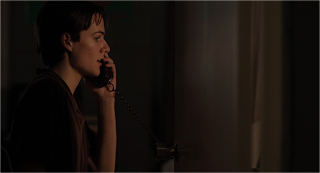
The next thing I want to talk about is family and relationships. The picture above is from the movie Milk in which this young person calls up Harvey Milk for help as his parents are about to send him off to be degayed. He’s advised to run away, and get to a big city. The image then zooms out, revealing he’s a wheelchair user. That story had a happy ending, but many don’t.
It’s hard enough escaping from abusive or bigoted family - but if you have limited mobility, if sleeping on a couch isn’t possible for you, if you need personal care provided by your parents, if they’re the ones who take you to medical appointments, if public transport is inaccessible and your escape can be attributed to your disability then it’s a whole other story. You’ve probably heard about parents of disabled adults fighting to be paid for carework in the news recently. Mostly it’s been fought from the angle of these parents’ rights - which is important. But it’s also important that disabled people are not forced to live with family members longer than they would otherwise choose for financial reasons.
Similarly, there can be pressure for disabled people to stay in relationships longer than they otherwise would if they are meeting support needs - this includes abusive relationships, but also those which have simply run their course. I think this issue is particularly important to the queer community, not just because abuse in queer relationships is under recognised, but because we place a lot of value on the fight to be accepted as in relationships, and we need to understand that for some leaving can be just as much as a struggle.
The sexuality and gender identity of disabled people can be linked to their disabled status in a way which pathologises or dismisses that identity. For example, asexual disabled people are assumed to be examples of the belief that ‘disabled people don’t have sex’ rather than having their identity acknowledged in its own right. Disabled lesbians are assumed to be lesbian because they can’t get a man. Genderqueer disabled people can be assumed to be confused or lack understanding of social appropriateness.
That said, I think queer people can often be unaware of the complex ways sexuality and gender identiy can be linked to disability for some people. To give just one specific example, a lot of autistic people see themselves as outside the gender binary. And a number of them would never identify as genderqueer or join groups catering for queer and gender diverse people (though of course some do!). They might see their gender identity as an extension of their autistic identity, but not talk in the terms or feel welcome in the spaces that other non-binary people do.
Disabled queer people of course experience similar issues to many who experience more than one form of oppression. The more acceptable norms a person fits, the more easily they can get away with breaking others. Sometimes this starts externally, and becomes internal, with people trying to hide one part of themselves because it is all ‘too much’.
Okay, shoe time:

Say (to make it simple) if you were at a queer women’s group, and a woman walked in wearing one of these pairs of shoes. You’d probably assume it related to her identity in some way. If I gave you two stereotype hairstyles, I’m sure you could match them with the shoes - and you might make some assumptions about the type of person she is and what she does with her time.
I look at those shoes and see one pair I could never ever conceive of wearing anything like them, because I’d fall over, and another that I might manage but would be a struggle. I don’t see identity; I see functionality. But so much of identity in the queer community is assumed to be tied up with what we wear or how we look which excludes those of us who have limited choices in this matter.
Related to this is the label of ‘assimilationist’. To me, an assimilationist position is one in which someone seeks to advance the position of their own group whilst leaving the system intact, someone who (for example) focuses on fighting for rich white gay men to have the same rights as rich white straight men, and thinks that’s as far as it needs to go. But I’ve seen it directed at individuals for focussing on meeting personal needs or living a conventional lifestyle.
The truth is, we all do what we need to survive in this society - but the needs of some disabled people may not be recognised as needs. Having - say - a quiet living space or a car because you need it (or even if you don’t need it) isn’t a problem - assuming that because you have the world isn’t broken is. Disabled queer people can also find themselves in a complicated position when it comes to breaking or conforming to stereotypes. The same action can be viewed as challenging stereotypes in one community, but upholding them in others. And therefore we really need to stop making this about our lifestyles, about how we live and what we own, because those don’t change anything. But what we fight for - and how we fight it, collectively - does.
Language and concepts associated with disability - intellectual disability and mental illness in particular - are often used to oppress queer people. Two particular examples come to mind; some of you may remember Constance McMillen, a young person in Mississippi who was not allowed to take her same sex partner to her school prom. After public pressure, the school seemingly relented, only trick to her into what was dubbed a ‘fake’ prom with her intellectually disabled classmates, whilst the so called ‘real’ prom went on elsewhere. Meanwhile in New Zealand a woman recently received an apology for years of medical abuse - including electro-convulsive therapy - resulting from her sexual orientation.
And I think it’s so important we’re careful how we respond to these. Our response shouldn’t be “this abuse was so bad because she wasn’t really mentally ill” or “it was wrong to segregate her from the rest of her school because she’s not intellectually disabled” but to acknowledge that people are on the receiving end of similar forms of oppression for ostensibly different reasons and we need to fight it together.
As a queer disabled person, the disadvantages and exclusion you face end up being multiplied. It’s hard to find queer friendly housing, and it’s hard to find accessible - which may mean quiet or dry or wheelchair accessible - housing. If you need both, you get slammed. Queer friendly healthcare isn’t that easily come by - but try finding queer friendly healthcare that is accessible and includes the specialist knowledge you might need. Queer people generally get useless, inappropriate and often outright damaging sex education. Disabled people can get the same, or often don’t get it at all, perhaps because we are assumed to be non-sexual, because we are removed from those classes for extra tuition, because it is not offered in a way we can understand or interpret or because it is not appropriate to our bodies. Again, the effect is multiplied.
Queer spaces are too often inaccessible - even on the most basic level of being wheelchair accessible. It's not acceptable, and constitutes a 'not welcome' sign on the door for many disabled people. And whilst this isn't okay anywhere, I think most of us here know how essential queer spaces can be, and that they're often the place you go after being excluded from anywhere else. Accessibility needs can be quite varied, though - to give one personal example, I struggle with the reliance on bars and clubs as queer spaces because I have problems in noisy environments. I'm happy that more and more alternatives are being offered, but there's a long way to go. Accessibility is often overlooked in event planning, but it needs to become as routine as booking a room or putting up posters.

The next thing I want to talk about is family and relationships. The picture above is from the movie Milk in which this young person calls up Harvey Milk for help as his parents are about to send him off to be degayed. He’s advised to run away, and get to a big city. The image then zooms out, revealing he’s a wheelchair user. That story had a happy ending, but many don’t.
It’s hard enough escaping from abusive or bigoted family - but if you have limited mobility, if sleeping on a couch isn’t possible for you, if you need personal care provided by your parents, if they’re the ones who take you to medical appointments, if public transport is inaccessible and your escape can be attributed to your disability then it’s a whole other story. You’ve probably heard about parents of disabled adults fighting to be paid for carework in the news recently. Mostly it’s been fought from the angle of these parents’ rights - which is important. But it’s also important that disabled people are not forced to live with family members longer than they would otherwise choose for financial reasons.
Similarly, there can be pressure for disabled people to stay in relationships longer than they otherwise would if they are meeting support needs - this includes abusive relationships, but also those which have simply run their course. I think this issue is particularly important to the queer community, not just because abuse in queer relationships is under recognised, but because we place a lot of value on the fight to be accepted as in relationships, and we need to understand that for some leaving can be just as much as a struggle.
The sexuality and gender identity of disabled people can be linked to their disabled status in a way which pathologises or dismisses that identity. For example, asexual disabled people are assumed to be examples of the belief that ‘disabled people don’t have sex’ rather than having their identity acknowledged in its own right. Disabled lesbians are assumed to be lesbian because they can’t get a man. Genderqueer disabled people can be assumed to be confused or lack understanding of social appropriateness.
That said, I think queer people can often be unaware of the complex ways sexuality and gender identiy can be linked to disability for some people. To give just one specific example, a lot of autistic people see themselves as outside the gender binary. And a number of them would never identify as genderqueer or join groups catering for queer and gender diverse people (though of course some do!). They might see their gender identity as an extension of their autistic identity, but not talk in the terms or feel welcome in the spaces that other non-binary people do.
Disabled queer people of course experience similar issues to many who experience more than one form of oppression. The more acceptable norms a person fits, the more easily they can get away with breaking others. Sometimes this starts externally, and becomes internal, with people trying to hide one part of themselves because it is all ‘too much’.
Okay, shoe time:

Say (to make it simple) if you were at a queer women’s group, and a woman walked in wearing one of these pairs of shoes. You’d probably assume it related to her identity in some way. If I gave you two stereotype hairstyles, I’m sure you could match them with the shoes - and you might make some assumptions about the type of person she is and what she does with her time.
I look at those shoes and see one pair I could never ever conceive of wearing anything like them, because I’d fall over, and another that I might manage but would be a struggle. I don’t see identity; I see functionality. But so much of identity in the queer community is assumed to be tied up with what we wear or how we look which excludes those of us who have limited choices in this matter.
Related to this is the label of ‘assimilationist’. To me, an assimilationist position is one in which someone seeks to advance the position of their own group whilst leaving the system intact, someone who (for example) focuses on fighting for rich white gay men to have the same rights as rich white straight men, and thinks that’s as far as it needs to go. But I’ve seen it directed at individuals for focussing on meeting personal needs or living a conventional lifestyle.
The truth is, we all do what we need to survive in this society - but the needs of some disabled people may not be recognised as needs. Having - say - a quiet living space or a car because you need it (or even if you don’t need it) isn’t a problem - assuming that because you have the world isn’t broken is. Disabled queer people can also find themselves in a complicated position when it comes to breaking or conforming to stereotypes. The same action can be viewed as challenging stereotypes in one community, but upholding them in others. And therefore we really need to stop making this about our lifestyles, about how we live and what we own, because those don’t change anything. But what we fight for - and how we fight it, collectively - does.
Language and concepts associated with disability - intellectual disability and mental illness in particular - are often used to oppress queer people. Two particular examples come to mind; some of you may remember Constance McMillen, a young person in Mississippi who was not allowed to take her same sex partner to her school prom. After public pressure, the school seemingly relented, only trick to her into what was dubbed a ‘fake’ prom with her intellectually disabled classmates, whilst the so called ‘real’ prom went on elsewhere. Meanwhile in New Zealand a woman recently received an apology for years of medical abuse - including electro-convulsive therapy - resulting from her sexual orientation.
And I think it’s so important we’re careful how we respond to these. Our response shouldn’t be “this abuse was so bad because she wasn’t really mentally ill” or “it was wrong to segregate her from the rest of her school because she’s not intellectually disabled” but to acknowledge that people are on the receiving end of similar forms of oppression for ostensibly different reasons and we need to fight it together.
Tuesday, 31 July 2012
Bridges, Boundaries and Territories
At the beginning of the year, I was finally diagnosed as autistic. I’ve been struggling to blog since.
This isn’t an apology for that, or a promise to do better - though I hope to some extent it will motivate me to consider this near hiatus at an end. It’s a post about the bridges we have to form, and the pressures of talking about experiences outside the mainstream.
The problem wasn’t that I was devastated by the news (I wasn’t). It wasn’t that I was absorbed in reevaluating my whole life (even though some of that did go on). It wasn’t that I was so obsessed with finding information that I had no time to disseminate any of my own (though I did read twelve books in the three days following).
It wasn’t that I had no thoughts to blog - I had thousands. It wasn’t that none of them were relevant, directly or indirectly, to a feminist blog, because many were. I thought about - and may still write about - how autistic women and girls are routinely un and misdiagnosed due to gender stereotypes, the particular intersections of discrimination we face, how autism relates to the gender binary and what lies outside it. I could have contrasted my experiences of coming out queer and coming out autistic or what it means to believe that action must be collective, but also not be able to handle being around other people very well. I wanted to share writing by amazing autistic activists.
It’s that once again I found myself in a minority community and group, and I had no idea where the boundaries between that group and the majority world were, where the bridges were, where one territory ended and another began, and which were the fuzzy areas, those of indeterminate governance, or where tourists were welcomed. It’s because I found suddenly there were all these words and concepts that described my experiences where previously there were none, but I didn’t know how accessible they would be to a general audience, when I should use them, when I should explain them. It’s because I didn’t know what to explain, if I had to do 101 at the start of every post, what assumptions readers would come with, what stereotypes I needed to dispel, that even though a diagnosis was largely a confirmation of an existing state my frames of reference shifted immensely, and I wasn’t sure, even with an unrelated blog post, just how much and how that would impact my writing.
These considerations aren’t wholly negative. I’m finding my way through them, as I’ve done in other areas before. But there’s always this layer we have to think through, write through, always this process of figuring out where we are on the map and what roads connect us and where they are blocked, uneven, or take an unexpected turn.
This isn’t an apology for that, or a promise to do better - though I hope to some extent it will motivate me to consider this near hiatus at an end. It’s a post about the bridges we have to form, and the pressures of talking about experiences outside the mainstream.
The problem wasn’t that I was devastated by the news (I wasn’t). It wasn’t that I was absorbed in reevaluating my whole life (even though some of that did go on). It wasn’t that I was so obsessed with finding information that I had no time to disseminate any of my own (though I did read twelve books in the three days following).
It wasn’t that I had no thoughts to blog - I had thousands. It wasn’t that none of them were relevant, directly or indirectly, to a feminist blog, because many were. I thought about - and may still write about - how autistic women and girls are routinely un and misdiagnosed due to gender stereotypes, the particular intersections of discrimination we face, how autism relates to the gender binary and what lies outside it. I could have contrasted my experiences of coming out queer and coming out autistic or what it means to believe that action must be collective, but also not be able to handle being around other people very well. I wanted to share writing by amazing autistic activists.
It’s that once again I found myself in a minority community and group, and I had no idea where the boundaries between that group and the majority world were, where the bridges were, where one territory ended and another began, and which were the fuzzy areas, those of indeterminate governance, or where tourists were welcomed. It’s because I found suddenly there were all these words and concepts that described my experiences where previously there were none, but I didn’t know how accessible they would be to a general audience, when I should use them, when I should explain them. It’s because I didn’t know what to explain, if I had to do 101 at the start of every post, what assumptions readers would come with, what stereotypes I needed to dispel, that even though a diagnosis was largely a confirmation of an existing state my frames of reference shifted immensely, and I wasn’t sure, even with an unrelated blog post, just how much and how that would impact my writing.
These considerations aren’t wholly negative. I’m finding my way through them, as I’ve done in other areas before. But there’s always this layer we have to think through, write through, always this process of figuring out where we are on the map and what roads connect us and where they are blocked, uneven, or take an unexpected turn.
Saturday, 7 April 2012
Conversations I want to have
The following was recently published in 'Thinking Differently', the quarterly newsletter of Autism New Zealand Inc.
I'm angry and saddened that it was written, more so that Autism New Zealand saw fit to publish such an offensive letter whilst stating that it presents 'a valid point of view'. But I'm perhaps most frustrated at the way it has set the agenda, that to counteract this it feels necessary to scrabble round for statistics saying that we're not any more likely to murder or rape than "normal people". I don't want to have to come up with examples of how we're the good "Aspergers" who pay our taxes and follow the law and have never had so much as a speeding fine. Those aren't the conversations I want to have.'Your Letters'This is an excerpt from a letter we received from one reader, who had been married to a man with Aspergers Syndrome. She discovered he'd been sexually interfering with her 11-year old twin daughters and eventual divorced him. The letter is extensive, but she presents a valid point of view, based on her experience.
"The Law is there to protect others from those behaviours. Aspergers should not be exempt from the law or being locked up. I do believe many serial killers and rapists have Aspergers. They can be cunning and devious. Aspergers do commit crimes, probably more often than normal people. We matter too."
H---- F--- (abridged)
I don't think there's any way to usefully engage with the idea of 'serial killers'. Is regular murder not shocking enough? There really aren't enough serial killers out there for this to be a meaningful discussion. I don't believe aspies are any more likely to be rapists than the general population. If there's evidence of a statistically significant disparity, that needs to be looked at, but in a country and world with the rates of rape and associated violence that exists, along with the terrible conviction rates and limited government willingness to do anything about either, I feel there are more important things to engage in that idle speculation about who does it most.
But let's leave aside the serial killers and the rapists for a second. Let's talk about the aspies who end up in the justice system for vandalism, for theft, for getting into fights or retaliating against violence. Lets talk about those who have not done what they're accused of but can't stand up to questioning or navigate the legal system (as a teenager I admitted to shoplifting I hadn't done (fortunately avoiding a criminal charge) because security guard told me I had no choice but to admit it and I believed that, literally, and because I didn't see any way anyone would understand my compulsive need to read song lyrics anyway). If the main backbone of the conversation is that statistically most of us are law abiding, if those of us who can go round flaunting our jobs and our taxpaying and our relationships and our degrees and our mortgages and our nice clean criminal records, then we're feeling good about ourselves and changing absolutely nothing.
So instead, let's have a conversation about a world which makes things unbearable for us, and when we lash out, potentially at people or at objects, the solution is not to change the environment to prevent a reoccurance, but to punish us. Let's have a conversation about how difficult legal systems are to navigate, how atypical facial expressions or eye contact are so often assumed to mean guilt, how a neurotypical person can sometimes avoid a charge for a minor offence with a "sorry mate" whilst pedantic questioning of language and the nature of the offence is almost certainly going to lead to an arrest. Let's talk about how atypical movement or gestures or reasons for going to places is viewed as grounds for suspicion, how silence is viewed as stubbornness or lack of co-operation, how literal interpretation of questions is viewed as rudeness. Let's talk about how the effect is doubled, tripled for people already disadvantaged in our legal system.
Let's not be afraid to have a conversation about prisons. When people say we don't lock up autistic people/mentally ill people/intellectually impaired people, I always want to ask what the hell they think prisons are other than a dumping ground with disproportionate rates of all of the above. And I get why we're afraid to talk about this - we've spent so long trying to say that we're good people really, we're not scary people, we could be your neighbour. But we need to challenge the assumption that there's a perfect correlation between 'in prison' and 'bad person', or that crimes exist in some kind of vacuum as an indicator of someone's morality, rather than being socially constructed.
Yes, it is worth challenging such obvious bigotry, the inaccruate assumptions, the stereotyping and the offensive language. And then let's move on. If we're talking about Aspergers and crime, let's talk about parents who murder autistic children and are then treated with sympathy, about autistic people who have been raped and are then told their non-verbal communication is inadmissable in court. Let's talk less about how some cunning and devious aspies can apparently get away with everything (something I'd guess would have far more to with the numbers who get away with child abuse generally) and more about how the legal system fails aspies on both sides.
Wednesday, 15 February 2012
An enabling alternative universe
30 November 2011
Dear Ms Mathers,
I'd like to extend my congratulations to you, and welcome you into your new role as a member of parliament. You will be aware that I have held the Speaker's role in the last parliament, a role which holds some responsibility in terms of parliamentary funding.
I am of course aware that you will be the first member of New Zealand's parliament with a hearing impairment, and would like to ascertain whether there is anything you will require in order to make your working environment here in parliament, and your ability to participate as a representative, work smoothly. This may also provide us with an opportunity to consider the many hearing impaired people in New Zealand's communities who may not always be able to access our democratic debates in progress, and I welcome your input and guidance in this area.
I am aware that if expenditure is required in order to ensure you can participate fully, the Speaker will possibly need to refer this decision to the appropriate committee. Fortunately, we are breaking over the Christmas period for several weeks, so if you were able to make us aware of your needs before this period, it's my expectation that we should be able to resolve any communication needs in a timely way to ensure in 2012 you will be able to participate fully.
Congratulations once again. I have been a member of parliament for a long time, and it continues to be an honour to represent our New Zealand communities.
Yours sincerely,
Lockwood Smith
Dear Ms Mathers,
I'd like to extend my congratulations to you, and welcome you into your new role as a member of parliament. You will be aware that I have held the Speaker's role in the last parliament, a role which holds some responsibility in terms of parliamentary funding.
I am of course aware that you will be the first member of New Zealand's parliament with a hearing impairment, and would like to ascertain whether there is anything you will require in order to make your working environment here in parliament, and your ability to participate as a representative, work smoothly. This may also provide us with an opportunity to consider the many hearing impaired people in New Zealand's communities who may not always be able to access our democratic debates in progress, and I welcome your input and guidance in this area.
I am aware that if expenditure is required in order to ensure you can participate fully, the Speaker will possibly need to refer this decision to the appropriate committee. Fortunately, we are breaking over the Christmas period for several weeks, so if you were able to make us aware of your needs before this period, it's my expectation that we should be able to resolve any communication needs in a timely way to ensure in 2012 you will be able to participate fully.
Congratulations once again. I have been a member of parliament for a long time, and it continues to be an honour to represent our New Zealand communities.
Yours sincerely,
Lockwood Smith
Tuesday, 24 January 2012
Uncomfortable Overlaps
A few years ago, I sought counselling from a feminist organisation. I had effectively untreated and quite serious PTSD from events earlier in my life, and there were a couple of other smaller stresses on me at that time. I've never had a good time with counselors; my previous experiences had ranged from outright homophobia and pretty significant verbal abuse to my pissing them off for reasons I simply couldn't identify. Suffice it to say that I didn't try again until I really needed to.
Said feminist organisation was the only option - at least that I was aware of - that was possible given my budget. I wasn't comfortable with it from the start; I knew people whose employment or voluntary work brought them into contact with it in a professional capacity. Rationally, most of the people I had in mind were caring and supportive - or at least capable of acting so. But every week I sat in the waiting room on the verge of throwing up from the fear that I would meet someone I knew and explain that I was not there in my usual activist role. However much I believed there was no shame in being there, I was utterly ashamed.
This post is an attempt to untangle, both from personal experience and a more theoretical standpoint some of the issues around the uncomfortable intersection between the activist community and the provisions and receipt of services (none of these are ideal terms, but I lack better ones). And the first point is criticism. Because my experience wasn't good. It involved - and I won't go into the details - significant amounts of implied victim blaming, repeated dismissal of my disabilities, telling me to do things I'd explicitly identified as triggering and ultimately - when the counselor left the service - dropping me when I was in an obviously incredibly vulnerable state without any kind of follow up.
Yet I really hesitated about writing this post. It's been brewing in my head for a while, and I'm still not sure if I'll actually click 'publish'. And one of the reasons is I feel uncomfortable criticising this organisation when I know many people who do important work to support it. I don't think I personally know anyone who works or volunteers there, but I could. They're the sort of people I organise events alongside, go to meetings with, march with. It goes against a lot of instinct - even though the only place my criticism gets personal is against that one counsellor - to criticise when we should be standing together against some scary common enemy, or something like that. Moreover, I know this organisation and others like it are horribly underfunded and need support - and they do help a lot of people and I really don't want to undermine that in any way. It's not a new, or an unusual quandry - how to criticise from within a marginalised group or perspective without reinforcing that coming from without, but I think it has a particularly concerning place here.
The second point is about supporting people who are within activist groups. This is a much bigger topic than I have the scope for here, and a lot has been written about it. But all I've found is centred on two things; one is when someone is being supported with an issue that relates to the group (for example abuse by another group member) or short term support - such as someone being triggered within a meeting. I don't necessarily consider this a bad thing, or that activist groups should be taking on long term support roles - in fact, I think often the danger is taking on too much and it is better to draw a clear line around what can and can't be done well. But where activism and service provision are mixed, things can become problematic, and I'm not sure a lot of people involved even note this as an issue.
Part of this relates to heirarchy. This is not to discount the hierarchy present within activist organisations, and part of this is personal - I really struggle with interacting with medical and related services and I tend to thrive in environments where I get to talk loudly, organise things and play with websites and mailing lists. I appreciate this isn't universal. But the movement of the same people, involving the same issues, between the fuzzy, ill defined and informal roles and heirarchy of informal activist groups and the really clear cut roles of (say) counsellor and client is not necessarily an easy one. And then - more simply but perhaps hard to resolve - simpler issues like confidentiality and how relationships change between spaces.
I think also, there are different stories told in service provision and activist groups. I'm sure there are a lot of exceptions to these, as there are people about whom they are true, but as much as anything it's the assumptions that are made that's relevant. One, by (generally charitable) service providers, is of the client who comes to them with a problem; usually there are multiple things wrong in their life. They are helped by the organisation, they grow in confidence. They volunteer for the group and become a campaigner on the issue they experienced. The other story is - well I've found it most common in socialist groups, particularly around sexual orientation, but I think it's wider than that - of people who participate in activism for a cause, perhaps defending people they care about, perhaps because it relates to something else they're involved in, perhaps seeing it in pretty abstract terms initially. It's that involvement that gives them the knowledge and confidence to address it in their own lives.
And there are problems - probably for both groups - in reconciling these two stories. It was really hard to explain that yes, I'd organised a reclaim the night march (hey look, there's the poster for it on the wall right there), yes, I'd blogged for the best part of the year on victim blaming, but that doesn't mean that I haven't internalised a whole lot of these ideas.
The third angle I wanted to talk about was exclusion. Whilst the counselor crossed some very clear lines with me, as others have done, I'm increasingly seeing my general negative interactions in terms of my disability status. I didn't fit into the typical mold of people they catered for, and they didn't cater for me. The lack of acknowledgement or understanding of this is what makes it particularly problematic, but even with that, it's exclusionary.
I'm reasonably confident in my response to groups that deliberately discriminate against groups of people (it ain't positive). I also recognise that they cannot provide services to all people, and that there are legitimate limits to what they can and can't do. But this indirect exclusion becomes more difficult when there are discrepancies between a funded service provider that may well have a mandate to meet the more typical needs of the majority, versus a dynamic where questioning such exclusions is a discussion that comes naturally to some of the members.
On a personal level, I found options that worked for me and I am doing much better now. Options that required having someone to help me research them, and a disposable income, both of which I had, neither of which should be expected. On a more general level... once again, I feel only that I have a whole heap of issues to raise and no solutions to offer, but it's a start.
Comment direction: no speculation about the identities of individuals and organisations involved please. It makes me really uncomfortable and isn't relevant. I ask you to remember that this post represents my thoughts and experiences and not necessarily those of anyone else at THM.
Friday, 9 December 2011
Abortion, Eugenics, and Big Things like that
I feel a bit icky criticising a pro-choice article in the local media; it's not like there's a lot of them and Richard Boock's written some good stuff lately. I have time for much of 'A Woman's Right to Choose'; not least the unashamed, no apologies, pro-choice stand. But this, this I struggle with:
Abortion and disability is a really complicated subject. I'm far - oh so far - from having all the answers. But if we characterise such concerns - concerns which have very real importance - as the territory of "bat-shit crazy" (which probably wasn't the best wording under the circumstances) anti-choice advocates we're not only alienating people within or potentially supportive of, pro-choice networks, we're also avoiding an important discussion.
But to compare pre-natal Down syndrome testing (and associated terminations) with eugenics only reminds us how bat-shit crazy so many of them are.I doubt the motives of the anti-abortion groups at least as much as Boock does. But issues around pre-natal testing are things we should be discussing. I wouldn't compare them to eugenics (and if it's not clear, I support the right of a woman to have an abortion for any reason) but I also don't see any way we can have a clear discussion about this without referring to eugenics.
Abortion and disability is a really complicated subject. I'm far - oh so far - from having all the answers. But if we characterise such concerns - concerns which have very real importance - as the territory of "bat-shit crazy" (which probably wasn't the best wording under the circumstances) anti-choice advocates we're not only alienating people within or potentially supportive of, pro-choice networks, we're also avoiding an important discussion.
Sunday, 4 December 2011
Lazy
There have been a few things that have inspired this post. I've
really appreciated the voices emerging from the fat positive/size
acceptance movement challenging the idea that anyone has any obligation
to be healthy. Amongst others, there are some excellent posts on this is at The Fat Nutritionist and Raising My Boy Chick. But there is little
equivalent of these when it comes to that other stereotype attached to
fatness: laziness.
Then there's this image which has been going round on Facebook, which reads as follows:

(This image annoys me a lot).
There's personal experience also. I have a disability which makes certain tasks either extremely difficult or very slow. Particularly as a child, but sometimes still, I've been called lazy as a result of that. And on the flip side of that, I found some activities so incredibly easy that I could do them in half the time others did and spend half of that time staring in to space - and worried that I must be being incredibly lazy as a result. I have something of a terror of being seen as lazy, and at times have pushed myself to injury by taking on unsustainable amounts of work to avoid that.
And then there's the speculation on why the turnout at the election was so low. There have been a number of comments along the lines of "I don't mind people who make a conscious decision not to vote but I do when they're just too lazy."
When I started to think about laziness, I struggled to understand what exactly it was. It's something we talk about all the time, but none of the definitions I could find really made sense. Dictionary.com is probably as good a starting place as any:
I think we can safely ignore 4 for the purposes of this discussion. 2 and 3 (and I know these are not specifically applied to people, but the associations are still there) have real value judgements implicit in them. 3 is related to speed. There are a lot of values we attach to speed (remember that 'I want to punch slow moving people in the back of the head' facebook group). Speed of movement, speed of thought, speed of learning. Huge issues there when thinking about disability.
When it comes to 1, here's the definition of idleness (and I promise I won't spend all this post quoting dictionary.com:
Everything there screams judgements on the value of work or activity. And we've all heard those before. Women's work vs men's work. Paid work vs unpaid work. Paid work vs unpaid work vs non work activities. Etc.
I think the first definition of lazy is the most interesting. It refers to not wanting to work, the favourite trope of beneficiary bashers everywhere. But if the definition of work is relatively complicated, that of activity is even more so. Not to be facetious, but what is not an activity? Watching television is as much an activity as running a marathon but only one of those activities would led the participant to accusations of laziness. So the way I'm looking at this is in terms of allocation of resources (and yes, I do find it deeply ironic that the image I posted referred to spoons). Laziness is a value judgement on how we, usually as individuals, allocate our personal resources.
The image I posted earlier, the one that berates people for not washing the spoons? Think for a minute about what types of work are involved in washing a metal spoons versus manufacturing a plastic spoon. One is individual, the other is part of a process involving many people, which theoretically allows for types of work to be allocated according to people's abilities, for predictable shifts, sick leave. It may not in practice, but the idea is not alien. Washing a spoon isn't a big deal - unless turning on taps is painful or impossible. If you take lunch to eat outside the home and there are no washing facilities, it should be easy to take it home and wash it. If you don't have memory impairments that mean chances are the remaining yoghurt on it will end up going mouldy in your bag. If you have a car to put it in rather than cart it round with you all day, that makes things easier. If you can afford a dishwasher, that makes things easier. If you are responsible for a number of people, you're going to have more spoons to wash. And it's not going to be just spoons - the same extends to plates and forks and cups.
So there are two things going on here. One is presenting washing a spoon as an activity which takes a universally equal and minimal amount of effort, rather than a task that can be difficult or impossible or cause a whole series of problems, depending on the individual and their resources. The other is to compare two ideas of work: one linked with individual unpaid labour in the home; the other paid employment in often traditionally male occupations. The former is a trivial activity; the latter hard and excessive work.
Voting is an allocation of resources also. I think in this country voting, for most people, uses less resources than it does in most others, and I'm happy about that. But it still requires resources, mental and physical. To complain about someone not voting, you're claiming the right to a say in how they allocate their personal resources. And that may well be in ignorance about factors which either cause them to have less personal resources, or to have more demands on those resources. I know people are frustrated about the result of the election, and see - rightly or wrongly - a low turnout as partly responsible. But if increasing the turnout is a primary goal for you, berating individuals is not the way to do it.
Of course, as I indicated at the beginning of this post, laziness is implicitly linked to fat. 'Fat and lazy' is such an automatic phrase I had to stop and think about why they are associated. Of course, there's the obvious belief that lack of physical activity causes fatness - or fatness causes lack of activity - or... oh dear god people, please make up your minds. In any case, it comes back to the privileging of one activity (physical exercise) over others. But there's more to it than that. By being fat, there's an implied judgement that you have allocated resources incorrectly - you have consumed too much and you have worked too little. Accusations of laziness are simply the next strand of that. Your allocation of resources is a moral failing on your part.
We all have things we should do. But that is not the same as giving some activities inherent moral worth (as opposed to moral value attached to what happens as a result of these, which is a different question entirely) over others nor is it demanding a certain level of exertion, physical or intellectual, for a person to be considered worthy or 'not lazy'. I think judgements such as these are very common in activist groups - I'm sure I've made them myself and I've certainly had them made against me. But laziness is, when it comes down to it, full of implied fatphobia and makes - often heavily gendered - statements about what work is and isn't valued, something I've had more than enough of.
Then there's this image which has been going round on Facebook, which reads as follows:

IT’S PRETTY AMAZING THAT
OUR SOCIETY HAS REACHED A POINT
WHERE THE EFFORT NECESSARY TO

EXTRACT OIL FROM THE GROUND
SHIP IT TO A REFINERY
TURN IT INTO PLASTIC
SHAPE IT APPROPRIATELY
TRUCK IT TO A STORE
BUY IT AND BRING IT HOME

IS CONSIDERED TO BE LESS EFFORT THAN WHAT IT TAKES
TO JUST WASH THE SPOON WHEN YOU’RE DONE WITH IT.
(This image annoys me a lot).
There's personal experience also. I have a disability which makes certain tasks either extremely difficult or very slow. Particularly as a child, but sometimes still, I've been called lazy as a result of that. And on the flip side of that, I found some activities so incredibly easy that I could do them in half the time others did and spend half of that time staring in to space - and worried that I must be being incredibly lazy as a result. I have something of a terror of being seen as lazy, and at times have pushed myself to injury by taking on unsustainable amounts of work to avoid that.
And then there's the speculation on why the turnout at the election was so low. There have been a number of comments along the lines of "I don't mind people who make a conscious decision not to vote but I do when they're just too lazy."
When I started to think about laziness, I struggled to understand what exactly it was. It's something we talk about all the time, but none of the definitions I could find really made sense. Dictionary.com is probably as good a starting place as any:
lazy [ley-zee] Origin la·zy [ley-zee] Show IPA adjective, -zi·er, -zi·est, verb, -zied, -zy·ing. adjective
1. averse or disinclined to work, activity, or exertion; indolent.
2. causing idleness or indolence: a hot, lazy afternoon.
3. slow-moving; sluggish: a lazy stream.
4. (of a livestock brand) placed on its side instead of upright.
I think we can safely ignore 4 for the purposes of this discussion. 2 and 3 (and I know these are not specifically applied to people, but the associations are still there) have real value judgements implicit in them. 3 is related to speed. There are a lot of values we attach to speed (remember that 'I want to punch slow moving people in the back of the head' facebook group). Speed of movement, speed of thought, speed of learning. Huge issues there when thinking about disability.
When it comes to 1, here's the definition of idleness (and I promise I won't spend all this post quoting dictionary.com:
idleness [ahyd-l] Origin i·dle [ahyd-l] Show IPA adjective, i·dler, i·dlest, verb i·dled, i·dling, noun adjective
1. not working or active; unemployed; doing nothing: idle workers.
2. not spent or filled with activity: idle hours.
3. not in use or operation; not kept busy: idle machinery.
4. habitually doing nothing or avoiding work; lazy.
5. of no real worth, importance, or significance: idle talk.
Everything there screams judgements on the value of work or activity. And we've all heard those before. Women's work vs men's work. Paid work vs unpaid work. Paid work vs unpaid work vs non work activities. Etc.
I think the first definition of lazy is the most interesting. It refers to not wanting to work, the favourite trope of beneficiary bashers everywhere. But if the definition of work is relatively complicated, that of activity is even more so. Not to be facetious, but what is not an activity? Watching television is as much an activity as running a marathon but only one of those activities would led the participant to accusations of laziness. So the way I'm looking at this is in terms of allocation of resources (and yes, I do find it deeply ironic that the image I posted referred to spoons). Laziness is a value judgement on how we, usually as individuals, allocate our personal resources.
The image I posted earlier, the one that berates people for not washing the spoons? Think for a minute about what types of work are involved in washing a metal spoons versus manufacturing a plastic spoon. One is individual, the other is part of a process involving many people, which theoretically allows for types of work to be allocated according to people's abilities, for predictable shifts, sick leave. It may not in practice, but the idea is not alien. Washing a spoon isn't a big deal - unless turning on taps is painful or impossible. If you take lunch to eat outside the home and there are no washing facilities, it should be easy to take it home and wash it. If you don't have memory impairments that mean chances are the remaining yoghurt on it will end up going mouldy in your bag. If you have a car to put it in rather than cart it round with you all day, that makes things easier. If you can afford a dishwasher, that makes things easier. If you are responsible for a number of people, you're going to have more spoons to wash. And it's not going to be just spoons - the same extends to plates and forks and cups.
So there are two things going on here. One is presenting washing a spoon as an activity which takes a universally equal and minimal amount of effort, rather than a task that can be difficult or impossible or cause a whole series of problems, depending on the individual and their resources. The other is to compare two ideas of work: one linked with individual unpaid labour in the home; the other paid employment in often traditionally male occupations. The former is a trivial activity; the latter hard and excessive work.
Voting is an allocation of resources also. I think in this country voting, for most people, uses less resources than it does in most others, and I'm happy about that. But it still requires resources, mental and physical. To complain about someone not voting, you're claiming the right to a say in how they allocate their personal resources. And that may well be in ignorance about factors which either cause them to have less personal resources, or to have more demands on those resources. I know people are frustrated about the result of the election, and see - rightly or wrongly - a low turnout as partly responsible. But if increasing the turnout is a primary goal for you, berating individuals is not the way to do it.
Of course, as I indicated at the beginning of this post, laziness is implicitly linked to fat. 'Fat and lazy' is such an automatic phrase I had to stop and think about why they are associated. Of course, there's the obvious belief that lack of physical activity causes fatness - or fatness causes lack of activity - or... oh dear god people, please make up your minds. In any case, it comes back to the privileging of one activity (physical exercise) over others. But there's more to it than that. By being fat, there's an implied judgement that you have allocated resources incorrectly - you have consumed too much and you have worked too little. Accusations of laziness are simply the next strand of that. Your allocation of resources is a moral failing on your part.
We all have things we should do. But that is not the same as giving some activities inherent moral worth (as opposed to moral value attached to what happens as a result of these, which is a different question entirely) over others nor is it demanding a certain level of exertion, physical or intellectual, for a person to be considered worthy or 'not lazy'. I think judgements such as these are very common in activist groups - I'm sure I've made them myself and I've certainly had them made against me. But laziness is, when it comes down to it, full of implied fatphobia and makes - often heavily gendered - statements about what work is and isn't valued, something I've had more than enough of.
Thursday, 1 December 2011
But they do such good work...
Today I'll just be the grumpy feminist, sitting over here in the corner complaining about charity at Christmastime. How many times have you heard this:
The idea of good work and of charity generally, is fraught with issues as well, but there's something more specific happening here. There's a division presented between the practical, on the ground, real charity stuff - soup kitchens, emergency accommodation, addiction treatment or whatever. That's concrete and real. The other stuff - homophobia, transphobia, ableism, misogyny etc - that's not nice, but it's purely theoretical and we really should be focused on the important things here. It's not like it makes any difference in practice...
...except it does. Even when charity provisions don't actively discriminate - and sometimes they do, with horrendous consequences - you can be sure that there will be a lot of people who don't feel safe using their services. The people who are discriminated against are both more likely to be in the groups that need services provided by charities, and likely to be in a more difficult situation than many others needing those services.
It's also not the case - as some people assume - that the choice is between having, say, a homeless shelter which isn't accessible to everyone, or no shelter at all. Such services are often partially government funded - the need for them is already recognised; it's simply a case of who the contract goes to. And I like to think that as a society we do see the need for solutions - or at least ambulances at bottoms of cliffs - to these issues, even if not as much or as soon as I'd like.
This isn't a division between real physically tangible things or some fluffy abstract principle. This is about whether kids who can no longer live safely at home get to sleep in appropriate accommodation or on the streets. It's about whether people are able to eat in an environment in which they feel safe, or have to weigh that up versus going hungry. It's about whether people abused by carers have a way out or whether the abuse of them is reinforced. It's about whether can access free counseling that is appropriate to them, or whether they get increasingly and more dangerously desperate. The identities of the people who need them don't make that food or that roof any less concrete, any less needed.
You may or may not have the ability or inclination to donate money. You may feel that it is better going to places that aren't charities in the usual sense of the word (a reminder that CMP meatworkers are still locked out). But if you do chose to make a charitable donation, please make sure that it is to a group that is genuinely in line with your beliefs, and not pushing us two steps backward for every one they take forwards.
"Oh, I obviously don't like a lot of the things [Charity] stands for, but, you know, they do such good work..."
The idea of good work and of charity generally, is fraught with issues as well, but there's something more specific happening here. There's a division presented between the practical, on the ground, real charity stuff - soup kitchens, emergency accommodation, addiction treatment or whatever. That's concrete and real. The other stuff - homophobia, transphobia, ableism, misogyny etc - that's not nice, but it's purely theoretical and we really should be focused on the important things here. It's not like it makes any difference in practice...
...except it does. Even when charity provisions don't actively discriminate - and sometimes they do, with horrendous consequences - you can be sure that there will be a lot of people who don't feel safe using their services. The people who are discriminated against are both more likely to be in the groups that need services provided by charities, and likely to be in a more difficult situation than many others needing those services.
It's also not the case - as some people assume - that the choice is between having, say, a homeless shelter which isn't accessible to everyone, or no shelter at all. Such services are often partially government funded - the need for them is already recognised; it's simply a case of who the contract goes to. And I like to think that as a society we do see the need for solutions - or at least ambulances at bottoms of cliffs - to these issues, even if not as much or as soon as I'd like.
This isn't a division between real physically tangible things or some fluffy abstract principle. This is about whether kids who can no longer live safely at home get to sleep in appropriate accommodation or on the streets. It's about whether people are able to eat in an environment in which they feel safe, or have to weigh that up versus going hungry. It's about whether people abused by carers have a way out or whether the abuse of them is reinforced. It's about whether can access free counseling that is appropriate to them, or whether they get increasingly and more dangerously desperate. The identities of the people who need them don't make that food or that roof any less concrete, any less needed.
You may or may not have the ability or inclination to donate money. You may feel that it is better going to places that aren't charities in the usual sense of the word (a reminder that CMP meatworkers are still locked out). But if you do chose to make a charitable donation, please make sure that it is to a group that is genuinely in line with your beliefs, and not pushing us two steps backward for every one they take forwards.
Wednesday, 30 November 2011
Thinking of the children (and the rest of us)
An acquaintance, someone I once knew well but have largely drifted apart from, posts about her son's screaming in response to various stimuli. She doesn't know why it happens, she says, but it's wearing her down and she doesn't know how to manage it. She's a parent in need of more support than she's getting, like many are. You'd have to be a parent to understand, she says.
My fingers hover over the comment box. I'm pretty sure I know exactly why her son is reacting why he does. I have some educated guesses on things that would make life easier for him - but they start from a different philosophical viewpoint to that she appears to hold. You'd have to be a parent to understand. I click away.
Another time - and really this isn't one time, it's hundreds - I look for advice online on how to do things in a way that accommodates my needs. How to learn to drive. How to arrange meals in a way that works for me. How to survive the commute when people insist on playing music audible over their headphones. I mostly get strategies for helping one's child through primary school. Once I try looking to see if tiredness is a probably cause for an increase in impairment I noticed at a particular time; instead I find posts from parents complaining how tired they are of their child's disability.
I get frustrated by it. The various frustrations subside into one. There's an unspoken assumption that it is the needs of our parents only that matter, and when we cease to be their problem those needs disappear also, or that our needs disappear at age 18* because people fail to acknowledge that just like anyone else we change and grow up and find better ways of interacting with the world, and thus see any changes as a cure. Where less autonomy was a horrible thing - and it was for me - being thought of as a child instills fear. And then there's a feeling of looking at children who are very like you were, and watching the same mistakes being made over again, and you know that it generally has little to do with individuals and far more to do with a society but you're really not sure how to express that to an already stressed out parent.
Then I start thinking elsewhere. And I think of what we do in the queer community. Queerness isn't generally equated to childhood - the opposite in fact, with may queer kids being told they are far too young to understand their identity. And whilst some people do feel the need to be wary of interacting with young people, there are more of us who can't see a kid in school uniform smiling in a queer friendly space without feeling teary.
So when we see marginalised kids in our community but aren't afraid of being considered children ourselves, what do we do? We send books to them or to their schools. We offer them sofas to sleep on. We lend them money or help them navigate hellish systems to claim entitlements. We educate them about safe sex because mostly their schools utterly fail at doing so. We engage in activism and let them yell through the megaphone and oh god they're too young to understand why we yell no blood for oil at every single demo how did this happen? We offer advice on talking to families or schools if needed. We do our level best, in whatever way we think we can - and we know only too well that it's not always enough - to make them feel welcome and accepted and safe.
And what works in one situation doesn't work in others. Queer kids tend to have supportive parents or are pushing away from their parents, sometimes living independently by necessity. Many neuroatypical kids are more dependent than average - whether by reason of their impairment or because there are no facilities set up to enable them to become more independent. It isn't a perfect parallel for many reasons. But as much as I wish that people would stop treating adults like children, or recognising the needs of neurotypical parents only, I also hope we can find a better solution than abandoning and ignoring kids who are like we were.
*well actually a bunch of them did. It's amazing what happens when you learn exercising =/= catching a ball and writing =/= to holding a pen, but that is neither universal, nor does it mean they weren't partially replaced by others.
My fingers hover over the comment box. I'm pretty sure I know exactly why her son is reacting why he does. I have some educated guesses on things that would make life easier for him - but they start from a different philosophical viewpoint to that she appears to hold. You'd have to be a parent to understand. I click away.
Another time - and really this isn't one time, it's hundreds - I look for advice online on how to do things in a way that accommodates my needs. How to learn to drive. How to arrange meals in a way that works for me. How to survive the commute when people insist on playing music audible over their headphones. I mostly get strategies for helping one's child through primary school. Once I try looking to see if tiredness is a probably cause for an increase in impairment I noticed at a particular time; instead I find posts from parents complaining how tired they are of their child's disability.
I get frustrated by it. The various frustrations subside into one. There's an unspoken assumption that it is the needs of our parents only that matter, and when we cease to be their problem those needs disappear also, or that our needs disappear at age 18* because people fail to acknowledge that just like anyone else we change and grow up and find better ways of interacting with the world, and thus see any changes as a cure. Where less autonomy was a horrible thing - and it was for me - being thought of as a child instills fear. And then there's a feeling of looking at children who are very like you were, and watching the same mistakes being made over again, and you know that it generally has little to do with individuals and far more to do with a society but you're really not sure how to express that to an already stressed out parent.
Then I start thinking elsewhere. And I think of what we do in the queer community. Queerness isn't generally equated to childhood - the opposite in fact, with may queer kids being told they are far too young to understand their identity. And whilst some people do feel the need to be wary of interacting with young people, there are more of us who can't see a kid in school uniform smiling in a queer friendly space without feeling teary.
So when we see marginalised kids in our community but aren't afraid of being considered children ourselves, what do we do? We send books to them or to their schools. We offer them sofas to sleep on. We lend them money or help them navigate hellish systems to claim entitlements. We educate them about safe sex because mostly their schools utterly fail at doing so. We engage in activism and let them yell through the megaphone and oh god they're too young to understand why we yell no blood for oil at every single demo how did this happen? We offer advice on talking to families or schools if needed. We do our level best, in whatever way we think we can - and we know only too well that it's not always enough - to make them feel welcome and accepted and safe.
And what works in one situation doesn't work in others. Queer kids tend to have supportive parents or are pushing away from their parents, sometimes living independently by necessity. Many neuroatypical kids are more dependent than average - whether by reason of their impairment or because there are no facilities set up to enable them to become more independent. It isn't a perfect parallel for many reasons. But as much as I wish that people would stop treating adults like children, or recognising the needs of neurotypical parents only, I also hope we can find a better solution than abandoning and ignoring kids who are like we were.
*well actually a bunch of them did. It's amazing what happens when you learn exercising =/= catching a ball and writing =/= to holding a pen, but that is neither universal, nor does it mean they weren't partially replaced by others.
Wednesday, 22 June 2011
Cleaning as a Skill
[This post isn't in response to the recent discussion about the 'I would have got away with it...' cartoon - I've actually been thinking about it for some time, but you may find the links relevant.]
A lot of the defenses of the value of housework come from the perspective of those who do a lot of it. But I think it is just as important for such perspectives to come from those of us who don't do very much at all, and particularly those of us who find it difficult.
A couple of years ago I was living in a house with an old switchboard, the sort where you have to wrap fuse wire round two points. The fuses also happened to be unlabeled. At one point a fuse blew, and so I worked out which fuse was which by testing which lights/appliances when off when I removed various fuses, bought some fuse wire (which is surprisingly hard to find) and replaced the offending fuse.
When I mentioned this to friends, they were shocked that I hadn't called the landlord to send an electrician. Honestly, as someone who had spent half her childhood fiddling round with electric circuits (and though I've forgotten a lot of what I knew then, as may be evident from my vague description, it still makes an instinctive sense) the idea would never have occurred to me.
Yet I imagine a lot of people who couldn't understand why I didn't call an electrician would have been confused or quietly critical (or even loudly critical) if I paid someone to come in and do my vacuuming, and this independent of how much I would pay them. I find vacuuming really, incredible difficult. I literally haven't done it in years (my partner and I have a deal: she vacuums, I empty the vacuum). Yes, in my case I do have a diagnosed neurological condition that this is at least partially the result of, and that would make hiring a vacuumer more acceptable in many people's eyes, but I don't think my argument depends on that fact. Some people are just not good at housework.
I've struggled a bit with a workmate, who I think really does not understand how my struggling when it is my turn to deal with the office kitchen is in any way like her struggling with understanding html (which I find relatively easy). That's because some things, like cleaning, are assumed to be natural, instinctive, anyone can do them, and in particular women are expected to know how to clean without an instruction or effort.
Valuing these things as skills, which take ability and learning, does help lead to greater respect for those who do them, and whilst I do not think this is the cause of the financial disparity between, say, cleaning and other equivalent male occupations, dismissing it as unskilled is used as a justification for that financial disparity, which we need to counter. But it is also a step for those of us who struggle with these skills as seeing this not as a failing as a human being or laziness, but one skill set amongst others which we may lack or have to a lesser degree, and one ability amongst others that may not come naturally to us.
I am absolutely not saying that some people are born to do housework and others aren't. I am particularly wary of how that may be used to justify the greater portion of housework falling on women because they are 'naturally better at it' or some other such bullshit. To the extent that housework is necessary - and I am aware many people take it beyond this, which is their prerogative but not a universal standard - members of a unit need to come to a fair arrangement (which may include contracting of people from outside that unit) that takes account of everyone's skills and abilities, and people are going to need to put some effort into things they find hard, or learn new skills they lack. But I think recognising housework as a skill leads to more respect, and recognition of abilities, all round.
A lot of the defenses of the value of housework come from the perspective of those who do a lot of it. But I think it is just as important for such perspectives to come from those of us who don't do very much at all, and particularly those of us who find it difficult.
A couple of years ago I was living in a house with an old switchboard, the sort where you have to wrap fuse wire round two points. The fuses also happened to be unlabeled. At one point a fuse blew, and so I worked out which fuse was which by testing which lights/appliances when off when I removed various fuses, bought some fuse wire (which is surprisingly hard to find) and replaced the offending fuse.
When I mentioned this to friends, they were shocked that I hadn't called the landlord to send an electrician. Honestly, as someone who had spent half her childhood fiddling round with electric circuits (and though I've forgotten a lot of what I knew then, as may be evident from my vague description, it still makes an instinctive sense) the idea would never have occurred to me.
Yet I imagine a lot of people who couldn't understand why I didn't call an electrician would have been confused or quietly critical (or even loudly critical) if I paid someone to come in and do my vacuuming, and this independent of how much I would pay them. I find vacuuming really, incredible difficult. I literally haven't done it in years (my partner and I have a deal: she vacuums, I empty the vacuum). Yes, in my case I do have a diagnosed neurological condition that this is at least partially the result of, and that would make hiring a vacuumer more acceptable in many people's eyes, but I don't think my argument depends on that fact. Some people are just not good at housework.
I've struggled a bit with a workmate, who I think really does not understand how my struggling when it is my turn to deal with the office kitchen is in any way like her struggling with understanding html (which I find relatively easy). That's because some things, like cleaning, are assumed to be natural, instinctive, anyone can do them, and in particular women are expected to know how to clean without an instruction or effort.
Valuing these things as skills, which take ability and learning, does help lead to greater respect for those who do them, and whilst I do not think this is the cause of the financial disparity between, say, cleaning and other equivalent male occupations, dismissing it as unskilled is used as a justification for that financial disparity, which we need to counter. But it is also a step for those of us who struggle with these skills as seeing this not as a failing as a human being or laziness, but one skill set amongst others which we may lack or have to a lesser degree, and one ability amongst others that may not come naturally to us.
I am absolutely not saying that some people are born to do housework and others aren't. I am particularly wary of how that may be used to justify the greater portion of housework falling on women because they are 'naturally better at it' or some other such bullshit. To the extent that housework is necessary - and I am aware many people take it beyond this, which is their prerogative but not a universal standard - members of a unit need to come to a fair arrangement (which may include contracting of people from outside that unit) that takes account of everyone's skills and abilities, and people are going to need to put some effort into things they find hard, or learn new skills they lack. But I think recognising housework as a skill leads to more respect, and recognition of abilities, all round.
Wednesday, 4 May 2011
Pretending to be Crazy
"...and then if we want an abortion, we need to pretend to be crazy"I need to stop saying this. It's a product of frustration and anger, at the hoops we need to jump through, the disrespect for our bodies, our health, our minds and our autonomy, and the ridiculous mismatch between what the law says and what happens and what many people believe happens.
-Me, lots of times
But we don't always need to pretend. 20% of the population have experienced a "mental disorder" within the past five years (source). Even though I don't really consider myself to have an active mental illness at this time (though I'm not sure I can confidently say I don't - it's... uh... complicated) I'd have no problems, without stretching the truth at all, at making a case for an abortion even under a reasonably strict interpretation of the law.
I'm not ignoring the impact this has on people with no experience of mental illness. Aside from the lack of autonomy and the practical and emotional effects of all the hoop jumping and the stigma and potential mistreatment of having a label attached to you whether accurate or not, having inaccurate information on your medical record can bring it's own set of challenges. But at the same time, I want to make a real effort to not frame this as normal people don't want to get labeled with icky mental illness - and of course everyone here is in the former category.
And far from giving those with mental health issues an easy/ier ride through the system, the current laws are just making things worse in the mental illness stigma department.
Firstly, they take legitimacy away from the many reasons people with mental illness may choose to have an abortion. This happens to everyone to an extent, but it's particularly hard for someone to say "I just said that to get the abortion" when the medical situation is actually true. I have a lot of really well thought out reasons for deciding not to have children, and whilst of course I have taken my health situation (in all areas) into account, it's actually not that high up the list. Of course some people will decide not to become parents because of their experience of mental illness - and they need to have that (often very difficult) choice respected, not dismissed as a mechanism to work the law in their favour.
And then, relatedly, is the effect on attitudes to mentally ill parents. If all these women are having abortions, not as a result of their own considered decisions, but because having a baby would damage their mental health, what does that say to someone who chooses to get pregnant and has a significant mental illness?
And then there are those who want an abortion now but children in the future. Pregnancy and birth may well exacerbate an existing mental illness - but mostly this is just not the right time. Five years down the track, the mental illness may still be the same, the risk of it being exacerbated just the same, but the pregnant person has appropriate support systems in place, worked out plans for the worst, and is ready to have children. But if the reasons she gave for the abortion are still the same, how does she justify going ahead with the pregnancy?
Our abortion laws suck pretty much all round. We need to acknowledge that.
Subscribe to:
Posts (Atom)