We can have it all, that's what the feminists of the 1960s and 1970s said right? Well no actually, they didn't, but that's the most common reference point used by those who criticise feminism now; that women were told they could have it all and now they're finding out that they can't.
The "all" in the statement is frequently considered shorthand for children and career.* Don't many men get to have a family and a career, without anyone even thinking that the world might operate otherwise?
People say sometimes that the reason women can't have it all, however all is being defined, is because when you have children, and/or a partner, you have to make sacrifices. I agree that you do have to make sacrifices when you have a family. You have to make choices, often difficult ones, and you do have to put the needs of others, often vulnerable little ones, before your own on a regular basis. But our society seems to be explicit about the sacrifices the ewes make, yet not talk about sacrifices for the rams.
There are men who do make sacrifices for the sake of their children, or their partner. There are expectations still that men should be the earner and support their partner and children financially, and with this sometimes there are sacrifices about which job they do (e.g. something that earns more or has security, as opposed to what they actually want to do), the hours they work (e.g. lots of overtime, two jobs to bring in enough money), and more. I know a father who lost his job because he wasn't working the ridiculous extra hours his boss required, primarily because he wanted, and needed, to be an active dad engaged in his child's life.
Those sacrifices are under the radar, and sadly seem to go largely unexamined. Why do we have an economic system that requires more than one income to run a household, and particularly to raise children? Given that our political and economic system is supposed to help us achieve what we want as individuals and as a group, perhaps we should be doing something about that?
But I digress, a little.
I wonder if the reason that we tell women they have to make sacrifices for their kids, but we are silent about what men forfeit, is because we still think that really women want to constantly spend time with their children and men are happy to go to sports with the little tykes on the weekends, ruffle their hair occasionally, and generally be distant figures invoked for disciplinary purposes and on Fathers' Day once a year. Does anyone, man or woman, fit either of those stereotypes, really?
The sad reality for many families is that it is the woman (and sometimes more than one) who is expected to give up more of their time to support the household group. Doing the unpaid domestic work, the school run, the cooking, the childcare, the cleaning, running the family finances and ensuring the bills are paid (or juggling things if they cannot be), all of this involves spending time on others that you might otherwise spend on yourself. And this work is still predominantly done by women in our society. How many readers have lived in a family setting where the weekends involve the adult males doing what they like to do, mostly, and the adult females doing what they need to do, by and large?
If we could balance these sacrifices, share them if you will, then not only would women have more time for their stuff, but men would be more engaged with their families and more empowered in the home. Sounds good to me.
With thanks to Alison for sparking my thinking on this post in a brunch-fuelled conversation recently.
*While for me "all" is in fact a much bigger concept, let's go with that for the purposes of this rant.
Wednesday, 31 March 2010


Tuesday, 30 March 2010
john key to date...
someone by the name of bronwyn dutton put up a fine list of achievements/proposals by john key, which i've copied below the fold. since it's on the save radio nz facebook page which has over 20,000 members, i'm hoping she won't mind me sharing it here. a couple of missing things come to mind: significantly cutting the budget of the department of conservation; scrapping the fast forward research fund and the research & development tax credit; ending local democracy in the canterbury region.
1 Let junk food back into school tuck shops
2: Stop the phasing out of inefficient incandescent light bulbs
3: Introduce a 90 day "probation period" for employees
4. Abandon minimum fuel economy standards for cars
5: Abandon the commission to equalise wages between sexes for the same job
6: End local democracy in the Auckland Region.
7: Cut funding for adult education night classes just as a recession is taking hold
8: Increase funding for private schools.
9: Introduce "3 strikes" legislation, proved worldwide to actually worsen crime rates
10: Change New Zealand's stance on whaling without consulting the country
11: Put the issue of climate change on the back burner indefinitely
12: Rort the ministerial expenses system and get away with it.
13: Appoint Christine Rankin to the Children's Commission
14: 'Streamline' the RMA to allow for unfettered development.
15: Lift the ban on new thermal (coal and gas) electricity generation.
16: Repeal the biofuels sales obligation.
17: Refer to coal as 'sexy.'
18: Abandon the TVNZ charter
19: Propose to open up conservation land for mining
20: Introduce national educational standards in primary schools despite all the international research indicating they are a bad idea.
21: Propose cutbacks to the National Radio network and commercialisation of the Concert Programme
22: Raise GST to 15% while at the same time cutting the top tax rate
23: Proposed extensions to the 90 day probation period so that large companies will also have the ability to sack employers without giving reason.
24: Choose not to introduce a capital gains tax on people with investment properties, therefore continuing the absurd growth in house prices and rentals. (Offset this loss of potential revenue with an increase in GST & cutbacks on all of the above)
25: Halve the effectiveness of the Kiwisaver scheme byreducing employer contributions from 4 to 2%
26: Appoint Rodney Hide as minister of local government
27: Plan to cut 700 teaching positions from NZ secondary schools
28: Pass legislation to bulldoze parts of Mt Albert to build a new motorway.
29: Prepare ACC for privatisation.
30: Take a party who only got 2.2% of the vote as a coalition partner and let them call the tune.
31. Amalgamate government departments (resulting in job losses), and claim it's to "improve services" rather than just to save money.
32 increased the quota for the endangered bluefin tuna"
1 Let junk food back into school tuck shops
2: Stop the phasing out of inefficient incandescent light bulbs
3: Introduce a 90 day "probation period" for employees
4. Abandon minimum fuel economy standards for cars
5: Abandon the commission to equalise wages between sexes for the same job
6: End local democracy in the Auckland Region.
7: Cut funding for adult education night classes just as a recession is taking hold
8: Increase funding for private schools.
9: Introduce "3 strikes" legislation, proved worldwide to actually worsen crime rates
10: Change New Zealand's stance on whaling without consulting the country
11: Put the issue of climate change on the back burner indefinitely
12: Rort the ministerial expenses system and get away with it.
13: Appoint Christine Rankin to the Children's Commission
14: 'Streamline' the RMA to allow for unfettered development.
15: Lift the ban on new thermal (coal and gas) electricity generation.
16: Repeal the biofuels sales obligation.
17: Refer to coal as 'sexy.'
18: Abandon the TVNZ charter
19: Propose to open up conservation land for mining
20: Introduce national educational standards in primary schools despite all the international research indicating they are a bad idea.
21: Propose cutbacks to the National Radio network and commercialisation of the Concert Programme
22: Raise GST to 15% while at the same time cutting the top tax rate
23: Proposed extensions to the 90 day probation period so that large companies will also have the ability to sack employers without giving reason.
24: Choose not to introduce a capital gains tax on people with investment properties, therefore continuing the absurd growth in house prices and rentals. (Offset this loss of potential revenue with an increase in GST & cutbacks on all of the above)
25: Halve the effectiveness of the Kiwisaver scheme byreducing employer contributions from 4 to 2%
26: Appoint Rodney Hide as minister of local government
27: Plan to cut 700 teaching positions from NZ secondary schools
28: Pass legislation to bulldoze parts of Mt Albert to build a new motorway.
29: Prepare ACC for privatisation.
30: Take a party who only got 2.2% of the vote as a coalition partner and let them call the tune.
31. Amalgamate government departments (resulting in job losses), and claim it's to "improve services" rather than just to save money.
32 increased the quota for the endangered bluefin tuna"
Monday, 29 March 2010
Iceland bans strip clubs
Thanks to the Auckland Women's Centre for flagging this great piece by Julie Bindel which appeared in The Guardian:
Iceland has just banned all strip clubs. Perhaps it's down to the lesbian prime minister, but this may just be the most female-friendly country on the planet. Iceland is fast becoming a world-leader in feminism. A country with a tiny population of 320,000, it is on the brink of achieving what many considered to be impossible: closing down its sex industry.
While activists in Britain battle on in an attempt to regulate lapdance clubs – the number of which has been growing at an alarming rate during the last decade – Iceland has passed a law that will result in every strip club in the country being shut down. And forget hiring a topless waitress in an attempt to get around the bar: the law, which was passed with no votes against and only two abstentions, will make it illegal for any business to profit from the nudity of its employees.
Even more impressive: the Nordic state is the first country in the world to ban stripping and lapdancing for feminist, rather than religious, reasons. [I think they mean it's been banned for feminist reasons - they're not implying that anyone does it for feminist or religious reasons!] Kolbrún Halldórsdóttir, the politician who first proposed the ban, firmly told the national press on Wednesday: "It is not acceptable that women or people in general are a product to be sold."
When I asked her if she thinks Iceland has become the greatest feminist country in the world, she replied: "It is certainly up there. Mainly as a result of the feminist groups putting pressure on parliamentarians. These women work 24 hours a day, seven days a week with their campaigns and it eventually filters down to all of society."
The news is a real boost to feminists around the world, showing us that when an entire country unites behind an idea anything can happen. And it is bound to give a shot in the arm to the feminist campaign in the UK against an industry that is both a cause and a consequence of gaping inequality between men and women.
According to Icelandic police, 100 foreign women travel to the country annually to work in strip clubs. It is unclear whether the women are trafficked, but feminists say it is telling that as the stripping industry has grown, the number of Icelandic women wishing to work in it has not. Supporters of the bill say that some of the clubs are a front for prostitution – and that many of the women work there because of drug abuse and poverty rather than free choice. I have visited a strip club in Reykjavik and observed the women. None of them looked happy in their work.
So how has Iceland managed it? To start with, it has a strong women's movement and a high number of female politicans. Almost half the parliamentarians are female and it was ranked fourth out of 130 countries on the international gender gap index (behind Norway, Finland and Sweden). All four of these Scandinavian countries have, to some degree, criminalised the purchase of sex (legislation that the UK will adopt on 1 April). "Once you break past the glass ceiling and have more than one third of female politicians," says Halldórsdóttir, "something changes. Feminist energy seems to permeate everything."
Johanna Sigurðardottir is Iceland's first female and the world's first openly lesbian head of state. Guðrún Jónsdóttir of Stígamót, an organisation based in Reykjavik that campaigns against sexual violence, says she has enjoyed the support of Sigurðardottir for their campaigns against rape and domestic violence: "Johanna is a great feminist in that she challenges the men in her party and refuses to let them oppress her."
Then there is the fact that feminists in Iceland appear to be entirely united in opposition to prostitution, unlike the UK where heated debates rage over whether prostitution and lapdancing are empowering or degrading to women. There is also public support: the ban on commercial sexual activity is not only supported by feminists but also much of the population. A 2007 poll found that 82% of women and 57% of men support the criminalisation of paying for sex – either in brothels or lapdance clubs – and fewer than 10% of Icelanders were opposed.
Jónsdóttir says the ban could mean the death of the sex industry. "Last year we passed a law against the purchase of sex, recently introduced an action plan on trafficking of women, and now we have shut down the strip clubs. The Nordic countries are leading the way on women's equality, recognising women as equal citizens rather than commodities for sale."
Strip club owners are, not surprisingly, furious about the new law. One gave an interview to a local newspaper in which he likened Iceland's approach to that of a country such as Saudi Arabia, where it is not permitted to see any part of a woman's body in public. "I have reached the age where I'm not sure whether I want to bother with this hassle any more," he said.
Janice Raymond, a director of Coalition Against Trafficking in Women, hopes that all sex industry profiteers feel the same way, and believes the new law will pave the way for governments in other countries to follow suit. "What a victory, not only for the Icelanders but for everyone worldwide who repudiates the sexual exploitation of women," she says. Jónsdóttir is confident that the law will create a change in attitudes towards women. "I guess the men of Iceland will just have to get used to the idea that women are not for sale."
Iceland has just banned all strip clubs. Perhaps it's down to the lesbian prime minister, but this may just be the most female-friendly country on the planet. Iceland is fast becoming a world-leader in feminism. A country with a tiny population of 320,000, it is on the brink of achieving what many considered to be impossible: closing down its sex industry.
While activists in Britain battle on in an attempt to regulate lapdance clubs – the number of which has been growing at an alarming rate during the last decade – Iceland has passed a law that will result in every strip club in the country being shut down. And forget hiring a topless waitress in an attempt to get around the bar: the law, which was passed with no votes against and only two abstentions, will make it illegal for any business to profit from the nudity of its employees.
Even more impressive: the Nordic state is the first country in the world to ban stripping and lapdancing for feminist, rather than religious, reasons. [I think they mean it's been banned for feminist reasons - they're not implying that anyone does it for feminist or religious reasons!] Kolbrún Halldórsdóttir, the politician who first proposed the ban, firmly told the national press on Wednesday: "It is not acceptable that women or people in general are a product to be sold."
When I asked her if she thinks Iceland has become the greatest feminist country in the world, she replied: "It is certainly up there. Mainly as a result of the feminist groups putting pressure on parliamentarians. These women work 24 hours a day, seven days a week with their campaigns and it eventually filters down to all of society."
The news is a real boost to feminists around the world, showing us that when an entire country unites behind an idea anything can happen. And it is bound to give a shot in the arm to the feminist campaign in the UK against an industry that is both a cause and a consequence of gaping inequality between men and women.
According to Icelandic police, 100 foreign women travel to the country annually to work in strip clubs. It is unclear whether the women are trafficked, but feminists say it is telling that as the stripping industry has grown, the number of Icelandic women wishing to work in it has not. Supporters of the bill say that some of the clubs are a front for prostitution – and that many of the women work there because of drug abuse and poverty rather than free choice. I have visited a strip club in Reykjavik and observed the women. None of them looked happy in their work.
So how has Iceland managed it? To start with, it has a strong women's movement and a high number of female politicans. Almost half the parliamentarians are female and it was ranked fourth out of 130 countries on the international gender gap index (behind Norway, Finland and Sweden). All four of these Scandinavian countries have, to some degree, criminalised the purchase of sex (legislation that the UK will adopt on 1 April). "Once you break past the glass ceiling and have more than one third of female politicians," says Halldórsdóttir, "something changes. Feminist energy seems to permeate everything."
Johanna Sigurðardottir is Iceland's first female and the world's first openly lesbian head of state. Guðrún Jónsdóttir of Stígamót, an organisation based in Reykjavik that campaigns against sexual violence, says she has enjoyed the support of Sigurðardottir for their campaigns against rape and domestic violence: "Johanna is a great feminist in that she challenges the men in her party and refuses to let them oppress her."
Then there is the fact that feminists in Iceland appear to be entirely united in opposition to prostitution, unlike the UK where heated debates rage over whether prostitution and lapdancing are empowering or degrading to women. There is also public support: the ban on commercial sexual activity is not only supported by feminists but also much of the population. A 2007 poll found that 82% of women and 57% of men support the criminalisation of paying for sex – either in brothels or lapdance clubs – and fewer than 10% of Icelanders were opposed.
Jónsdóttir says the ban could mean the death of the sex industry. "Last year we passed a law against the purchase of sex, recently introduced an action plan on trafficking of women, and now we have shut down the strip clubs. The Nordic countries are leading the way on women's equality, recognising women as equal citizens rather than commodities for sale."
Strip club owners are, not surprisingly, furious about the new law. One gave an interview to a local newspaper in which he likened Iceland's approach to that of a country such as Saudi Arabia, where it is not permitted to see any part of a woman's body in public. "I have reached the age where I'm not sure whether I want to bother with this hassle any more," he said.
Janice Raymond, a director of Coalition Against Trafficking in Women, hopes that all sex industry profiteers feel the same way, and believes the new law will pave the way for governments in other countries to follow suit. "What a victory, not only for the Icelanders but for everyone worldwide who repudiates the sexual exploitation of women," she says. Jónsdóttir is confident that the law will create a change in attitudes towards women. "I guess the men of Iceland will just have to get used to the idea that women are not for sale."

Feminism and the Media on Media7 this Thursday
Russell Brown explains thus:
So tune in to TVNZ7 this Thursday at 9.10pm, or check out TVNZ On Demand afterwards (which is how I'll be attempting to watch it, seeing as how we haz no Freeview).
I'm already looking forward to next week's show, which takes the 40th anniversary of the publication of The Female Eunuch as a kick-off point. We have Marilyn Waring and Gemma Gracewood with one more panellist tbc, and Sarah Daniell is interviewing Marcia Russell about memories of Thursday magazine. But more on that next week.I can confirm that the third panellist is going to be Sophia Blair, who frequently comments here and is National Women's Rights Officer for NZUSA this year (and writing her thesis on feminist stuff!)
So tune in to TVNZ7 this Thursday at 9.10pm, or check out TVNZ On Demand afterwards (which is how I'll be attempting to watch it, seeing as how we haz no Freeview).
Double standards
Took a bit of time off work last week to look after Wriggly while my partner did other stuff (mainly the local Plunket appeal). It was nice to spend extra time with him, although quite exhausting! I suppose if I had a three hour nap every day and slept 11 hours a night I might be that energetic too. Hmm, maybe not.
I'm not posting today to share that observation with you, but to fume a little about an encounter I had with two strangers on Wednesday afternoon when out with Wriggly.
We were having some lunch at a cafe in a major shopping centre (cannelloni for me, muffin for Wriggly) and my son was being his usual charming self and smiling engagingly at the two women eating at the next table. As usually happens when Wriggly ingratiates himself with strangers through his irrestible cuteness, I ended up talking to them a bit. I kind of wished I hadn't.
Somehow I told them I am employed full time and that I'd taken some time off that afternoon. They assumed Wriggly was in an early childhood centre, or rather in "daycare" stated with a rather negative tone. No, no, I said, my partner was primary caregiver, but I was keen to get Wriggly into a local centre part time soon for the education and social skills.
I was told firmly that mothers who do paid work full time "miss so much". Also: that it was unhealthy to put children in "daycare". Judgy much?
I don't want to go into the early childhood crap, because that's too close to my job, but I do want to write a bit about the missing stuff bit.
I've written a little about how I'm happily guilt-free, and I still am. People who say stuff like that to me, enforcing the guilt I'm supposed to have I guess, just piss me off. And incite me to write ranty blog posts about their judgyness.
No one ever says to my male colleagues who have young children and are in full time employment that they "miss so much", in that "you should really be at home" way. No one tells them their children must be upset when they leave in the morning, and wishing Daddy would stay home. No one expects them to take their child's birthday off (although one of the men I work with is taking a day this week to celebrate his daughter's 3rd natal anniversary). No one implies that spending the time they spend with their kids on the weekends, in the mornings, in the evenings and on public holidays is not enough.
I'm not advocating that fathers who do paid work full time should be under this pressure. There are plenty of men expected to work ridiculous hours as the breadwinner which severely undermine their ability to be active fathers, and that's not good either.
I'm just asking that women who happen to be mothers and happen to have young children and happen to be in paid employment that requires them to be away from their children for forty hours plus travel a week are held to the same standard as fathers who tick those boxes. A standard that isn't judgy, doesn't spout crap about how they are scarring their children, and actually supports people both as parents and as human beings with their own lives.
Kthxbye.
I'm not posting today to share that observation with you, but to fume a little about an encounter I had with two strangers on Wednesday afternoon when out with Wriggly.
We were having some lunch at a cafe in a major shopping centre (cannelloni for me, muffin for Wriggly) and my son was being his usual charming self and smiling engagingly at the two women eating at the next table. As usually happens when Wriggly ingratiates himself with strangers through his irrestible cuteness, I ended up talking to them a bit. I kind of wished I hadn't.
Somehow I told them I am employed full time and that I'd taken some time off that afternoon. They assumed Wriggly was in an early childhood centre, or rather in "daycare" stated with a rather negative tone. No, no, I said, my partner was primary caregiver, but I was keen to get Wriggly into a local centre part time soon for the education and social skills.
I was told firmly that mothers who do paid work full time "miss so much". Also: that it was unhealthy to put children in "daycare". Judgy much?
I don't want to go into the early childhood crap, because that's too close to my job, but I do want to write a bit about the missing stuff bit.
I've written a little about how I'm happily guilt-free, and I still am. People who say stuff like that to me, enforcing the guilt I'm supposed to have I guess, just piss me off. And incite me to write ranty blog posts about their judgyness.
No one ever says to my male colleagues who have young children and are in full time employment that they "miss so much", in that "you should really be at home" way. No one tells them their children must be upset when they leave in the morning, and wishing Daddy would stay home. No one expects them to take their child's birthday off (although one of the men I work with is taking a day this week to celebrate his daughter's 3rd natal anniversary). No one implies that spending the time they spend with their kids on the weekends, in the mornings, in the evenings and on public holidays is not enough.
I'm not advocating that fathers who do paid work full time should be under this pressure. There are plenty of men expected to work ridiculous hours as the breadwinner which severely undermine their ability to be active fathers, and that's not good either.
I'm just asking that women who happen to be mothers and happen to have young children and happen to be in paid employment that requires them to be away from their children for forty hours plus travel a week are held to the same standard as fathers who tick those boxes. A standard that isn't judgy, doesn't spout crap about how they are scarring their children, and actually supports people both as parents and as human beings with their own lives.
Kthxbye.
Sunday, 28 March 2010
not enough of a kiwi yet?
what does it mean when, in the middle of a discussion or debate, someone mentions the fact that they are a 6th generation nz'er? why would they even need to mention that fact?
i can only think of one explanation: that they think this somehow makes them a better nz'er than me. that this history means that their opinion somehow has greater weight than my opinion, simply because neither myself nor my parents were born in nz. maybe that this person thinks they somehow have (or should have) more rights than me.
there is only one context where time spent in nz might be relevant in a debate - perhaps in discussing aspects of nz culture that a new migrant may not be aware of. in that situation, a person who has lived here longer would have a better knowledge of local traditions and history. but even then, where their parents or grandparents were born would have no bearing on that.
and anyway, as someone who has lived in the country for 38 years, i think that length of time would be about long enough for me to understand local issues pretty well. so why would someone bring up their family history in that way, unless they meant it as a racist slapdown?
if anyone can think of a better explanation, believe me, i'm all ears!
i can only think of one explanation: that they think this somehow makes them a better nz'er than me. that this history means that their opinion somehow has greater weight than my opinion, simply because neither myself nor my parents were born in nz. maybe that this person thinks they somehow have (or should have) more rights than me.
there is only one context where time spent in nz might be relevant in a debate - perhaps in discussing aspects of nz culture that a new migrant may not be aware of. in that situation, a person who has lived here longer would have a better knowledge of local traditions and history. but even then, where their parents or grandparents were born would have no bearing on that.
and anyway, as someone who has lived in the country for 38 years, i think that length of time would be about long enough for me to understand local issues pretty well. so why would someone bring up their family history in that way, unless they meant it as a racist slapdown?
if anyone can think of a better explanation, believe me, i'm all ears!
Canvas article on feminism yesterday
Ages ago I did a phone interview for a Weekend Herald magazine article on feminism, which appeared in print in Canvas yesterday. I thought it wasn't available online, but Cactus Kate, who was also interviewed but not quoted (ouch), has rectified that, and supplied her email interview too. Madeleine Flannagan, of MandM, also featured, along with 2009 Women's Rights' Officer at AUSA Caroline Fergusson, Sandra Coney and a woman by the name of Emma Joyce who I must confess is unfamiliar to me.
Friday, 26 March 2010
Guest post: Paula Bennett, you don't speak for me!
Many thanks to G for permission to publish this email she has sent to the Minister of Social Development today, regarding the discriminatory welfare reforms in Future Focus and the Minister's quotes on the matter.
Kia ora Paula Bennett MP,
The NZ Herald article about your welfare reforms quotes you as saying: "I think that is a discrimination that most New Zealanders will see as being fair and reasonable." Firstly, please don't speak for me, I am not in your "most" category at all!
I would like to think you were mis-quoted although when I discussed this comment with colleagues today one noted you said the same thing on a tv interview last night also.
I am astounded and appalled that you feel that any some forms of discrimination could be deemed as "fair and reasonable". As you were on the DPB yourself, do you then believe it is ok for people to discriminate against you? Fair and reasonable discrimination is an oxymoron.
Obviously the National Party believe it is ok to pick on certain members on society, to be arrogant towards others, to discriminate when it suits you to. I cannot stand back and wait for someone else to pull you up on this, I am horrified that you are in charge of MSD.
I have limited experience of the MSD system, I tried to apply for some short term employment assistance and was basically told that WINZ didn't have enough contacts to help find me a job that I would be better off doing it myself. I felt so uncomfortable, judged and looked down upon after sitting through a compulsory training course that I suffered for the next two months with no assistance until I found a job.
My mother is on the sickness benefit and was working part time as a in-home carer. She struggled to make ends meet due to the low wages she was paid and lack of petrol money paid by the caring agency. She got little in the way of assistance or empathy from WINZ when her clients died and her hours were cut and she needed more assistance at times.
I tried to help a friend and called WINZ on her behalf only to get the incorrect information about stand downs and have her face her case manager again who gave her a bollocking about daring to question WINZ. She had tried to go off the DPB and be self-sufficient and when she needed help it cost her dearly, only through loans from friends, family and her union did her family (her and two children) pull through their hard time, no thanks to MSD.
There may be a small amount of people trying to rort the system but you make it sound like ALL beneficiaries are taking NZ for a ride. What crap - what evidence is there to back up your assertion that we can pick on these people, that they are all rorting the system?
Stick your tax cut and GST increase - I don't want either. I won't be better off even though I am now fairly well paid. Besides, I would rather my tax dollars went into health, education and helping those in need.
What a shame you show no empathy towards those who are in the very position you were in.
How can you justify your comments?
Regards,
Giarne
Kia ora Paula Bennett MP,
The NZ Herald article about your welfare reforms quotes you as saying: "I think that is a discrimination that most New Zealanders will see as being fair and reasonable." Firstly, please don't speak for me, I am not in your "most" category at all!
I would like to think you were mis-quoted although when I discussed this comment with colleagues today one noted you said the same thing on a tv interview last night also.
I am astounded and appalled that you feel that any some forms of discrimination could be deemed as "fair and reasonable". As you were on the DPB yourself, do you then believe it is ok for people to discriminate against you? Fair and reasonable discrimination is an oxymoron.
Obviously the National Party believe it is ok to pick on certain members on society, to be arrogant towards others, to discriminate when it suits you to. I cannot stand back and wait for someone else to pull you up on this, I am horrified that you are in charge of MSD.
I have limited experience of the MSD system, I tried to apply for some short term employment assistance and was basically told that WINZ didn't have enough contacts to help find me a job that I would be better off doing it myself. I felt so uncomfortable, judged and looked down upon after sitting through a compulsory training course that I suffered for the next two months with no assistance until I found a job.
My mother is on the sickness benefit and was working part time as a in-home carer. She struggled to make ends meet due to the low wages she was paid and lack of petrol money paid by the caring agency. She got little in the way of assistance or empathy from WINZ when her clients died and her hours were cut and she needed more assistance at times.
I tried to help a friend and called WINZ on her behalf only to get the incorrect information about stand downs and have her face her case manager again who gave her a bollocking about daring to question WINZ. She had tried to go off the DPB and be self-sufficient and when she needed help it cost her dearly, only through loans from friends, family and her union did her family (her and two children) pull through their hard time, no thanks to MSD.
There may be a small amount of people trying to rort the system but you make it sound like ALL beneficiaries are taking NZ for a ride. What crap - what evidence is there to back up your assertion that we can pick on these people, that they are all rorting the system?
Stick your tax cut and GST increase - I don't want either. I won't be better off even though I am now fairly well paid. Besides, I would rather my tax dollars went into health, education and helping those in need.
What a shame you show no empathy towards those who are in the very position you were in.
How can you justify your comments?
Regards,
Giarne
The Odds & Ends Drawer
 Jane Young examines the fine line between hate speech and free speech in the case of Ann Coulter at the University of Ottawa.
- Alison Campbell tells us about the flaws of the Scole experiment which supposedly provided evidence for an afterlife.
- Deborah takes back her original support for National's welfare changes.
- anarkaytie reports on her recent encounters with the Sea Shepherd peeps.
- AmericanDad writes an open letter to Conservative Americans.
- Homepaddock asks what $2 shops will call themselves if GST increases.
- Janlogie finds refuge in sarcasm.
- sas has spruced up her place something pretty.
- Steven Shaw reviews Boy.
- unPC Lesbian has issues with the concept of "The One".
- Erin shares part 2 of her International Women's Day speech.
- Make Tea Not War has been watching NZ's Hottest Home Baker.

Frustrating abortion survey out
Massey University have released the abortion portion of the results from an annual Social Inequality survey that their School of Communication, Journalism & Marketing carries out. I haven't seen any releases about any other bits, has anyone else?
The results appear to show some pretty alarmingly restrictive attitudes about when abortion is ok, such as 10% of respondents opposing a termination when the woman's physical health is "seriously endangered by the pregnancy." I cannot imagine being that opposed to abortion that you would hold such an extreme position as to allow someone to die rather than terminate a pregnancy. I know women who would not be alive today in a world that harsh.
The questions themselves, which you can see in the Scoop release, seem to me quite judgy. Particularly the scenario "If the woman is not married and does not wish to marry the man" (which had the lowest approval rate, 33%), when there was no question flipping the gender of who didn't wish to marry. Not to mention the rather quaint old fashioned notion of Then Comes Marriage, Then Comes A Baby In A Baby Carriage implicit in this phrasing. Surely enough New Zealanders now know people born out of wedlock, living in sin, or parenting prior to entering the Holy State of Matrimony to be a bit more open-minded about this.
Why not simply ask who should decide whether or not a pregnancy can be terminated? Surely that gets to the crux of it?
Our dear friends at Family First of course put their own spin on the survey results, proclaiming 'Lifestyle' Abortions Lose Support thunderously. Of course their release isn't entirely consistent with the actual numbers from Massey, seeing as how they imply that the public does not support the woman's mental health as an ok reason for termination. In fact 73% of those surveyed supported abortion in the case of "serious endangerment" to mental health with only 16% opposed in those circumstances. Just as well Massey put out their own release with the information a few days after FF, so we could actually see for ourselves.
Then there's their use of the "lifestyle" moniker, so popular as a perjorative term currently. I can just see it now, women all over the country thinking what shall I do today? Oh I know, a mani and a pedi, then an abortion. And I better book in for a nice massage to release the tension afterwards. Even if we truly did have abortion on demand, as FF claim, that's not how terminations would happen.
New Zealanders in general are perhaps not as progressive about abortion as I'd like, but I still believe they are significantly more liberal on the matter than Family First and their allies claim.
The results appear to show some pretty alarmingly restrictive attitudes about when abortion is ok, such as 10% of respondents opposing a termination when the woman's physical health is "seriously endangered by the pregnancy." I cannot imagine being that opposed to abortion that you would hold such an extreme position as to allow someone to die rather than terminate a pregnancy. I know women who would not be alive today in a world that harsh.
The questions themselves, which you can see in the Scoop release, seem to me quite judgy. Particularly the scenario "If the woman is not married and does not wish to marry the man" (which had the lowest approval rate, 33%), when there was no question flipping the gender of who didn't wish to marry. Not to mention the rather quaint old fashioned notion of Then Comes Marriage, Then Comes A Baby In A Baby Carriage implicit in this phrasing. Surely enough New Zealanders now know people born out of wedlock, living in sin, or parenting prior to entering the Holy State of Matrimony to be a bit more open-minded about this.
Why not simply ask who should decide whether or not a pregnancy can be terminated? Surely that gets to the crux of it?
Our dear friends at Family First of course put their own spin on the survey results, proclaiming 'Lifestyle' Abortions Lose Support thunderously. Of course their release isn't entirely consistent with the actual numbers from Massey, seeing as how they imply that the public does not support the woman's mental health as an ok reason for termination. In fact 73% of those surveyed supported abortion in the case of "serious endangerment" to mental health with only 16% opposed in those circumstances. Just as well Massey put out their own release with the information a few days after FF, so we could actually see for ourselves.
Then there's their use of the "lifestyle" moniker, so popular as a perjorative term currently. I can just see it now, women all over the country thinking what shall I do today? Oh I know, a mani and a pedi, then an abortion. And I better book in for a nice massage to release the tension afterwards. Even if we truly did have abortion on demand, as FF claim, that's not how terminations would happen.
New Zealanders in general are perhaps not as progressive about abortion as I'd like, but I still believe they are significantly more liberal on the matter than Family First and their allies claim.
Thursday, 25 March 2010
giving it a miss
i saw the trailer for the next movie instalment of the twilight series the other day. it's called eclipse, and i'm not going to link to it - you can go and search you-tube or one of the twilight fan sites.
i've read all the books, and i've seen the two movies that have come out so far. but the third book is the most disturbing for me (although the others aren't all that wonderful either). in eclipse, our heroine (of sorts - she doesn't do anything heroic until the end of the fourth and final book) is basically stalked by a young man (jacob) who loves her and thinks that he is better for her than her current boyfriend. and is sure that she loves him (ie jacob) but just doesn't know it yet.
and so you have dialogue in the film trailer that goes along the lines of "i'm going to fight for you til your last breath" coming from jacob, while bella (our "heroine") looks down in distress. i just found this sickening when i watched it. in the book it's worse - he forces her to kiss him in what is basically an assault (and her father laughs when he hears about this, because he prefers jacob to the boyfriend), and in a later scene threatens to commit suicide if she doesn't kiss him.
it's classic stalker behaviour, dressed and presented as romantic and supposedly sweet. and of course, in the book, somehow it's all bella's fault because she has apparently been leading jacob on and sending out the wrong signals. never once do we hear jacob talk about or think about what bella might want, or acknowledge the fact that she might know what she wants better than he does.
sick, sick, sick. needless to say, i won't be going to watch eclipse. i don't think i could stand it.
i've read all the books, and i've seen the two movies that have come out so far. but the third book is the most disturbing for me (although the others aren't all that wonderful either). in eclipse, our heroine (of sorts - she doesn't do anything heroic until the end of the fourth and final book) is basically stalked by a young man (jacob) who loves her and thinks that he is better for her than her current boyfriend. and is sure that she loves him (ie jacob) but just doesn't know it yet.
and so you have dialogue in the film trailer that goes along the lines of "i'm going to fight for you til your last breath" coming from jacob, while bella (our "heroine") looks down in distress. i just found this sickening when i watched it. in the book it's worse - he forces her to kiss him in what is basically an assault (and her father laughs when he hears about this, because he prefers jacob to the boyfriend), and in a later scene threatens to commit suicide if she doesn't kiss him.
it's classic stalker behaviour, dressed and presented as romantic and supposedly sweet. and of course, in the book, somehow it's all bella's fault because she has apparently been leading jacob on and sending out the wrong signals. never once do we hear jacob talk about or think about what bella might want, or acknowledge the fact that she might know what she wants better than he does.
sick, sick, sick. needless to say, i won't be going to watch eclipse. i don't think i could stand it.
For and against Future Focus's welfare changes
I thought it might be interesting to reflect on who is supporting and who is opposing Paula Bennett's welfare reform package announced this week.
I've had my rant about Future Focus already (although that doesn't mean I won't do another one!), and it's pretty predictable that the blogosphere division on the matter reflects possies on the political spectrum with left-of-centre bloggers agin and right-of-centre bloggers pro. Meanwhile, out there in the real world, the breakdown looks something like this:
Opposing National's welfare changes:
Labour
The Greens
The Maori Party* (? Have only seen this comment, no media statement)
Wellington People's Centre,
NZ Council of Christian Social Services,
Salvation Army,
National Collective of Independent Women's Refuges,
Every Child Counts,
ComVoices,
The Attorney-General's report on the Bill itself*
The Alliance,
NZ Council of Trade Unions
Expressing concern:
United Future*
Supporting National's welfare changes:
The actual Government* (via the PM)
Auckland Chamber of Commerce
The Kiwi Party
And of course the Libertarianz don't think the changes go far enough.
Thanks to Scoop's handy summary of the media statement's they've received on the topic. I couldn't find anything from Act or the Progressives, so if anyone else has seen anything please let me know and I'll add it in.
You'll notice there are no organisations who actually work with beneficiaries who have been supportive of the reforms. A bit like how there weren't many agencies focused on children's welfare in favour of smacking. You may also note the *s, which are afixed to parts of the Government, and there's only one of those in the Supporting column...
Finally, I recommend Idiot/Savant's succint and spot on post about why these changes are a stupid idea.
I've had my rant about Future Focus already (although that doesn't mean I won't do another one!), and it's pretty predictable that the blogosphere division on the matter reflects possies on the political spectrum with left-of-centre bloggers agin and right-of-centre bloggers pro. Meanwhile, out there in the real world, the breakdown looks something like this:
Opposing National's welfare changes:
Labour
The Greens
The Maori Party* (? Have only seen this comment, no media statement)
Wellington People's Centre,
NZ Council of Christian Social Services,
Salvation Army,
National Collective of Independent Women's Refuges,
Every Child Counts,
ComVoices,
The Attorney-General's report on the Bill itself*
The Alliance,
NZ Council of Trade Unions
Expressing concern:
United Future*
Supporting National's welfare changes:
The actual Government* (via the PM)
Auckland Chamber of Commerce
The Kiwi Party
And of course the Libertarianz don't think the changes go far enough.
Thanks to Scoop's handy summary of the media statement's they've received on the topic. I couldn't find anything from Act or the Progressives, so if anyone else has seen anything please let me know and I'll add it in.
You'll notice there are no organisations who actually work with beneficiaries who have been supportive of the reforms. A bit like how there weren't many agencies focused on children's welfare in favour of smacking. You may also note the *s, which are afixed to parts of the Government, and there's only one of those in the Supporting column...
Finally, I recommend Idiot/Savant's succint and spot on post about why these changes are a stupid idea.
Wednesday, 24 March 2010
a public proposal
i was watching an ad for some kind of tv show or something last week (i've been told my mind is a sieve, and this beginning may give you a clue as to why!). anyway, the only bit i remember is a man proposing to his beloved in front of an audience full of people. and it struck me that this wasn't a particularly nice thing to do.
it's something that's pretty hollywood - the hero going down on bended knee in a crowded restaurant, or having his proposal announced at a baseball match as tens of thousands of screaming fans watch on. i'm sure you remember many such similar scenes. and it's always presented as some kind of super romantic thing.
but really, i see it more as a kind of harassment. ok not in 100% of cases, but it seems to me that the main purpose of the public proposal is to put pressure on the other person to say yes, or to make it that much more difficult for her to say no due to the general embarassment it would cause for herself and for the person who was asking.
i guess it wouldn't be as bad if you were absolutely sure your partner was going to say yes - but then how can you be absolutely, completely, totally sure? people can change their minds for any number of reasons, in the space of hours or even minutes. what they thought was a wonderful idea in for months on end might suddenly not seem such a good idea, and suddenly they're not interested in marriage any more.
maybe i'm just an arch-cynic who doesn't have a romantic bone left in her body. but a public proposal does not seem like a good idea to me.
it's something that's pretty hollywood - the hero going down on bended knee in a crowded restaurant, or having his proposal announced at a baseball match as tens of thousands of screaming fans watch on. i'm sure you remember many such similar scenes. and it's always presented as some kind of super romantic thing.
but really, i see it more as a kind of harassment. ok not in 100% of cases, but it seems to me that the main purpose of the public proposal is to put pressure on the other person to say yes, or to make it that much more difficult for her to say no due to the general embarassment it would cause for herself and for the person who was asking.
i guess it wouldn't be as bad if you were absolutely sure your partner was going to say yes - but then how can you be absolutely, completely, totally sure? people can change their minds for any number of reasons, in the space of hours or even minutes. what they thought was a wonderful idea in for months on end might suddenly not seem such a good idea, and suddenly they're not interested in marriage any more.
maybe i'm just an arch-cynic who doesn't have a romantic bone left in her body. but a public proposal does not seem like a good idea to me.
Tuesday, 23 March 2010
wonderful wonderland ending
i saw my first ever 3-D movie this weekend, the full imax experience (whatever that last actually means). as you can guess from the post title, i saw alice in wonderland, and though i can't say that i totally loved the film, i did totally love the ending.
the rest of the post has spoilers, so i've hidden it below just in case you don't want to know what happens.
so, what i loved most about the ending was that alice didn't run off with a "prince charming" type character. in fact, she had no romantic involvement at all, and went off to a future where she determined the course of her life. YAY!!!!
it actually reminded of the ending of yentl, which was another great movie. and the film itself reminded me a little of the golden compass. in any case, it's nice to see a film with heroine doing all the cool stuff, finding herself and finding her courage. all in a blockbuster hollywood film. double YAY!!!!
i'd have drooled about johnny depp's performance too, but i've gone off him ever since he made statements supporting roman polanski. still, i totally enjoyed the 3-D thing, and i'm thinking that i'll have to try that again.
the rest of the post has spoilers, so i've hidden it below just in case you don't want to know what happens.
so, what i loved most about the ending was that alice didn't run off with a "prince charming" type character. in fact, she had no romantic involvement at all, and went off to a future where she determined the course of her life. YAY!!!!
it actually reminded of the ending of yentl, which was another great movie. and the film itself reminded me a little of the golden compass. in any case, it's nice to see a film with heroine doing all the cool stuff, finding herself and finding her courage. all in a blockbuster hollywood film. double YAY!!!!
i'd have drooled about johnny depp's performance too, but i've gone off him ever since he made statements supporting roman polanski. still, i totally enjoyed the 3-D thing, and i'm thinking that i'll have to try that again.
Way to ruin my Tuesday, Paula Bennett
We all knew it was coming sooner or later, but even so it feels like being slapped, reading Paula Bennett's release today on what will amount to cutting access to benefits.
"Future Focus" they're calling it. Why exactly? What does that mean?
Anyway, the name is the least of the troubles. It's all based around the concept that those who can work should. Which is all well and good if there are jobs galore. But there aren't.
So instead we end up with a regime which blames beneficiaries for the absence of employment options. Generally those without work don't have a lot of power about creating jobs. Seems pretty unfair to then punish them for not getting jobs that don't exist and which they have no power to create.
Several of the measures, notably for those on the sickness and domestic purposes benefits are based around pushing part time work as the answer. But part time work in New Zealand is often appalling. Many of those working part time currently do it because of parenting obligations, and they find it difficult to access many of the basic rights that other workers do, even in the same workplace. I've had part time workers tell me their employer said they're not entitled to sick leave, they've been excluded from professional development opportunities everyone else gets, or they simply have to work more hours than they are paid to get the job done. There needs to be some serious work done to address the inequities around part time work already, and forcing a whole heap more people to work part time only gives employers more power to mistreat part timers without helping at all.
Future Focus also ignores the fact that sometimes you are on a benefit because you can't work for a very good reason. Take for example those on the sickness benefit; they will now get work-tested to see if they can work part-time, at least, have a 12 month review, and a new 8 week medical certificate which is intended to make it harder to qualify for the sickness benefit. That'll learn them for getting sick.
Ok, I'm going to stop now before I get too depressed.
"Future Focus" they're calling it. Why exactly? What does that mean?
Anyway, the name is the least of the troubles. It's all based around the concept that those who can work should. Which is all well and good if there are jobs galore. But there aren't.
So instead we end up with a regime which blames beneficiaries for the absence of employment options. Generally those without work don't have a lot of power about creating jobs. Seems pretty unfair to then punish them for not getting jobs that don't exist and which they have no power to create.
Several of the measures, notably for those on the sickness and domestic purposes benefits are based around pushing part time work as the answer. But part time work in New Zealand is often appalling. Many of those working part time currently do it because of parenting obligations, and they find it difficult to access many of the basic rights that other workers do, even in the same workplace. I've had part time workers tell me their employer said they're not entitled to sick leave, they've been excluded from professional development opportunities everyone else gets, or they simply have to work more hours than they are paid to get the job done. There needs to be some serious work done to address the inequities around part time work already, and forcing a whole heap more people to work part time only gives employers more power to mistreat part timers without helping at all.
Future Focus also ignores the fact that sometimes you are on a benefit because you can't work for a very good reason. Take for example those on the sickness benefit; they will now get work-tested to see if they can work part-time, at least, have a 12 month review, and a new 8 week medical certificate which is intended to make it harder to qualify for the sickness benefit. That'll learn them for getting sick.
Ok, I'm going to stop now before I get too depressed.
Diana Crossan in Papakura to talk about retirement savings
What: Why Should I Save for the Day I Retire? Talk by Diana Crossan, Retirement Commissioner
When: 7.30pm, Thursday 8th April
Where: Salvation Army Centre, 87 Clevedon Rd, Papakura
Message from the organisers:
Diana will inform you on what can and is making a difference as she speaks to New Zealanders in schools, tertiary institutions and the workplace also to those already retired. She is also being invited to take her message internationally. So don’t miss the chance to ask the questions you’d like answered while she visits our locality. Young or mature you can always improve your options, Come and find out.
Gold coin donation (to NCW for expenses). Light refreshments available after the presentation.
Organised by the Papakura/Franklin branch of the National Council of Women
When: 7.30pm, Thursday 8th April
Where: Salvation Army Centre, 87 Clevedon Rd, Papakura
Message from the organisers:
Diana will inform you on what can and is making a difference as she speaks to New Zealanders in schools, tertiary institutions and the workplace also to those already retired. She is also being invited to take her message internationally. So don’t miss the chance to ask the questions you’d like answered while she visits our locality. Young or mature you can always improve your options, Come and find out.
Gold coin donation (to NCW for expenses). Light refreshments available after the presentation.
Organised by the Papakura/Franklin branch of the National Council of Women
Monday, 22 March 2010
human rights review tribunal appointments
the human rights commission is a body that is close to my heart. this is the organisation that enforces my daughters' rights to wear hijab with their school uniform, along with long skirts or trousers underneath the skirt. this is the organisation that gives me the strength to insist that my girls can play any sport they like in full trackpants and hijab. this is the organisation that stands between me and a legal headscarf ban such as the ones they have in france and turkey.
so it pains me to hear that the human rights review tribunal, which is part of the process of enforcing human rights in this country, has had people appointed to it without due process. I/S first highlighted the issue:
Firstly, it confirms that the cronies were appointed without any interview or formal process. They were "well known to Ministers" who were "satisfied as to their suitability for appointment". And that, apparently, was the end of the matter. There was no examination of qualifications beyond a standardised curriculum vitae form, and certainly no formal test of their ability to contribute meaningfully to the work of the Tribunal as recommended by its chair. They were "well known to Ministers", and so they were in. Whether this is a suitable appointments process for a quasi-constitutional body with power to overturn legislation such as the HRRT is left as an exercise for the reader.
To add insult to injury, the nomination of these cronies displaced more qualified candidates. Power had initially proposed the reappointment of eight existing, experienced members of the HRRT. Four of them were dumped to make room for these cronies. These included all three legal practitioners, who the chair had specifically requested be retained to provide a core of legal capability "to ensure continuity in the decision-making process of the Tribunal". Faced with a choice between an effective human rights body, and jobs for their mates, National chose the latter.
it has also been highlighted by tumeke, who highlights the fact that this issue has failed to hit the news headlines. at all.
for me it's personal. these are the people who will make a decision if i take a case like this to it (and mediation has failed):
Rep. Andre Carson (D-IN), one of two Muslims in Congress, reported that protesters chanted "the N-word, the N-word, 15 times" as he left the Cannon House Office Building with Rep. John Lewis (D-GA), a leader of the civil rights movement. Protesters also spat on and shouted bigoted slurs at other lawmakers.
it bothers me that there would be people making a decision who don't have the legal expertise to support them, and who don't think human rights are particularly important. it bothers me that these appointments have happened under the radar, without any media scrutiny at all. actually, it doesn't just bother me. it makes me feel less safe.
so it pains me to hear that the human rights review tribunal, which is part of the process of enforcing human rights in this country, has had people appointed to it without due process. I/S first highlighted the issue:
Firstly, it confirms that the cronies were appointed without any interview or formal process. They were "well known to Ministers" who were "satisfied as to their suitability for appointment". And that, apparently, was the end of the matter. There was no examination of qualifications beyond a standardised curriculum vitae form, and certainly no formal test of their ability to contribute meaningfully to the work of the Tribunal as recommended by its chair. They were "well known to Ministers", and so they were in. Whether this is a suitable appointments process for a quasi-constitutional body with power to overturn legislation such as the HRRT is left as an exercise for the reader.
To add insult to injury, the nomination of these cronies displaced more qualified candidates. Power had initially proposed the reappointment of eight existing, experienced members of the HRRT. Four of them were dumped to make room for these cronies. These included all three legal practitioners, who the chair had specifically requested be retained to provide a core of legal capability "to ensure continuity in the decision-making process of the Tribunal". Faced with a choice between an effective human rights body, and jobs for their mates, National chose the latter.
it has also been highlighted by tumeke, who highlights the fact that this issue has failed to hit the news headlines. at all.
for me it's personal. these are the people who will make a decision if i take a case like this to it (and mediation has failed):
Rep. Andre Carson (D-IN), one of two Muslims in Congress, reported that protesters chanted "the N-word, the N-word, 15 times" as he left the Cannon House Office Building with Rep. John Lewis (D-GA), a leader of the civil rights movement. Protesters also spat on and shouted bigoted slurs at other lawmakers.
it bothers me that there would be people making a decision who don't have the legal expertise to support them, and who don't think human rights are particularly important. it bothers me that these appointments have happened under the radar, without any media scrutiny at all. actually, it doesn't just bother me. it makes me feel less safe.
Stepmothering research
From the Herald this morning:
Portrayed as evil and wicked, the poor old stepmother has never had a good reputation - in fairytales or real life.Click through for the rest of the article.
She's usually seen as mean and manipulative, determined to steal a father from his children and the creator of much conflict.
But one Auckland stepmother is hoping to change that with a project that will shed light on the difficulties the "evil stepmother" encounters in adapting to her new role.
Researcher Adrienne Bartle, who is doing a doctorate in clinical psychology at Auckland University, said the role of stepmother was one of the hardest within today's family unit - and yet there was little help available.
"When I became a stepmother, there was very, very limited - in fact almost no - resources at all, so I pretty much mucked and bumbled my way through, doing almost everything that was wrong."
Ms Bartle is interviewing 20 stepmothers and families to try to find out more about the areas of conflict and agreement, the quality of relationships and communication strategies used to work through problems.
She hopes her three-year research project, which is part of the ongoing Families in Transition study, will generate better insights into stepfamilies and what works in successful families.
A bouquet to the Ministry of Women's Affairs
 You may recall I made an Official Information Act request of the Ministry of Women's Affairs (MWA to its frequent correspondents apparently) back in Feb. I was requesting information to check, and analyse, some figures the Minister of Women's Affairs was using about the percentage of women appointed by Govt to various boards etc in the last quarter of 2009.
Last week I blogged a few days before their 20 day deadline, wondering if they would meet it, given that I had not even had an acknowledgement email to my request to their main email addy on their website.
So I was quite surprised to get an email from the General Manager Corporate of the MWA, on March 18th (the aforementioned deadline), explaining that they had noticed my blog posting and sadly had never received my email. It appeared that it had been jettisoned mistakenly in the spam filter overnight (I had sent it in the evening) and they were suitably apologetic.
Since then I've had an exchange of emails with the GMC of the MWA and a phone call with him and another staffer at the Ministry to work out how they could get me the information I want, given that a lot of it they don't hold and there are privacy issues. They have nutted out another way to supply some broader info, which I'm hoping will provide me with some good data to have a chomp at for a future blog post about the representation of women in Govt-appointed board spots. Fingers crossed I'll have it in a fortnight or so.
All in all, a very impressive proactive approach by the MWA. I have no idea how they picked up on my blog post (Google Alerts I guess?), and had intended to approach them again over the weekend, or go to the Ombudsmen or something, but instead I'm writing a nice post about the wonderful service from these public servants. Yay!
Saturday, 20 March 2010
Wanting what men have got, Episode Two
A DomPost reprint from the Sunday Times of an article by Amy Turner pointed out that there's a big difference between the supposedly enlightened West and the supposedly less enlightened East in terms of the numbers of senior women in business, and especially in banking.
One on four FTSE 100 companies has no women on its board, and there are just four female chief executives. In all, 113 women hold 131 FTSE 100 directorships, compared with 834 men holding 947. The NZ figures are, I think, even worse. And women know this. So, "Which came first, the chicken or the boys' club?"
And yet - and this is the part I really like - recent research on 17,000 companies found that those with at least one woman on their board were 20 percent less likely to go bankrupt.
Meanwhile the Bric countries - Brazil, Russia, India, China - are doing a great deal better, especially in banking. Why? Apparently it's something to do with being able to call on extended family to fill the gaps, so high-flying women can manage much more easily. Plus they're typically from high-class elite families where servants are the norm. So they feel much less guilty.
Meanwhile the West still does its best to keep that old guilt going. In Germany a woman who tries "to balance a high-powered career with family life" is called a "rabenmutter" - raven mother - because ravens have a bad rep for neglecting their young. Damned if you do, dear, and damned if you don't.
One on four FTSE 100 companies has no women on its board, and there are just four female chief executives. In all, 113 women hold 131 FTSE 100 directorships, compared with 834 men holding 947. The NZ figures are, I think, even worse. And women know this. So, "Which came first, the chicken or the boys' club?"
And yet - and this is the part I really like - recent research on 17,000 companies found that those with at least one woman on their board were 20 percent less likely to go bankrupt.
Meanwhile the Bric countries - Brazil, Russia, India, China - are doing a great deal better, especially in banking. Why? Apparently it's something to do with being able to call on extended family to fill the gaps, so high-flying women can manage much more easily. Plus they're typically from high-class elite families where servants are the norm. So they feel much less guilty.
Meanwhile the West still does its best to keep that old guilt going. In Germany a woman who tries "to balance a high-powered career with family life" is called a "rabenmutter" - raven mother - because ravens have a bad rep for neglecting their young. Damned if you do, dear, and damned if you don't.
Wanting what men have got, Episode One
The DomPost came up with a very odd editorial on Friday. The headline was "Ongoing dilemma of wanting it all". It linked the resignation of the first female director of Auckland Museum, Vanda Vitali,* with former (and first female) Telecom director Theresa Gattung's new book to opine:
"The decision by any woman to go for, then hold on to, a top job - in politics, business, or the public sector - still has its challenges...women, especially, still make a slew of choices and juggle responsibilities, should they wish not only to have families, but to further their careers, too."
So "wanting it all" actually means "wanting exactly what men have already got" - a career to match your talents, and a family. (Which in fact, if "family" equates to "children", neither Gattung nor Vitali had.)
And it is, of course, only women who must make choices, juggle responsibilities and generally struggle "not to shortchange their families and their bosses" - because it's taken for granted that this is never a problem for men.
It's definitely not a problem for society, either: "Such choices are, of course, the preserve only of the couples involved. If they are state servants, a benevolent employer might have a role, too."
Nobody else need concern themselves with this in the slightest. If you want kids, you sort it out - and don't expect their father's employer to do anything about it, either.
But heaven forfend that even in the state service, this role might extend to, oh, I don't know, something like paying women and men comparable rates for work of equal value. Or even for the same work. Before it was scrapped, the Pay and Employment Equity Unit unearthed instances of unequal pay for equal work in pretty much all the bits of the state service it looked at.
It may have been the law since 1972, but that doesn't mean it exists in practice. And women really need better pay, if only to afford the full cost of replacement childcare - which is, naturally (that siren call of biology again, you see) the price they must pay for wanting it all.
Except that the previous government did bring in 20 hours' free care and 14 weeks' paid parental leave for childbirth. They must have had some strange notion that women having it all - a job AND children - is in everyone's interests. The editorial writer must have missed all that, since he or she felt no embarrassment about coming to such a time-warp conclusion.
*They were thrilled to get her at the time, given her distinguished CV.
"The decision by any woman to go for, then hold on to, a top job - in politics, business, or the public sector - still has its challenges...women, especially, still make a slew of choices and juggle responsibilities, should they wish not only to have families, but to further their careers, too."
So "wanting it all" actually means "wanting exactly what men have already got" - a career to match your talents, and a family. (Which in fact, if "family" equates to "children", neither Gattung nor Vitali had.)
And it is, of course, only women who must make choices, juggle responsibilities and generally struggle "not to shortchange their families and their bosses" - because it's taken for granted that this is never a problem for men.
It's definitely not a problem for society, either: "Such choices are, of course, the preserve only of the couples involved. If they are state servants, a benevolent employer might have a role, too."
Nobody else need concern themselves with this in the slightest. If you want kids, you sort it out - and don't expect their father's employer to do anything about it, either.
But heaven forfend that even in the state service, this role might extend to, oh, I don't know, something like paying women and men comparable rates for work of equal value. Or even for the same work. Before it was scrapped, the Pay and Employment Equity Unit unearthed instances of unequal pay for equal work in pretty much all the bits of the state service it looked at.
It may have been the law since 1972, but that doesn't mean it exists in practice. And women really need better pay, if only to afford the full cost of replacement childcare - which is, naturally (that siren call of biology again, you see) the price they must pay for wanting it all.
Except that the previous government did bring in 20 hours' free care and 14 weeks' paid parental leave for childbirth. They must have had some strange notion that women having it all - a job AND children - is in everyone's interests. The editorial writer must have missed all that, since he or she felt no embarrassment about coming to such a time-warp conclusion.
*They were thrilled to get her at the time, given her distinguished CV.
Anarcha-Feminism Hui in April, in Wellington
What: Aotearoa Anarcha-Feminist Hui 2010
When: 2nd-5th April (Easter)
Where: Wellington
Who: "open to people of all genders, excluding cis-men (people assigned the male gender at birth who identify as male)."
Way more info on their blog
Message from the organisers (cribbed from the media statement):
People from around Aotearoa will converge on Wellington this Easter to discuss decolonisation, racism and challenging white privilege in Aotearoa. This will be the 3rd such hui in as many years, and forms part of an ongoing tradition of more than 19 years of Anarcha-Feminist organising in this country.
“...Anarcha-Feminism is a political philosophy opposed to all all kinds of domination and oppression. The movement in Aotearoa has not seriously explored the issues of racism and colonisation, and we see this hui as an opportunity to begin to change that.” said Laura Drew, one of the organisers.
Added Drew, “There is a need to acknowledge and address racism in Aotearoa and the way its effects are often down-played in the media and by the Pakeha majority.”
There will also be workshops on topics such as body image, mental health and ableism, and time for socialising and networking.
“This hui is for transgender people and women, as we recognise that both groups are adversely affected by patriarchal societies, and therefore can share experiences and strategies. We recognise that men have a role to play in fighting sexism too, and encourage men to organise an event focusing on these topics.” Drew said.
Organisers want to make the hui as accessible as possible, so have kept the cost of attendance low. Admittance, all food and accommodation is only $30-$60 sliding scale for the whole 4 day event. The venue is wheelchair accesible and free childcare will be provided throughout.
When: 2nd-5th April (Easter)
Where: Wellington
Who: "open to people of all genders, excluding cis-men (people assigned the male gender at birth who identify as male)."
Way more info on their blog
Message from the organisers (cribbed from the media statement):
People from around Aotearoa will converge on Wellington this Easter to discuss decolonisation, racism and challenging white privilege in Aotearoa. This will be the 3rd such hui in as many years, and forms part of an ongoing tradition of more than 19 years of Anarcha-Feminist organising in this country.
“...Anarcha-Feminism is a political philosophy opposed to all all kinds of domination and oppression. The movement in Aotearoa has not seriously explored the issues of racism and colonisation, and we see this hui as an opportunity to begin to change that.” said Laura Drew, one of the organisers.
Added Drew, “There is a need to acknowledge and address racism in Aotearoa and the way its effects are often down-played in the media and by the Pakeha majority.”
There will also be workshops on topics such as body image, mental health and ableism, and time for socialising and networking.
“This hui is for transgender people and women, as we recognise that both groups are adversely affected by patriarchal societies, and therefore can share experiences and strategies. We recognise that men have a role to play in fighting sexism too, and encourage men to organise an event focusing on these topics.” Drew said.
Organisers want to make the hui as accessible as possible, so have kept the cost of attendance low. Admittance, all food and accommodation is only $30-$60 sliding scale for the whole 4 day event. The venue is wheelchair accesible and free childcare will be provided throughout.
Friday, 19 March 2010
UOA Campus Feminist Collective meets Monday
What: Campus Feminist Collective's first meeting for 2010
When: Monday 22nd March, 11am - 12noon
Where: Strata (a cafe), fourth floor of the Kate Edger Information Commons, cnr Alfred St and Symonds St, Auckland
Facebook event here
(And if any of the other campus women's/feminist groups want a notice up please let me know and it will be done!)
When: Monday 22nd March, 11am - 12noon
Where: Strata (a cafe), fourth floor of the Kate Edger Information Commons, cnr Alfred St and Symonds St, Auckland
Facebook event here
(And if any of the other campus women's/feminist groups want a notice up please let me know and it will be done!)
The Odds & Ends Drawer
 Luddite Journo reckons Michael Clarke may have been guilty of being a decent guy.
- Azlemed considers the ethical question of whether or not women should be allowed to sell their eggs.
- Deborah asks how one goes about getting rid of a dodgy Pope, after revelations the man now known as Benedict XVI was involved in covering up sexual abuse of children.
- meganwegan sighes.
- Amy gives us a bit of advance notice for Ada Lovelace Day on March 24th.
- Helen rediscovers sizeable fiction.
- barvasfiend didn't like Avatar and did like Dr Parnassus' Imaginarium.
- Shiny's perturbed by an icky Air NZ Facebook advert.
- Marianne outlines what courage looks like to her on an ordinary day, and asks readers for to share their courageous everydays too.

Thursday, 18 March 2010
Happy Birthday to us!
 It's now been two years since The Hand Mirror launched publicly, on 18th March 2008.
 This will be our 1826th post. I lost count of the number of comments a long time ago, but I can tell you that we recently cracked 400,000 hits on the trusty Statcounter.
Thanks so much to everyone who helps to make The Hand Mirror work; writers, readers, guest posters, those who give us valuable link oxygen from their own spaces, and the people well behind the scenes who support me and the other bloggers to keep doing what we do. If you've ever taken part in one of the collective actions we've promoted, or sent us a URL for an interesting article, or joined our Facebook group, or come to a Hand Mixer,* or read a post, or argued with a mate about something we've raised, you've helped, and you are part of this, so thank you so much.
* Next Auckland brunch version is Saturday 27th March at The Library Cafe in Onehunga :-)
Carnival goodies
Many thanks to Deborah for her carnival watching, which enables us to bring you links to
The Fifteenth Carnival of Feminists
and
The Tenth Carnival of Feminist Parenting
Hurrah!
The Fifteenth Carnival of Feminists
and
The Tenth Carnival of Feminist Parenting
Hurrah!
Wednesday, 17 March 2010
And the best thing about it is they're guilty!
In Decca: The Letters of Jessica Mitford she tells a story of the 1960s. I can't remember the details of the political trial - had the defendant's been accused of . But they were found not guilty, and in the party to celebrate the result a young man stood on a table and shouted out "And the best thing about it is they're guilty."
Today the jury took just two hours to find Adrian Leason, Peter Murnane, and Sam Land not guilty of willful damage and burglary.
In April 2008, they went to the Waihopai spy base and destroyed one of the domes. Since then they have been very clear that they did damage the spy base, but they were not guilty of any crime. They had taken the action that they did to avert much greater harm, including the on-going war in Iraq.
For those interested in the exact legal details I recommend Brian Law. But it's not the legal aspects of this that I'm celebrating. It's that the Waihopai 3 maintained that they did it, and that they were right to do it, and the jury believed them.
Today the jury took just two hours to find Adrian Leason, Peter Murnane, and Sam Land not guilty of willful damage and burglary.
In April 2008, they went to the Waihopai spy base and destroyed one of the domes. Since then they have been very clear that they did damage the spy base, but they were not guilty of any crime. They had taken the action that they did to avert much greater harm, including the on-going war in Iraq.
For those interested in the exact legal details I recommend Brian Law. But it's not the legal aspects of this that I'm celebrating. It's that the Waihopai 3 maintained that they did it, and that they were right to do it, and the jury believed them.
Guest post: Why should women have to wait for pay equality?
Many thanks to all round awesome person Rebecca Matthews for sharing with us her speech to the Graduate Gender Pay Gap discussion in Wellington last night. She spoke on behalf of the Pay and Employment Equity Challenge coalition. And thanks also to Jan Logie for her review of the meeting which prompted me to ask Becs for this contribution :-)
Thank you for the invitation to participate in this tonight’s discussion. It’s both good and bad to be here tonight. It’s good to be part of such an interesting panel with an interesting audience.
But it is a major disappointment that we are here, yet again, having to discuss, debate and identify the way forward to eliminate gender pay discrimination.
I don’t understand why, or accept, that women should have to wait in order to be paid fairly for our work. The time to act on this issue is long overdue. Why should women have to wait for pay equality when men don’t have to for their current pay advantage? They need to only need to wait 6 months after graduating to earn more than us.
I want to focus on two key issues tonight. The first is the need for urgent action now. The second is to examine the tactics that have been successful at closing the gender pay gap and how we can do more of what works to ensure that our daughters and granddaughters are not having the exact same conversation we’re having tonight.
I’m here representing the Pay and Employment Equity Challenge coalition. We are a coalition of unions, women’s groups and community groups who have got together to campaign to close the gender pay gap, for graduates and for all women workers.
We have a series of goals about educating the public and raising the profile of this issue, but our primary goal is the big one: achieve equal value and recognition of women’s work. We established the coalition in June last year following the closure of the Pay and Employment Equity Unit in the Department of labour.
Though I am a university graduate I’m also here today as a trade unionist. I want to work with others to do whatever will be most effective to getting to that goal of fair pay for women.
And in a way, while it is still important to educate the public and talk about the problem, I am getting pretty sick of hearing analysis of the causes of the gender pay gap – and probably not as sick of this as many women who have been campaigning on this issue a lot longer than I have!
I started to engage on pay equity issues as Women’s Rights Officer of the Auckland University Students’ Association in 1993.
And, seventeen years later it seems to me, very little has changed.
We have won some important work rights for women since then –paid parental leave, the right to request flexible working hours, and breaks and facilities for breastfeeding.
But the gender pay gap is still significant, and there still seems to be little enthusiasm at the moment from government or employers to be doing anything about it.
The closure of the Pay and Employment Equity Unit in The Department of Labour, which was starting to show some good results in achieving fairer workplace practices in the public sector, is a very overt signal of the lack of intention and enthusiasm to close the gender pay gap.
I am dismayed by the ongoing focus on research of the problem.
The latest MWA numbers are important, but they should be a spur for action, not for further reflection.
It seems to me that there are too many people, and particularly in this government, who use further research and analysis as a shield to hide behind, because they actually don’t view the gender pay gap as a problem and don’t want to commit to doing anything about it..
So who and how are we going to deliver on that goal of fair recognition for women’s work?
So far, it is really only through womens groups and unions organising and campaigning that change has come about.
There are virtually no examples of employers voluntarily and willingly improving pay and employment equity.
And where there are examples they tend to be in individual workplaces, so the changes have little effect on an industry or the workforce as a whole and when women leave those workplaces they will be subject to the inequality of the rest of the job market again.
And there are also scant examples of politicians making long-lasting meaningful change to the law that allows for pay and employment discrimination against women.
So far in New Zealand most of the work around making pay fairer for women has been because women’s groups, and trade unions, particularly women in unions have fought long and hard for it. This is a hard process.
For unionists, it requires high levels of union density, commitment of resources our unions often lack, and years of single-minded campaigning to achieve our goals.
We have had our successes and they have been spectacular. In particular, I think of the pay settlement the New Zealand Nurses Organisation achieved as a result of their stunning campaign under the leadership of Laila Harre.
In the private sector the situation is grim. In the private sector, we lack even the most basic information to know whether we are even accessing our current legal right to Equal Pay.
Without equivalent legislation to the State Sector Act we don’t even have access to basic tools like the ability to OIA information about gender pay gaps. We rely on the cooperation of uncooperative employers. It is a legal framework that acts against women and dooms our campaign to failure.
The union I work for, Finsec, the finance sector union - is dealing with some of the biggest and richest employers in the country but we have probably the largest gender pay gap.
In Australia, finance and insurance is the most unequal industry with a gender pay gap of 31.9%.
The limited numbers we have seen from New Zealand banks show men at a pre-management level being paid on average way above the pay scales.
I believe the banking industry may have an equal pay as well as a pay equity problem, founded on those two old chestnuts of lower starting salaries and lack of promotion paths for women staff.
However we are currently reliant on the banks providing us on a voluntary basis with accurate information about gender pay. One suggestion I bring tonight is that all private sector employers should be required to make public information about gender pay in their workforce, much the same as can occur in the public sector.
It is not right to pay women less than men for work of equal value and it should not be legal to do so either.
We need urgent legislative and political change to close the gender pay gap.
So what are some of the solutions I am saying we so urgently need to focus on?
A legislative framework is required to achieve pay equity Employers should be required to report their gender pay statistics and there should be sanctions if they are found to discriminate on the basis of gender.
The Equal Pay act is meaningless if its not enforceable and outcomes are not transparent. It should not be up to individual workers or unions to face the battle and costs of taking it up legally.
There should be accessible tools to support employers and workers to achieve pay and employment equity.
With only 21% of the workforce unionised in this country, we need to increase our levels of collective bargaining and unionisation .
High levels of inequality are correlated with low levels of collective bargaining and unionisation.
The minimum wage should be immediately increased to $15 an hour to lift the many thousands of women at the bottom of the pay tail.
And the ability for unions to bargain at an industry level must be increased. Strong unions, full of women, will be a critical counter to the current employer and political commitment to retaining the discriminatory status quo.
As American suffragette Susan B. Anthony once said “Join the union, girls, and together say Equal Pay for Equal Work”.
Thank you for the invitation to participate in this tonight’s discussion. It’s both good and bad to be here tonight. It’s good to be part of such an interesting panel with an interesting audience.
But it is a major disappointment that we are here, yet again, having to discuss, debate and identify the way forward to eliminate gender pay discrimination.
I don’t understand why, or accept, that women should have to wait in order to be paid fairly for our work. The time to act on this issue is long overdue. Why should women have to wait for pay equality when men don’t have to for their current pay advantage? They need to only need to wait 6 months after graduating to earn more than us.
I want to focus on two key issues tonight. The first is the need for urgent action now. The second is to examine the tactics that have been successful at closing the gender pay gap and how we can do more of what works to ensure that our daughters and granddaughters are not having the exact same conversation we’re having tonight.
I’m here representing the Pay and Employment Equity Challenge coalition. We are a coalition of unions, women’s groups and community groups who have got together to campaign to close the gender pay gap, for graduates and for all women workers.
We have a series of goals about educating the public and raising the profile of this issue, but our primary goal is the big one: achieve equal value and recognition of women’s work. We established the coalition in June last year following the closure of the Pay and Employment Equity Unit in the Department of labour.
Though I am a university graduate I’m also here today as a trade unionist. I want to work with others to do whatever will be most effective to getting to that goal of fair pay for women.
And in a way, while it is still important to educate the public and talk about the problem, I am getting pretty sick of hearing analysis of the causes of the gender pay gap – and probably not as sick of this as many women who have been campaigning on this issue a lot longer than I have!
I started to engage on pay equity issues as Women’s Rights Officer of the Auckland University Students’ Association in 1993.
And, seventeen years later it seems to me, very little has changed.
We have won some important work rights for women since then –paid parental leave, the right to request flexible working hours, and breaks and facilities for breastfeeding.
But the gender pay gap is still significant, and there still seems to be little enthusiasm at the moment from government or employers to be doing anything about it.
The closure of the Pay and Employment Equity Unit in The Department of Labour, which was starting to show some good results in achieving fairer workplace practices in the public sector, is a very overt signal of the lack of intention and enthusiasm to close the gender pay gap.
I am dismayed by the ongoing focus on research of the problem.
The latest MWA numbers are important, but they should be a spur for action, not for further reflection.
It seems to me that there are too many people, and particularly in this government, who use further research and analysis as a shield to hide behind, because they actually don’t view the gender pay gap as a problem and don’t want to commit to doing anything about it..
So who and how are we going to deliver on that goal of fair recognition for women’s work?
So far, it is really only through womens groups and unions organising and campaigning that change has come about.
There are virtually no examples of employers voluntarily and willingly improving pay and employment equity.
And where there are examples they tend to be in individual workplaces, so the changes have little effect on an industry or the workforce as a whole and when women leave those workplaces they will be subject to the inequality of the rest of the job market again.
And there are also scant examples of politicians making long-lasting meaningful change to the law that allows for pay and employment discrimination against women.
So far in New Zealand most of the work around making pay fairer for women has been because women’s groups, and trade unions, particularly women in unions have fought long and hard for it. This is a hard process.
For unionists, it requires high levels of union density, commitment of resources our unions often lack, and years of single-minded campaigning to achieve our goals.
We have had our successes and they have been spectacular. In particular, I think of the pay settlement the New Zealand Nurses Organisation achieved as a result of their stunning campaign under the leadership of Laila Harre.
In the private sector the situation is grim. In the private sector, we lack even the most basic information to know whether we are even accessing our current legal right to Equal Pay.
Without equivalent legislation to the State Sector Act we don’t even have access to basic tools like the ability to OIA information about gender pay gaps. We rely on the cooperation of uncooperative employers. It is a legal framework that acts against women and dooms our campaign to failure.
The union I work for, Finsec, the finance sector union - is dealing with some of the biggest and richest employers in the country but we have probably the largest gender pay gap.
In Australia, finance and insurance is the most unequal industry with a gender pay gap of 31.9%.
The limited numbers we have seen from New Zealand banks show men at a pre-management level being paid on average way above the pay scales.
I believe the banking industry may have an equal pay as well as a pay equity problem, founded on those two old chestnuts of lower starting salaries and lack of promotion paths for women staff.
However we are currently reliant on the banks providing us on a voluntary basis with accurate information about gender pay. One suggestion I bring tonight is that all private sector employers should be required to make public information about gender pay in their workforce, much the same as can occur in the public sector.
It is not right to pay women less than men for work of equal value and it should not be legal to do so either.
We need urgent legislative and political change to close the gender pay gap.
So what are some of the solutions I am saying we so urgently need to focus on?
A legislative framework is required to achieve pay equity Employers should be required to report their gender pay statistics and there should be sanctions if they are found to discriminate on the basis of gender.
The Equal Pay act is meaningless if its not enforceable and outcomes are not transparent. It should not be up to individual workers or unions to face the battle and costs of taking it up legally.
There should be accessible tools to support employers and workers to achieve pay and employment equity.
With only 21% of the workforce unionised in this country, we need to increase our levels of collective bargaining and unionisation .
High levels of inequality are correlated with low levels of collective bargaining and unionisation.
The minimum wage should be immediately increased to $15 an hour to lift the many thousands of women at the bottom of the pay tail.
And the ability for unions to bargain at an industry level must be increased. Strong unions, full of women, will be a critical counter to the current employer and political commitment to retaining the discriminatory status quo.
As American suffragette Susan B. Anthony once said “Join the union, girls, and together say Equal Pay for Equal Work”.
Tuesday, 16 March 2010
things worth listening to...
in lieu of a proper post, i'll do another plug for radio nz by saying you should listen to these interviews:
- this one with geena davis (nine to noon, friday 12th march, 10.10am) about gender equality in children's film and tv. she founded an institute to do research on this issue - go her!
- this one with leslie kenton (also on nine to noon - you're brilliant, kathryn ryan - monday 15th march, 10.07am) about her experiences of sexual abuse
- and this one with phil wallington (afternoons, tuesday 16 march, 13.24, and about 16 minutes into the clip), in which he tells us why he hates all sport on tv.
in regards the latter, i actually don't hate all sports on tv - i actually enjoy watching tennis, and also managed to catch a reasonable amount of the winter olympics coverage because of prime tv's live streaming. but i do agree with a lot of the points he makes and enjoyed the idea of the anti-soccer club (or some such).
sport is, after all, just another form of entertainment equivalent to movies but not reaching the pinnacles of artistic endeavour quite so often - though there are the odd moments where a particular sporting moment has all the best elements of drama and beauty that you could hope for. highly-paid sports stars are no different in my mind to highly paid actors, and very often behave much worse when they aren't performing.
in any case, back to radio nz, if you haven't joined the save radio nz facebook page, you can do so here. and you can sign a petition to the minister of braodcasting here.
Cameron Slater fails to get it, again
I see that Cameron Slater, also known as Whaleoil, has failed to understand one of the key reasons for giving name suppression, yet again.
He points out that a kickboxer facing aggravated burglary and blackmail charges has failed to have his name suppressed and that this shows that the Olympian charged with raping a family member should also have no name suppression.
Slater somehow decides that sporting prowess is the measuring stick here, for whether someone should get name suppression or not, and that therefore the Olympian should be named because his sporting achievements are not as signficant as the kick-boxer.
Actually, and I've said this before but clearly it needs to be said again, the reason for name suppression in the case of the Olympian is to protect the identity of the victim, not the accused.
We've discussed here whether name suppression really does aid abusers. Not all name suppressions are created equal. Some deserve to be challenged. But this case, the one of the Olympian, would seem to me to not be one of them and I don't think Slater is helping his argument by continuing to harp on about it.
He points out that a kickboxer facing aggravated burglary and blackmail charges has failed to have his name suppressed and that this shows that the Olympian charged with raping a family member should also have no name suppression.
Slater somehow decides that sporting prowess is the measuring stick here, for whether someone should get name suppression or not, and that therefore the Olympian should be named because his sporting achievements are not as signficant as the kick-boxer.
Actually, and I've said this before but clearly it needs to be said again, the reason for name suppression in the case of the Olympian is to protect the identity of the victim, not the accused.
We've discussed here whether name suppression really does aid abusers. Not all name suppressions are created equal. Some deserve to be challenged. But this case, the one of the Olympian, would seem to me to not be one of them and I don't think Slater is helping his argument by continuing to harp on about it.
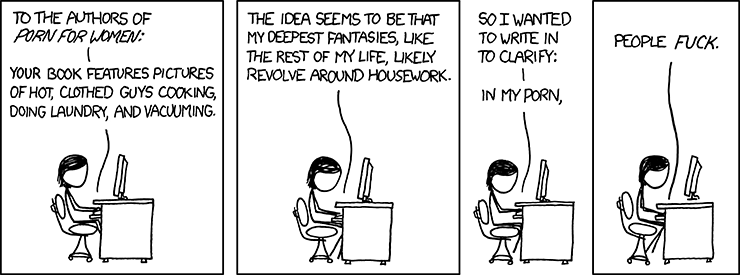
Monday, 15 March 2010
R&D blues
there are so many things that have been happening in the last year and a half that make me angry, too many to count. cuts to things that matter, but apparently plenty of money for things that don't, including big tax cuts for top income earners.
and last week cuts to our research and development sector were announced. again. this reminds me so much of the nastiness of a decade ago, when science funding had to be applied for annually so that it was almost impossible to plan for long-term projects. when constant restructuring and layoffs meant an terribly stressful work environment.
according to the CEO of agresearch, the cuts are a result of farmers deciding to no longer pay the meat and wool levy. however, there is also the requirement for CRIs to now provide a 12% profit, even though we are supposedly in a recession.
this latest announcement relates to scientific staff, but once they are gone, it means that the jobs of all related support staff will be at risk. it's a significant contraction of the organisation, and a stupid move given that so much of our global competitive advantage arises from the research done by our CRIs.
when i think that we could have had secure funding based on a mix of government and private sector input via the fast forward fund, it makes me want to cry. how can we expect to have high quality research and innovation in an environment of constant cuts and restructuring? it just won't happen.
and last week cuts to our research and development sector were announced. again. this reminds me so much of the nastiness of a decade ago, when science funding had to be applied for annually so that it was almost impossible to plan for long-term projects. when constant restructuring and layoffs meant an terribly stressful work environment.
according to the CEO of agresearch, the cuts are a result of farmers deciding to no longer pay the meat and wool levy. however, there is also the requirement for CRIs to now provide a 12% profit, even though we are supposedly in a recession.
this latest announcement relates to scientific staff, but once they are gone, it means that the jobs of all related support staff will be at risk. it's a significant contraction of the organisation, and a stupid move given that so much of our global competitive advantage arises from the research done by our CRIs.
when i think that we could have had secure funding based on a mix of government and private sector input via the fast forward fund, it makes me want to cry. how can we expect to have high quality research and innovation in an environment of constant cuts and restructuring? it just won't happen.
Will the Ministry of Women's Affairs meet the deadline?
Readers may recall that I made an OIA request of the Ministry of Women's Affairs almost a month ago. I've asked for information about Government appointments to boards, as a result of the Minister's claims in Parliament on Equal Pay Day that in the October - December 2009 quarter 47% of those appointed were women.
I've not even had a form response from the MWA saying they'll get back to me, and their 20 days to fill the request, under the Official Information Act, expire on March 18th...
I've not even had a form response from the MWA saying they'll get back to me, and their 20 days to fill the request, under the Official Information Act, expire on March 18th...
This is not what a feminist looks like
 Michele Hewitson's Weekend Herald interview on Saturday was with Act's Deputy Leader, and Cabinet Minister, Heather Roy. This quote stood out to me, and I thought it might be of interest to readers here:
[Roy] says her Territorial stint has done her tough-girl pollie image no harm. She agrees there is still an idea that women in politics have to be even tougher than the men. "Yes, I do. You struggle. If you're female and you're younger and you're blonde then you've got barriers to jump over. Those six-foot walls that I'd try and jump over in the Army, you've got to jump over in politics every day." But she "really dislikes" the word feminist and says she isn't one because it "implies people who go right out on an extreme. Just to put their stamp on the ground purely because they are female. I'm a great believer in people getting somewhere because they deserve to". Which is what I'd have thought feminism was about, but perhaps not to Super Moms.Were I in a position to waste a Question for Oral Answer for no good reason but my own curiosity I might ask Roy is she considered Sonya Davies was an extremist. Or, in hindsight, the suffragettes of the 19th century. Or Ashley Judd, Kate Walsh, Emma Watson, all of whom are pretty mainstream modern actresses who have proudly identifed as feminists. There's no shame in being called a feminist now.
Yes there are streams of feminism that are more radical than others. All you need to do is read this blog for a while, with its different authors and different perspectives on feminism, to see that there is a wide variety of views within the broad church of feminism in general. The radicalness, the extremism, is more often in the eye of the beholder than the writer, may I humbly suggest.
As a leftie, I tend to see Act as pretty extreme. It seemed somehow fitting to me that the current Deputy Leader would somehow be unaware that her party might be seen as ticking that box, whilst rejecting the word, the concept, and the possibility of being "feminist," because it is too radical. Even though she had just identified that in her political life she faces extra barriers because of her gender (and her appearance, which is usually not a problem identified by male MPs). *cough* false consciousness *cough*
Anyway, it seems timely to include another quote to round this post off. No prizes for guessing ahead which one it will be...
Feminism is the radical notion that women are people.
Sunday, 14 March 2010
Ideas looks at the "A Bit Rich" report
Today's Ideas programme, presented by Chris Laidlaw this morning, I only caught a snippet of this, but it sounded great.
(A reminder, this is the report done by the New Economics thinktank based in the UK which looked at the true value of some key areas of work and discovered that bankers destroy lots of wealth and nursery workers create lots of wealth)
(A reminder, this is the report done by the New Economics thinktank based in the UK which looked at the true value of some key areas of work and discovered that bankers destroy lots of wealth and nursery workers create lots of wealth)
Saturday, 13 March 2010
Some weekend funny
Many thanks to captiver for sending this in (potentially NSFW, depending on your workplace):
Friday, 12 March 2010
HRC on hone harawira
the race relations commissioner has reported back on the racially-charged email outburst from hone harawira last year, which you all probably remember seeing as how it called so much outrage. i wrote about it at the time here.
at the time, this is one of the points i made:
there's one point though, that these complainants may be missing. the impact of mr harawira's speech will, in actual fact, have little effect on them other than the emotional distress it causes them. no-one will hurl abuse at them in the streets as a result of that speech. they will not face barriers to employment, nor find it difficult when trying to get a rental house to live in. they won't face fear or restriction in their daily life....
what mr harawira said was wrong. but it's not the same. it's will never have the same effect as public speech that denigrates a minority group. and a minority group will never have the same ability to speak back in the way that the majority group does.
and this turns out to be one of the findings in the report:
Were the comments racially divisive; did they excite racial disharmony?
The comments provoked an angry response from many Pākehā, but they were also deplored by many Māori, including the Māori Party. They were potentially divisive in the sense that they were negative about Pākehā. Rather than provoke widespread hostility against Pākehā, however, they attracted criticism of the author and expressions of anti-Māori sentiment.
The relevant sections of the Human Rights Act, s61 and s131, which relate to racial disharmony and exciting racial disharmony, have a high threshold given the right to freedom of expression guaranteed by the New Zealand Bill of Rights Act. The effect of the comments was to attract hostility rather than to excite it against the group criticised. It is not a breach of the Human Rights Act to use offensive language.
it will be interesting to see the reaction, if any, to the whole report, and whether there is any pressure to change the laws around hate speech. i have to say that i'm secretly hoping there will be, because i'd love to see the greater protection for minorities that would result. but in the end, the report shows that for cases like this, changes to the law aren't required. there was public censure, there was action taken by the maori party, there was a futher apology from mr harawira.
at the time, this is one of the points i made:
there's one point though, that these complainants may be missing. the impact of mr harawira's speech will, in actual fact, have little effect on them other than the emotional distress it causes them. no-one will hurl abuse at them in the streets as a result of that speech. they will not face barriers to employment, nor find it difficult when trying to get a rental house to live in. they won't face fear or restriction in their daily life....
what mr harawira said was wrong. but it's not the same. it's will never have the same effect as public speech that denigrates a minority group. and a minority group will never have the same ability to speak back in the way that the majority group does.
and this turns out to be one of the findings in the report:
Were the comments racially divisive; did they excite racial disharmony?
The comments provoked an angry response from many Pākehā, but they were also deplored by many Māori, including the Māori Party. They were potentially divisive in the sense that they were negative about Pākehā. Rather than provoke widespread hostility against Pākehā, however, they attracted criticism of the author and expressions of anti-Māori sentiment.
The relevant sections of the Human Rights Act, s61 and s131, which relate to racial disharmony and exciting racial disharmony, have a high threshold given the right to freedom of expression guaranteed by the New Zealand Bill of Rights Act. The effect of the comments was to attract hostility rather than to excite it against the group criticised. It is not a breach of the Human Rights Act to use offensive language.
it will be interesting to see the reaction, if any, to the whole report, and whether there is any pressure to change the laws around hate speech. i have to say that i'm secretly hoping there will be, because i'd love to see the greater protection for minorities that would result. but in the end, the report shows that for cases like this, changes to the law aren't required. there was public censure, there was action taken by the maori party, there was a futher apology from mr harawira.
The Odds & Ends Drawer

- Deborah marks International Women's Day, including arguing for the importance of having a Minister of Women's Affairs.
- Catherine Delahunty reviews the Minister of Education's performance on Morning Report yesterday, as she failed to explain anything, really, about the $25M worth of cuts she's making to her Ministry.
- homepaddock reports the election of two new directors, both women, to the Meat & Wool Board.
- the girl with the blue blue heart seeks recommendations for good telly for her mum, who has recently discovered the wonders of Firefly, Buffy, Outrageous Fortune and Veronica Mars.
- Shiny ponders the calls for infant formula to be sent to disaster areas.
- Nikki is not sure she's ready for make up just yet. (I feel the same way myself)
- The Paradoxical Cat promotes voting for The Women's Bookshop's Fifty Fifty Women survey - helping to pick the top fifty women writers of the last fifty years.
- anne-marie chronicles a fortnight in paradise.
- Erin gives us her IWD speech on women and criminal justice.
- sas refutes the erroneous claims that women cannot write.
- Luddite Journo fisks Judy Turner's warped approach to family violence issues.
- Queen of Thorns shares two quick links to reject rape culture.
- Wellywood Woman writes about Kathryn Bigelow's Oscar, and the NZ Film Commission's gender problem.
- Janet Holmes writes in the Dominion Post about sexist language.
- And we have a letter to Fred pointing out that many child abusers were abused children themselves, and that perhaps rehabilitation is a more effective route to go down than sterilisation.
Thursday, 11 March 2010
A call to share our herstory
Today I was alerted to a moving and provocative piece from Alicia Simoni, a community manager and staff writer attending the current hearings of the UN Committee on the Status of Women, and the associated programme of events.
(This is the forum where Pansy Wong tried to pull the wool over the Committee's eyes by claiming that (a) it was the Nats who introduced 14 weeks' paid parental leave and (b) the Pay and Employment Equity Unit was shut down because its work was done.)
Simoni writes:
"Everything I’ve done — personally, professionally, politically, and everything in between — in the decade since graduating from college has been informed by the feminist values I first learned as a university student. And yet suddenly I feel as though I don’t know enough about where I – we – stand as women in society."
(This is the forum where Pansy Wong tried to pull the wool over the Committee's eyes by claiming that (a) it was the Nats who introduced 14 weeks' paid parental leave and (b) the Pay and Employment Equity Unit was shut down because its work was done.)
Simoni writes:
"Everything I’ve done — personally, professionally, politically, and everything in between — in the decade since graduating from college has been informed by the feminist values I first learned as a university student. And yet suddenly I feel as though I don’t know enough about where I – we – stand as women in society."
Yet more Not News
Last night TV3's attempt at a news bulletin was shameful. I could not believe the prominence given to a story that is so totally Not News that bloggers in Australia have already been tearing apart the irrelevancies, and the underlying misogyny, for most of the week.
It is Not News to cover the breakup of a celebrity couple. It is Not News even if one of them travels from our country to a neighbouring country to deal with it, in the midst of a sporting tour he is part of. It is Not News because actually their relationship is a) no one else's business and b) in no way whatsoever part of the broad range of things that it could be considered in the public interest to report on.
But we've had reporters and cameras camped outside someone's apartment, long range lenses scrutinising whether there is a certain ring on a certain finger, a live cross for absolutely no good reason on TV3 for several senseless minutes. How about we put some of those almighty media resources into some analysis of the significant cuts announced for the Ministry of Education yesterday, or what the SAS are still doing in Afghanistan, or John Key's (now no longer) secret plan to stop illegal whaling by legally allowing whaling?
One News may well have been just as bad. I was so annoyed at TV3 that I changed channels to the competition briefly, and I don't recall seeing anything about Lara Bingle and Michael Clarke, but then it was One News so I wasn't really paying attention. I roll my eyes at them all really - I'm sure if One News wasn't as invasive and irrelevant as TV3 on this story they'll have had a hard core debrief today about how they can do better (by which I mean worse) next time.
Oh, and Mr Emmerson, you generally irritate me beyond words, but this absolutely disgusting effort that never should have made it to print, is a new low, even for you.

It is Not News to cover the breakup of a celebrity couple. It is Not News even if one of them travels from our country to a neighbouring country to deal with it, in the midst of a sporting tour he is part of. It is Not News because actually their relationship is a) no one else's business and b) in no way whatsoever part of the broad range of things that it could be considered in the public interest to report on.
But we've had reporters and cameras camped outside someone's apartment, long range lenses scrutinising whether there is a certain ring on a certain finger, a live cross for absolutely no good reason on TV3 for several senseless minutes. How about we put some of those almighty media resources into some analysis of the significant cuts announced for the Ministry of Education yesterday, or what the SAS are still doing in Afghanistan, or John Key's (now no longer) secret plan to stop illegal whaling by legally allowing whaling?
One News may well have been just as bad. I was so annoyed at TV3 that I changed channels to the competition briefly, and I don't recall seeing anything about Lara Bingle and Michael Clarke, but then it was One News so I wasn't really paying attention. I roll my eyes at them all really - I'm sure if One News wasn't as invasive and irrelevant as TV3 on this story they'll have had a hard core debrief today about how they can do better (by which I mean worse) next time.
Oh, and Mr Emmerson, you generally irritate me beyond words, but this absolutely disgusting effort that never should have made it to print, is a new low, even for you.

about violence and non-violence
ok, this one's just a little controversial, but hey, what's a blog for if not to challenge it's readers...
below are excerpts from this article by radha d'souza. radha has a link with nz, in that she worked at the law school of the university of waikato for some years, her field of specialisation being human rights law. she was one of the four researchers who conducted the major project on protection orders (completed in 2008, i think), along with dr ruth busch.
i'm not going to add any commentary to radha's words, she's pretty eloquent after all. the context is her responding to a television interview she had seen about maoist violence in india, featuring dr binayak sen, a civil liberties campaigner:
Dr. Sen tried, heroically, to make the point that one third of the people of India suffer from chronic malnutrition, that over 50% of the Adivasis and 60% of Dalits are bordering on starvation (dear readers, put these numbers in perspective by bearing in mind that India is one-sixth of humanity), that over 50% of India (1/12th of world population) is undernourished, and that state policies that create and sustain the conditions for this mass starvation fall within the definition of “genocide” in international law....
At the heart of the controversy over Maoist violence is an issue that is foundational to modern societies... : the difference between institutional and individual violence. Only human beings can make ethical judgments because only human beings have a psyche capable of moral differentiation. For that reason in criminal trials, for example, intention is decisive. Institutions are not human beings, they are literally “mindless”. Institutions are complexes of laws that structure society and allocate people their places within it. When an institutional system is founded on violence, violence becomes the necessary condition for the continued existence of those institutions, in other words, the institution cannot survive without violence, it becomes like the proverbial vampire that will die if it cannot suck blood. This type of violence is fundamentally different from individual and group violence. However brutal, or obnoxious, or vicious it may be, individual violence is still human violence, it involves the mind, rightly or wrongly, and it invariably invites contestation over ethics in society. Institutions founded on violence, on the other hand, will collapse if violence is taken away. Individuals in charge of institutions must, therefore, continue to engage in violence if they are to save the institution from collapse....
Imagine by some miracle if a total pacifist were to occupy the White House. It is estimated that sixty percent of the American economy is directly or indirectly dependent on defense. Corporate America: the Lockheeds, the Boeings, the Northrops, will collapse like a pack of cards, taking with them the thousands they employ. Most technological innovations of the West that invest their institutions with so much power and capabilities are the result of militarism. Even banal things like food packaging, gyms and exercise regimes, dietetics, aging research, are driven by militarism. The internet and the communication technologies were military innovations. The incorporation of civilian and military uses of technologies through dual-use policies makes the intermeshing of militarism and economy virtually inseparable. The entire society is organized in a “warlike way” to use Marx’s phrase. In such a military-industrial-finance-media complex waging war becomes a necessity for survival of those institutions...
Our messiah of peace in the White House will have to reorganize life in America, bottoms-up, get people to plant potatoes and cabbages, run their own local communal power plants, dismantle the supermarkets and get them to preserve and cook their own food, and turn them into a community of people affiliated to land, instead of a community of interest groups affiliated to different types of market institutions. The messiah of peace will, without doubt, be branded a trouble maker, a revolutionary, a terrorist, even a Maoist perhaps, who knows. He will without doubt be liquidated before long. Only the people of America can undertake such a task, and that too only when they feel so committed to building a non-violent society that they are prepared for the sacrifices, and violence and bloodshed the task will necessarily invite.
The Indian armed forces are the fourth largest in the world. Unlike the United State, the Indian military has been used primarily against the Indian people: against Kashmiris, Nagas, Assamese, North-eastern peoples, Muslims, Dalits, Adivasis, or… Maoists. This is a fundamental difference between capitalist nations like the US, and India. The Indian state must colonise its own people to remain affiliated to the military-industrial-finance-media complex that rules....
The Maoists are desperate to get the message across to a nation besotted with the vampire, and they do it using desperate means. Are we going to shoot the messenger because we do not like the message, or, ostrich-like, bury our heads in the sand because we do not want to know about the message?
The message will not go away because we do not like how the message is delivered. If anything it will feed the vampire institutions with more blood.... The message and the desperate messengers are part of the same problem, the problem of the political economy of violence. Paradoxically, the institutions founded on violence, the military-industrial-finance-media complexes, are the ones that preach the ideology of non-violence in unequivocal terms; and those who advocate peace with justice end up advocating violence. How are we to understand this paradox? We cannot say it is because the institutions are hypocrites because, if institutions are mindless, they cannot be hypocrites.
i really recommend reading the whole article. certainly a lot of food for thought.
below are excerpts from this article by radha d'souza. radha has a link with nz, in that she worked at the law school of the university of waikato for some years, her field of specialisation being human rights law. she was one of the four researchers who conducted the major project on protection orders (completed in 2008, i think), along with dr ruth busch.
i'm not going to add any commentary to radha's words, she's pretty eloquent after all. the context is her responding to a television interview she had seen about maoist violence in india, featuring dr binayak sen, a civil liberties campaigner:
Dr. Sen tried, heroically, to make the point that one third of the people of India suffer from chronic malnutrition, that over 50% of the Adivasis and 60% of Dalits are bordering on starvation (dear readers, put these numbers in perspective by bearing in mind that India is one-sixth of humanity), that over 50% of India (1/12th of world population) is undernourished, and that state policies that create and sustain the conditions for this mass starvation fall within the definition of “genocide” in international law....
At the heart of the controversy over Maoist violence is an issue that is foundational to modern societies... : the difference between institutional and individual violence. Only human beings can make ethical judgments because only human beings have a psyche capable of moral differentiation. For that reason in criminal trials, for example, intention is decisive. Institutions are not human beings, they are literally “mindless”. Institutions are complexes of laws that structure society and allocate people their places within it. When an institutional system is founded on violence, violence becomes the necessary condition for the continued existence of those institutions, in other words, the institution cannot survive without violence, it becomes like the proverbial vampire that will die if it cannot suck blood. This type of violence is fundamentally different from individual and group violence. However brutal, or obnoxious, or vicious it may be, individual violence is still human violence, it involves the mind, rightly or wrongly, and it invariably invites contestation over ethics in society. Institutions founded on violence, on the other hand, will collapse if violence is taken away. Individuals in charge of institutions must, therefore, continue to engage in violence if they are to save the institution from collapse....
Imagine by some miracle if a total pacifist were to occupy the White House. It is estimated that sixty percent of the American economy is directly or indirectly dependent on defense. Corporate America: the Lockheeds, the Boeings, the Northrops, will collapse like a pack of cards, taking with them the thousands they employ. Most technological innovations of the West that invest their institutions with so much power and capabilities are the result of militarism. Even banal things like food packaging, gyms and exercise regimes, dietetics, aging research, are driven by militarism. The internet and the communication technologies were military innovations. The incorporation of civilian and military uses of technologies through dual-use policies makes the intermeshing of militarism and economy virtually inseparable. The entire society is organized in a “warlike way” to use Marx’s phrase. In such a military-industrial-finance-media complex waging war becomes a necessity for survival of those institutions...
Our messiah of peace in the White House will have to reorganize life in America, bottoms-up, get people to plant potatoes and cabbages, run their own local communal power plants, dismantle the supermarkets and get them to preserve and cook their own food, and turn them into a community of people affiliated to land, instead of a community of interest groups affiliated to different types of market institutions. The messiah of peace will, without doubt, be branded a trouble maker, a revolutionary, a terrorist, even a Maoist perhaps, who knows. He will without doubt be liquidated before long. Only the people of America can undertake such a task, and that too only when they feel so committed to building a non-violent society that they are prepared for the sacrifices, and violence and bloodshed the task will necessarily invite.
The Indian armed forces are the fourth largest in the world. Unlike the United State, the Indian military has been used primarily against the Indian people: against Kashmiris, Nagas, Assamese, North-eastern peoples, Muslims, Dalits, Adivasis, or… Maoists. This is a fundamental difference between capitalist nations like the US, and India. The Indian state must colonise its own people to remain affiliated to the military-industrial-finance-media complex that rules....
The Maoists are desperate to get the message across to a nation besotted with the vampire, and they do it using desperate means. Are we going to shoot the messenger because we do not like the message, or, ostrich-like, bury our heads in the sand because we do not want to know about the message?
The message will not go away because we do not like how the message is delivered. If anything it will feed the vampire institutions with more blood.... The message and the desperate messengers are part of the same problem, the problem of the political economy of violence. Paradoxically, the institutions founded on violence, the military-industrial-finance-media complexes, are the ones that preach the ideology of non-violence in unequivocal terms; and those who advocate peace with justice end up advocating violence. How are we to understand this paradox? We cannot say it is because the institutions are hypocrites because, if institutions are mindless, they cannot be hypocrites.
i really recommend reading the whole article. certainly a lot of food for thought.
A note of I told you so...
Like many people on the left I cut my eye teeth on student politics. In particular, I first became involved with political organising in 1997, the year of the Green paper. This was a proposal to corporatise the education system. I, along with 74 other people, got arrested on parliament's forecourt protesting it. We defeated some of the proposals in the Green paper, such as the proposals that tertiary institutions should be charged on the basis of their assets. But others, most critically funding of Private Training Institutions, went through.
So it is with the ears of a policy wonk that I listened to today's announcements about tertiary education. It is a clear rejection of the 'market fixes all' school of thought that had predominated in the 1990s.
This shouldn't be seen as a victory. It was interesting to hear Phil O'Reilly on The Panel today - he was torn in a couple of different ways. He specifically said that private providers and competition were important, but he also criticised the number of courses that these private training institutions had developed. Rather than being a step towards anything, it's just a recognition by capitalism that providing workers with specific skills needs more managerialism than a free market system will allow.
But I want to take a moment to say that we were right.
As for the 'solutions' - I think they'll probably do damage. The idea "we want Tertiary institutions to do X, therefore we'll pay institutions that do X more" creates all sorts of perverse incentives." The Labour government introduced a Performance Based Research Fund, because they wanted to make sure universities do research, not just concentrate on bums on seats. But by attempting to quantify research, they've created huge inequities, and perverse incentives. On top of that they've made the university a much more high pressure, unpleasant place to work. None of which actually encourages academic staff to do good research. It discourages anything that might be difficult, and instead encourages meeting criteria.
So it is with the ears of a policy wonk that I listened to today's announcements about tertiary education. It is a clear rejection of the 'market fixes all' school of thought that had predominated in the 1990s.
This shouldn't be seen as a victory. It was interesting to hear Phil O'Reilly on The Panel today - he was torn in a couple of different ways. He specifically said that private providers and competition were important, but he also criticised the number of courses that these private training institutions had developed. Rather than being a step towards anything, it's just a recognition by capitalism that providing workers with specific skills needs more managerialism than a free market system will allow.
But I want to take a moment to say that we were right.
As for the 'solutions' - I think they'll probably do damage. The idea "we want Tertiary institutions to do X, therefore we'll pay institutions that do X more" creates all sorts of perverse incentives." The Labour government introduced a Performance Based Research Fund, because they wanted to make sure universities do research, not just concentrate on bums on seats. But by attempting to quantify research, they've created huge inequities, and perverse incentives. On top of that they've made the university a much more high pressure, unpleasant place to work. None of which actually encourages academic staff to do good research. It discourages anything that might be difficult, and instead encourages meeting criteria.
Subscribe to:
Posts (Atom)